 PlantAlong
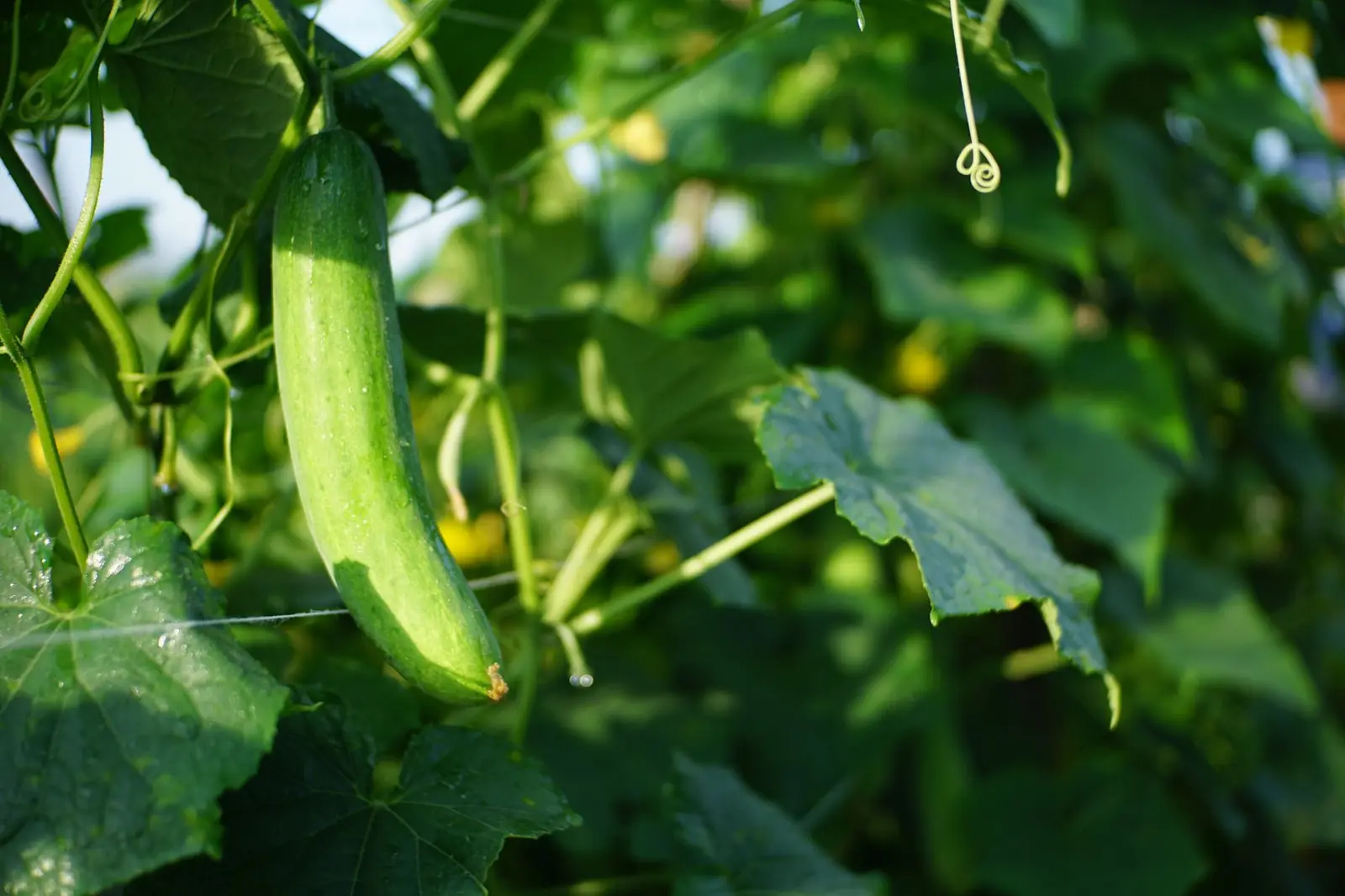 Photo: Agung Sutrisno / Pexels
Cucumbers
When to start, transplant and harvest cucumbers, as 5 university extension services put it, and what that means in each zone.
- Family
- Cucurbitaceae5
- Type
- Squash family
- Rules
- 8
- Last reviewed
Spring timing, source by source
Every rule counts from the last spring frost, so the same rule gives different dates in different gardens. Here are the rules themselves before any dates are worked out.
5 spring rules for cucumbers from 4 sources, in weeks relative to the last frost.
- Colorado State
- Utah State
- Oregon State, central OR
- Oregon State, central OR
- Texas A&M (E-502)
- Plant outdoors
- Start indoors
Fall timing, source by source
Fall rules count from the first fall frost.
1 fall rules for cucumbers, in weeks relative to the first frost.
- Texas A&M (E-502)
- Plant outdoors
| Source | Written for | What | When |
|---|---|---|---|
| Colorado State1 | CO | Sow outdoors | On the last frost |
| Utah State2 | UT | Sow outdoors | On the last frost |
| Oregon State, central OR8 | central Oregon | Transplant outdoors | 1 weeks after last frost |
| Oregon State, central OR8 | central Oregon | Start indoors | 2 weeks before last frost |
| Texas A&M (E-502)4 | TX | Sow outdoors | 1-6 weeks after last frost |
| Texas A&M (E-502)4 | TX | Plant for fall | 10-12 weeks before first frost |
| Nebraska (G1343)9 | NE | Plant for fall | Count back days to maturity + 14-day fall factor (+14 for tender crops) from the first frost |
Cucumbers by hardiness zone
Applied to the frost records of every ZIP in each zone. The zone median is a starting point; your own station can be weeks earlier or later.
| Zone | What | Zone median | Across most of the zone |
|---|---|---|---|
| 4a | Transplant outdoors | May 19 | May 12 – May 31 |
| 4b | Transplant outdoors | May 15 | May 8 – Jun 1 |
| 5a | Transplant outdoors | May 10 | May 3 – May 27 |
| 5b | Transplant outdoors | May 8 | Apr 28 – May 24 |
| 6a | Transplant outdoors | May 5 | Apr 23 – May 17 |
| 6b | Transplant outdoors | Apr 29 | Apr 17 – May 10 |
| 7a | Transplant outdoors | Apr 23 | Apr 11 – May 5 |
| 7b | Transplant outdoors | Apr 12 | Apr 6 – Apr 24 |
| 8a | Transplant outdoors | Apr 5 | Mar 27 – Apr 14 |
| 8b | Transplant outdoors | Mar 24 | Mar 13 – Apr 8 |
| 9a | Transplant outdoors | Mar 9 | Feb 23 – Mar 25 |
Growing facts
| Fact | Value | Source |
|---|---|---|
| Frost tolerance | tender | Colorado State1 |
| Frost tolerance | tender | Utah State2 |
| Frost tolerance | tender | Purdue (HO-66)3 |
| Minimum soil temperature | 60°F | Colorado State1 |
| Best soil temperature | 90°F | Colorado State1 |
| Days to germinate | 6-10 days | Colorado State1 |
| Days to germinate | 6-10 days | Texas A&M (E-502)4 |
| Days to maturity | 55 days from planting | Colorado State1 |
| Days to maturity | 50-70 days from planting | Texas A&M (E-502)4 |
| Days to maturity | 40-65 days from seed | UF/IFAS Florida5 |
| Days to maturity | 60-90 days from planting | Arizona (AZ1005)6 |
| Spacing | 6 in apart each way | Colorado State1 |
| Spacing | 24-36 in apart each way | Colorado State1 |
| Spacing | 8-12 in in the row, rows 48-72 in apart | Texas A&M (E-502)4 |
| Spacing | 6-12 in in the row, rows 48 in apart | UF/IFAS Florida5 |
| Heat limit | 90°F | purdue-hot-weather7 |
Companions, and how sure anyone is
Marigold · No clear effect Tested in a study
Claimed: marigold root exudates suppress nematodes. Field tests intercropping cucumber and squash with French marigold found no consistent effect on soil nematodes.1010101111
Powers et al. 1993 (Honduras field tests, 90 days). UF/IFAS ENY-056, citing that study, adds the marigold intercrop was less productive than cucurbit monoculture. Marigold reduces root-knot nematodes only as a cover crop grown at least 2 months before the vegetable on the same site.
Blue Hubbard squash · Trap crop Tested in a study
A border of Blue Hubbard squash, which striped cucumber beetles prefer, encircles the cucumbers; beetles concentrate on the border, which is then sprayed.1212121313
UConn 2003 plot trial: the sprayed Blue Hubbard border raised cucumber yield 33% and cut total plant death from 30% to 14% vs unsprayed all-cucumber controls. Depends on spraying the border as beetles arrive and on a complete, gap-free perimeter. Farm-scale trials; garden-scale effect not tested.
Potatoes · Avoid together Traditional pairing14
Tomatoes · Helps Traditional pairing14
Beans · Helps Traditional pairing14
Bush beans in the chart.
Peas · Helps Traditional pairing14
Lettuce · Helps Traditional pairing14
Traditional pairings come from a UC Master Gardener chart that traces to the UC Davis Edible Landscaping Handbook and ATTRA. The chart gives no reasons, and we found no trial of these pairs; treat them as garden lore.
All cucumbers companions, with sources · The full companion chart
Sources
- Colorado State University Extension, Vegetable Planting Guide (CMG GardenNotes #720), reviewed September 2024. Retrieved 2026-11-02.
- Utah State University Extension, Suggested Vegetable Planting Dates for Utah, January 2018; revised May 2025. Retrieved 2026-11-02.
- Purdue Extension, The Fall Vegetable Garden (HO-66-W), reviewed September 2019. Retrieved 2026-11-02.
- Texas AgriLife Extension Service, The Texas A&M System, Texas Home Vegetable Gardening Guide (E-502), 2/09. Retrieved 2026-11-02.
- University of Florida, IFAS Extension (Department of Horticultural Sciences), Florida Vegetable Gardening Guide (SP 103 / VH021), Original December 1999; revised October 2015, January 2016, May 2018, September 2020, September 2021, and June 2025. Retrieved 2026-11-02.
- The University of Arizona Cooperative Extension, Vegetable Planting Calendar for Maricopa County (AZ1005), reviewed This information has been reviewed by University faculty.. Retrieved 2026-11-02.
- Purdue University, Indiana Yard and Garden (Purdue Consumer Horticulture), Hot Weather Is Tough on Plants Too!, reviewed Page last modified October 26, 2016. Retrieved 2026-11-02.
- Oregon State University Extension Service, When to start seeds indoors in central Oregon, reviewed 2024. Retrieved 2026-11-02.
- University of Nebraska–Lincoln Extension, Fall Vegetable Gardening (NebGuide G1343), Revised March 2012. Retrieved 2026-11-02.
- Journal of Nematology 25(4):666-673 (Society of Nematologists); FLVC journal host, Effects of Mixed Cropping on a Soil Nematode Community in Honduras, 1993. Retrieved 2026-11-02.
- University of Florida, IFAS Extension (Entomology and Nematology Department), Marigolds (Tagetes spp.) for Nematode Management (ENY-056), reviewed Reviewed November 2019; page footer "Reviewed: 01/2024". Retrieved 2026-11-02.
- University of Connecticut Cooperative Extension System (UConn IPM), Protecting Cucumbers From Beetles and Wilt With Perimeter Trap Cropping, reviewed Reviewed 2012. Retrieved 2026-11-02.
- University of Vermont Extension, Vermont Vegetable and Berry Program, Perimeter Trap Cropping: A Novel Approach to Insect Pest Control, July 2004. Retrieved 2026-11-02.
- University of California Agriculture and Natural Resources (UCCE Master Gardener Program), Companion Planting Chart: Companion planting in the vegetable garden, File dated 2023-09 in URL path; no date printed. Retrieved 2026-11-02.