 PlantAlong
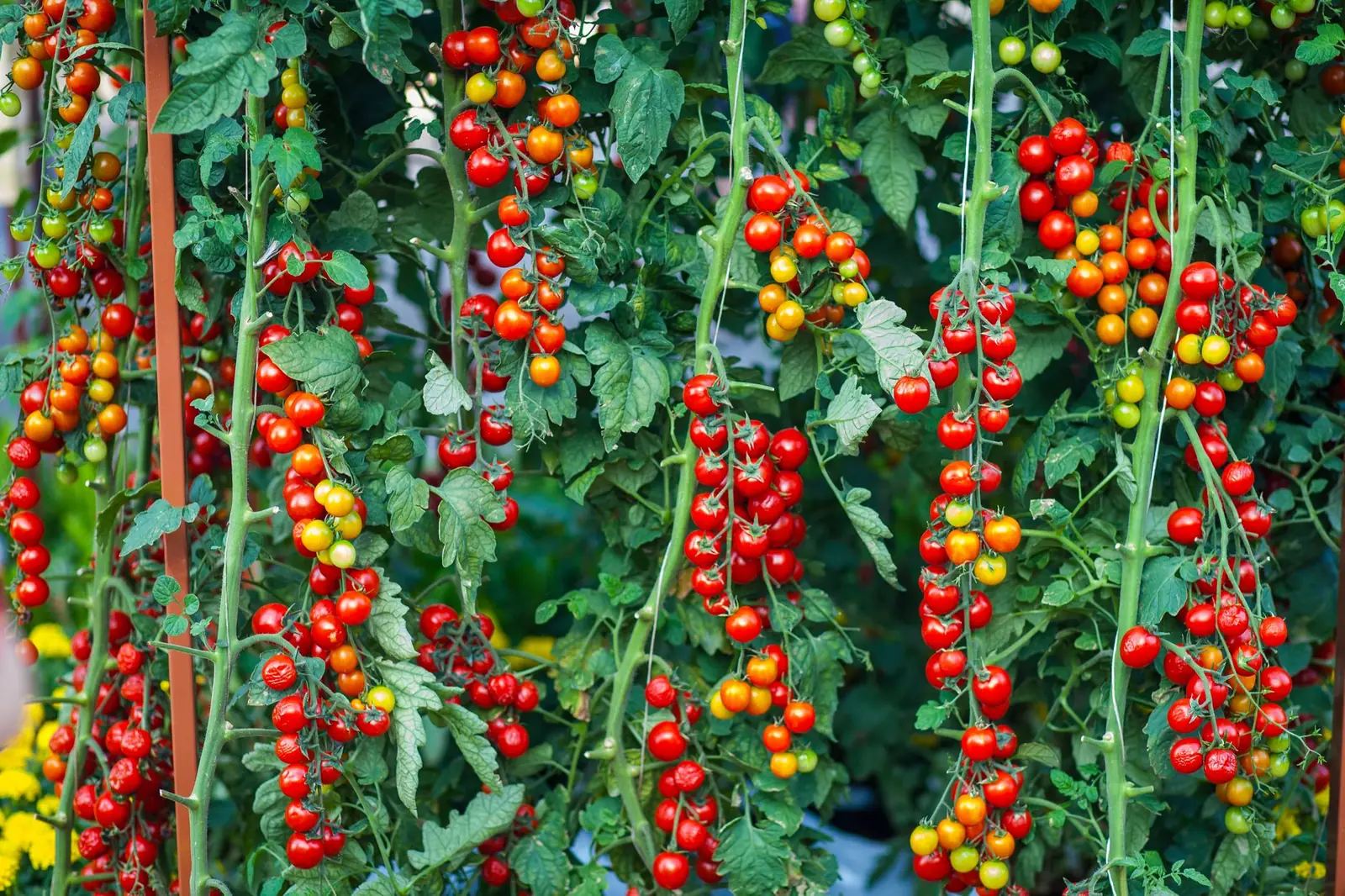 Photo: Thể Phạm / Pexels
Tomatoes
When to start, transplant and harvest tomatoes, as 6 university extension services put it, and what that means in each zone.
- Family
- Solanaceae5
- Type
- Fruiting
- Rules
- 8
- Last reviewed
Spring timing, source by source
Every rule counts from the last spring frost, so the same rule gives different dates in different gardens. Here are the rules themselves before any dates are worked out.
5 spring rules for tomatoes from 4 sources, in weeks relative to the last frost.
- Colorado State
- Utah State
- Oregon State, central OR
- Oregon State, central OR
- Texas A&M (E-502)
- Plant outdoors
- Start indoors
Fall timing, source by source
Fall rules count from the first fall frost.
1 fall rules for tomatoes, in weeks relative to the first frost.
- Texas A&M (E-502)
- Plant outdoors
| Source | Written for | What | When |
|---|---|---|---|
| Colorado State1 | CO | Transplant outdoors | 2 weeks after last frost |
| Utah State2 | UT | Transplant outdoors | 2 weeks after last frost |
| Oregon State, central OR11 | central Oregon | Transplant outdoors | On the last frost |
| Oregon State, central OR11 | central Oregon | Start indoors | 8 weeks before last frost |
| Texas A&M (E-502)4 | TX | Transplant outdoors | 1-8 weeks after last frost |
| Texas A&M (E-502)4 | TX | Plant for fall | 12-14 weeks before first frost |
| Nebraska (G1343)12 | NE | Plant for fall | Count back days to maturity + 14-day fall factor (+14 for tender crops) from the first frost |
Tomatoes by hardiness zone
Applied to the frost records of every ZIP in each zone. The zone median is a starting point; your own station can be weeks earlier or later.
| Zone | What | Zone median | Across most of the zone |
|---|---|---|---|
| 4a | Transplant outdoors | May 26 | May 19 – Jun 7 |
| 4b | Transplant outdoors | May 22 | May 15 – Jun 8 |
| 5a | Transplant outdoors | May 17 | May 10 – Jun 3 |
| 5b | Transplant outdoors | May 15 | May 5 – May 31 |
| 6a | Transplant outdoors | May 12 | Apr 30 – May 24 |
| 6b | Transplant outdoors | May 6 | Apr 24 – May 17 |
| 7a | Transplant outdoors | Apr 30 | Apr 18 – May 12 |
| 7b | Transplant outdoors | Apr 19 | Apr 13 – May 1 |
| 8a | Transplant outdoors | Apr 12 | Apr 3 – Apr 21 |
| 8b | Transplant outdoors | Mar 31 | Mar 20 – Apr 15 |
| 9a | Transplant outdoors | Mar 16 | Mar 1 – Apr 1 |
Growing facts
| Fact | Value | Source |
|---|---|---|
| Frost tolerance | very tender | Colorado State1 |
| Frost tolerance | very tender | Utah State2 |
| Frost tolerance | tender | Purdue (HO-66)3 |
| Minimum soil temperature | 50°F | Colorado State1 |
| Best soil temperature | 80°F | Colorado State1 |
| Days to germinate | 6-14 days | Colorado State1 |
| Days to germinate | 6-12 days | Texas A&M (E-502)4 |
| Days to maturity | 65 days from transplant | Colorado State1 |
| Days to maturity | 70-90 days from planting | Texas A&M (E-502)4 |
| Days to maturity | 90-110 days from seed | UF/IFAS Florida5 |
| Days to maturity | 70-90 days from transplant | UF/IFAS Florida5 |
| Days to maturity | 50-120 days from planting | Arizona (AZ1005)6 |
| Spacing | 24 in apart each way | Colorado State1 |
| Spacing | 36-48 in in the row, rows 36-48 in apart | Texas A&M (E-502)4 |
| Spacing | 18-32 in in the row, rows 48 in apart | UF/IFAS Florida5 |
| Spacing | 24-48 in in the row, rows 48-60 in apart | Texas A&M (E-517)7 |
| Heat limit | 90°F | ncsu-hoke-tired-tomatoes8 |
| Heat limit | 90°F | ncsu-burke-blossom-drop9 |
| Heat limit | 90°F | purdue-hot-weather10 |
Companions, and how sure anyone is
Basil · Disputed Tested in a study
Claims: basil raises combined yield, improves tomato flavour and masks tomatoes from thrips and hornworms. Garden-scale trials found no consistent flavour effect and mixed yield results.131313141415151617
Bomford 2004 thesis (not peer reviewed): basil companions gave a mean 20% relative-yield advantage, largest at high density and high basil share; no consistent taste preference. Bomford & Butler 2003 abstract: no LER significantly above 1; tomato pests did not respond. Penn State says basil masks tomatoes from thrips and hornworms but cites no study. Conboy 2019 (glasshouse): a marigold mix that included basil reduced whitefly; basil alone untested.
Marigold · Helps Tested in a study
French marigold grown alongside tomato slowed glasshouse whitefly build-up (airborne limonene). Marigold grown before tomato reduced root-knot nematode galling in the following tomato crop.16181819191917
Whitefly: glasshouse trials with marigolds present all season; adding them after whitefly build-up gave minimal reduction (Conboy 2019). Nematodes: only as a cover crop planted at least 2 months before, on the same site, in soil above 15 °C, with a resistant cultivar (Ploeg & Maris 1999; UF/IFAS ENY-056). Interplanting for nematodes is "probably not" effective, and marigold increases some nematodes (ENY-056).
Potatoes · Avoid together Extension guidance
Shared late blight: the pathogen overwinters mainly on infected potato tubers and spreads by wind to nearby tomatoes.20201717
WSU HortSense advises against planting the two close together. The UC tradition chart also lists them as incompatible (without giving a reason); we did not find a field study of planting distance.
Fennel · Avoid together Traditional pairing17
Carrots · Helps Traditional pairing17
Onions · Helps Traditional pairing17
The chart says "onion family".
Garlic · Helps Traditional pairing17
The chart says "onion family"; garlic is an onion-family (Allium) crop.
Cucumbers · Helps Traditional pairing17
Nasturtium · Helps Traditional pairing1716
In Conboy 2019 glasshouse trials a marigold mix that also held basil, nasturtium and Chinese cabbage reduced whitefly on tomato; nasturtium alone was not tested.
Traditional pairings come from a UC Master Gardener chart that traces to the UC Davis Edible Landscaping Handbook and ATTRA. The chart gives no reasons, and we found no trial of these pairs; treat them as garden lore.
All tomatoes companions, with sources · The full companion chart
Sources
- Colorado State University Extension, Vegetable Planting Guide (CMG GardenNotes #720), reviewed September 2024. Retrieved 2026-11-02.
- Utah State University Extension, Suggested Vegetable Planting Dates for Utah, January 2018; revised May 2025. Retrieved 2026-11-02.
- Purdue Extension, The Fall Vegetable Garden (HO-66-W), reviewed September 2019. Retrieved 2026-11-02.
- Texas AgriLife Extension Service, The Texas A&M System, Texas Home Vegetable Gardening Guide (E-502), 2/09. Retrieved 2026-11-02.
- University of Florida, IFAS Extension (Department of Horticultural Sciences), Florida Vegetable Gardening Guide (SP 103 / VH021), Original December 1999; revised October 2015, January 2016, May 2018, September 2020, September 2021, and June 2025. Retrieved 2026-11-02.
- The University of Arizona Cooperative Extension, Vegetable Planting Calendar for Maricopa County (AZ1005), reviewed This information has been reviewed by University faculty.. Retrieved 2026-11-02.
- Texas AgriLife Extension Service, The Texas A&M System, Easy Gardening: Tomatoes (E-517), 08-09. Retrieved 2026-11-02.
- N.C. Cooperative Extension, Hoke County Center, Tired Summer Tomatoes, 2025-07-16. Retrieved 2026-11-02.
- N.C. Cooperative Extension, Burke County Center, Blossom Drop, 2021-07-01. Retrieved 2026-11-02.
- Purdue University, Indiana Yard and Garden (Purdue Consumer Horticulture), Hot Weather Is Tough on Plants Too!, reviewed Page last modified October 26, 2016. Retrieved 2026-11-02.
- Oregon State University Extension Service, When to start seeds indoors in central Oregon, reviewed 2024. Retrieved 2026-11-02.
- University of Nebraska–Lincoln Extension, Fall Vegetable Gardening (NebGuide G1343), Revised March 2012. Retrieved 2026-11-02.
- West Virginia University, Plant and Soil Science (Ph.D. thesis); record on Organic Eprints, Yield, pest density, and tomato flavor effects of companion planting in garden-scale studies incorporating tomato, basil, and Brussels sprout, 2004 (deposited 19 Dec 2005). Retrieved 2026-11-02.
- Meeting abstract (ASA-CSSA-SSSA 2003 annual meetings abstracts collection, mirrored by Prince of Songkla University library), Do Tomatoes Love Basil But Hate Brussels Sprouts? Evaluating Popular Companion Planting Claims in Garden-Scale Studies (NE_05-bomford156693-oral), 2003. Retrieved 2026-11-02.
- Penn State Extension, Herbs Make Good Plant Partners and Companions, Updated April 22, 2026. Retrieved 2026-11-02.
- PLOS ONE 14(3): e0213071, Companion planting with French marigolds protects tomato plants from glasshouse whiteflies through the emission of airborne limonene, March 1, 2019. Retrieved 2026-11-02.
- University of California Agriculture and Natural Resources (UCCE Master Gardener Program), Companion Planting Chart: Companion planting in the vegetable garden, File dated 2023-09 in URL path; no date printed. Retrieved 2026-11-02.
- Journal of Nematology 31(4S):709-714 (Society of Nematologists); PMC2620405, Effect of Temperature on Suppression of Meloidogyne incognita by Tagetes Cultivars, December 1999. Retrieved 2026-11-02.
- University of Florida, IFAS Extension (Entomology and Nematology Department), Marigolds (Tagetes spp.) for Nematode Management (ENY-056), reviewed Reviewed November 2019; page footer "Reviewed: 01/2024". Retrieved 2026-11-02.
- Washington State University Extension (HortSense), Tomato: Late blight (HortSense fact sheet), reviewed Last review date: 2026-08-28. Retrieved 2026-11-02.