 PlantAlong
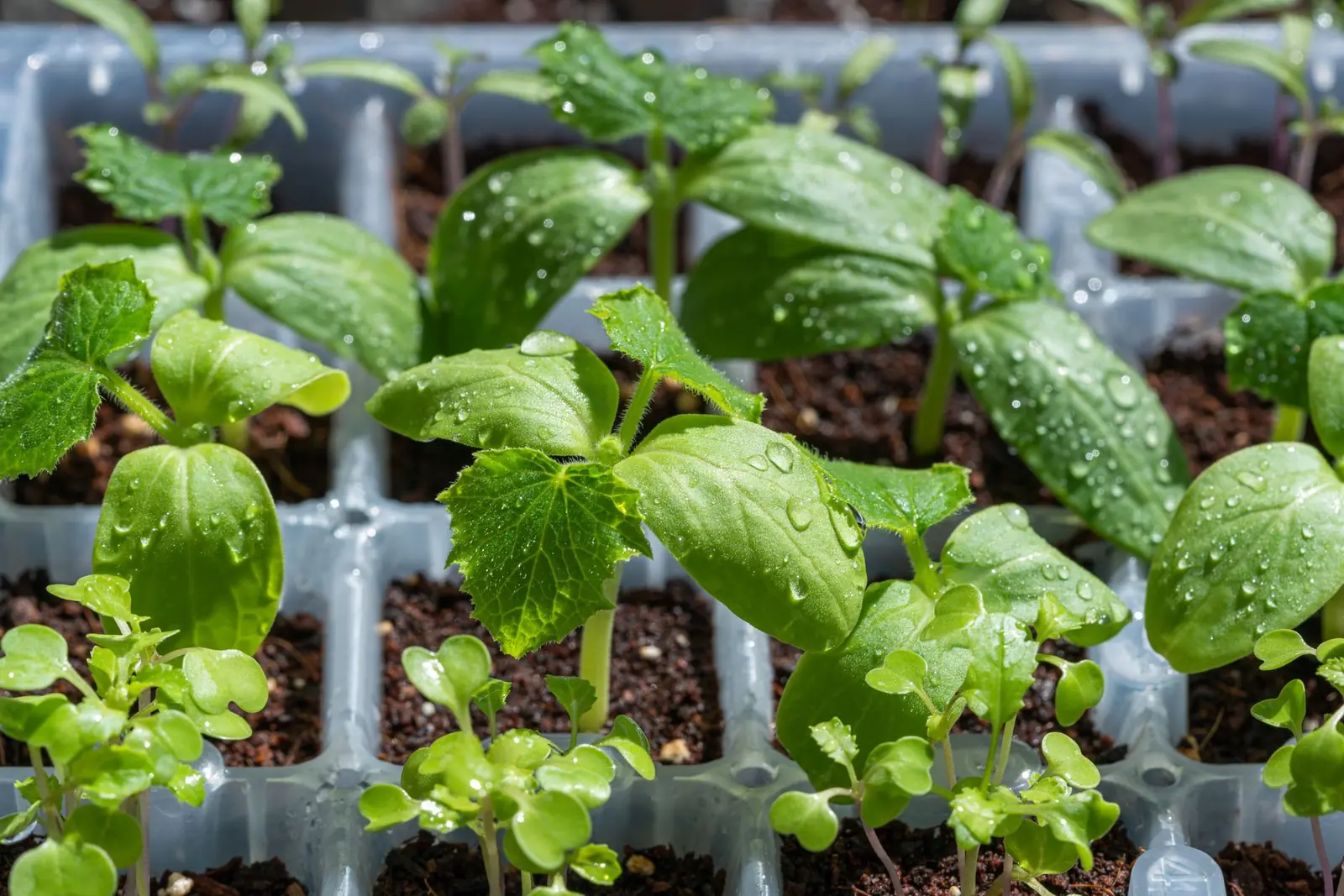 Photo: Frank Schrader / Pexels
How we date things
Every date on this site comes from a public dataset or a cited extension publication, through rules written down here. Where we had to choose, we say so.
- Last reviewed
- Sources
- 53

Hardiness zones
Zones come from the 2023 USDA Plant Hardiness Zone Map ZIP code files published by the PRISM Group at Oregon State University (1991-2020 average of each winter's coldest night). We use PRISM's files directly; they match USDA's own ZIP lookup for all 40,502 ZIP codes. Each ZIP has one zone, the one covering most of its area, so a ZIP can span more than one zone. Territories other than Puerto Rico have no published zone.
A zone says which perennials survive winter. It does not set a frost date, so we never turn a zone into a frost date.
Frost dates
Frost dates are NOAA's 1991-2020 U.S. Climate Normals: for each weather station, the dates of the last spring and first fall 32°F temperature at 10%, 50% and 90% probability. The median (50%) is the "typical" date. In spring the 10% date is the later, safer one: only one year in ten has a frost after it.
| Station type | Stations | What we show |
|---|---|---|
| Dated | 6,949 | Median and 10% dates for spring and fall |
| Frost too rare to date | 176 | The share of years with any 32°F night; no frost-date planting rules |
| Frost possible any month | 180 | No planting windows; 28°F hard-freeze dates for reference |
NOAA counts its frost season from August 1, so a station's "last spring frost" can fall in December and its "first fall frost" in January; the calendar handles both. Where 32°F happens in fewer than all years, NOAA's dates describe only the years with a frost, and we say so.
Matching a ZIP to a station
Each ZIP is placed at its 2026 Census ZIP Code Tabulation Area point, or, for PO-box and other ZIPs without an area, at a GeoNames point (city-level). We take the nearest station with freeze statistics and record the distance and the elevation difference (USGS elevation data). We never skip to a farther station to get a nicer answer.
No authority sets how far a station can be from a garden before its record stops applying, so the thresholds below are our own, informed by WMO guidance that local uses need stations within about 10 km, by temperatures dropping about 3.5°F per 1,000 ft of height (University of Idaho Bulletin 494), and by cold-air drainage and coastal effects.
| Check | Caution | Warning |
|---|---|---|
| Distance to station | over 25 km | over 60 km |
| Elevation difference | over 100 m | over 300 m |
| Location | — | this ZIP can only be placed at city level; location sources disagree for this ZIP |
| Station record | the station record is partly estimated | — |
| Zone check | station 2+ half-zones from the ZIP | — |
Today 61.8% of ZIPs are high confidence, 16.3% medium and 21.9% low.
Planting rules
We hold 91 planting rules for 12 crops, each copied as written from a university extension publication with the passage that states it. When sources disagree we keep every version and show them side by side. We never average or blend them.
For your calendar, each crop and method uses, in order:
- a month calendar written for your region, where one exists;
- a rule written for your state;
- the crop's primary source, applied to your own frost dates and labelled as coming from another state;
- otherwise the first source with that method in this order: Colorado State, Utah State, Nebraska (G1343), Purdue (HO-66), Wisconsin, Minnesota, … with Texas last because its guidance is written for a hot climate.
Fall rules from hot-climate sources (Texas A&M (E-502), Texas A&M (E-517)) are not applied outside their state below zone 9a; they stay visible as other guidance. Rules written for a named area without a stated boundary ("central Oregon") are never treated as covering the whole state.
How a window is computed
Week offsets. "Transplant 1-2 weeks after the last frost" becomes a window from 7 to 14 days after your median last frost. Spring rules count from the last frost; fall rules from the first.
Count-backs. Where a source gives a formula (Nebraska G1343), the latest fall planting date is the first frost minus days to maturity, a 14-day fall factor and, for frost-tender crops, another 14 days.
Harvest. Days to maturity are added to the planting window, using a figure counted from the same starting point (seed or transplant), preferably from the same source. Fall plantings that grow through winter, like garlic, get no harvest date, because winter dormancy breaks that arithmetic.
Short seasons. If a frost-tender crop planted in its window would not reach its earliest maturity before the median first frost, the calendar warns you.
Conditions. Some guidance is a condition, not a date ("plant basil when the soil is at least 60°F"). We show it as written and do not invent a date for it.
Hot and frost-free climates
Frost-date rules give poor advice where frost is rare or summer heat sets the season. Where an extension service publishes a month calendar we use it instead: UF/IFAS for North, Central and South Florida, and the University of Arizona's AZ1005 for Maricopa County (44 windows in all).
- North Florida (UF/IFAS: north of State Road 40): 34 counties
- Central Florida (UF/IFAS: between State Roads 40 and 70): 12 counties
- South Florida (UF/IFAS: below State Road 70): 11 counties
- Maricopa County, AZ (low desert, AZ1005): 1 county
UF/IFAS draws its regions along State Roads 40 and 70, not county lines, so we assign only counties that lie wholly on one side. Ten Florida counties crossed by those roads have no regional calendar yet. Where no source covers a frost-free climate (coastal Southern California, Hawaii) the calendar says so instead of guessing.
Companion evidence
Each of the 38 pairings is graded. Tested in a study: a field or controlled trial of this pair and effect, with its conditions recorded. Extension guidance: recommended by an extension publication without a cited trial. Traditional: found on companion charts that trace to gardening tradition. A pairing where credible sources contradict each other is marked disputed.
Soil volumes
Bed volume is length × width × depth. Conversions use exact factors from NIST Handbook 44: 1 cubic yard = 27 cubic feet; 1 cubic foot = 28.316846592 litres. Mix proportions are the parts by volume an extension source states. Bag sizes vary by product, and compressed bales are labelled at their compressed volume (NIST Handbook 130), so check the label.
Limits
- A weather station is not your garden. Frost pockets, slopes, walls and city heat can shift your dates by days or weeks.
- Climate normals describe 1991-2020. Individual years vary, and recent years may differ from the average.
- Several extension pages could not be read by our tools and are left out rather than guessed at.
- There is no sourced guidance yet for high-mountain sites, Hawaii, Alaska or coastal Southern California calendars.
Update history
- : First data build: PRISM 2023 zones, NOAA 1991-2020 normals, Census 2026 ZIP areas with GeoNames fallback, NED/SRTM elevations; 12 crops entered from extension sources; companion pairings graded; Florida and Maricopa County month calendars added.
All sources
Datasets
- GeoNames, GeoNames postal code dumps (US, PR, VI, GU, AS, MP). Snapshot downloaded 2026-11-02 (GeoNames updates continuously). Creative Commons Attribution 4.0 (CC BY 4.0). Retrieved 2026-11-02. Credit: Postal code locations for some ZIP codes from GeoNames (https://www.geonames.org), licensed under CC BY 4.0.
- NOAA National Centers for Environmental Information, U.S. Climate Normals 2020: U.S. Annual/Seasonal Climate Normals (1991-2020). 1991-2020 normals, v1.0.1 (archive c20230404). Public domain (NCEI open data policy; listed as CC0 on data.gov). Retrieved 2026-11-02. Credit: Palecki, Michael; Durre, Imke; Applequist, Scott; Arguez, Anthony; Lawrimore, Jay (2021). U.S. Climate Normals 2020: U.S. Annual/Seasonal Climate Normals (1991-2020). Freeze probability variables. NOAA National Centers for Environmental Information. Dataset. https://doi.org/10.25921/4ek7-fk11. Accessed 2026-11-02.
- PRISM Group, Oregon State University, 2023 USDA Plant Hardiness Zone Map ZIP code data (PHZM 2023). 2023 edition; 1991-2020 mean annual extreme minimum temperature. PRISM terms of use: free reproduction with credit; derived products must state they are not the official USDA Plant Hardiness Zone Map; no USDA-ARS or OSU logos. Retrieved 2026-11-02. Credit: Hardiness zones are from the 2023 USDA Plant Hardiness Zone Map ZIP code data (1991-2020 mean annual extreme minimum temperature), produced by the PRISM Group, Oregon State University, https://prism.oregonstate.edu, accessed 2026-11-02. This site is not the official USDA Plant Hardiness Zone Map; for the official map see https://planthardiness.ars.usda.gov. A ZIP code can span more than one zone.
- U.S. Census Bureau, County Adjacency File 2024 (county_adjacency2024.txt). 2024 (file last modified 2024-08-20). Public domain (U.S. Government work). Retrieved 2026-11-02.
- U.S. Census Bureau, 2020 FIPS Codes for Counties and County Equivalent Entities (national_county2020.txt). 2020. Public domain (U.S. Government work). Retrieved 2026-11-02.
- U.S. Census Bureau, 2026 Gazetteer Files: ZIP Code Tabulation Areas (2026_Gaz_zcta_national). 2026 Gazetteer (2020 ZCTA definitions). Public domain (U.S. Government work). Retrieved 2026-11-02.
- U.S. Census Bureau, 2020 ZCTA to County Relationship File (tab20_zcta520_county20_natl). 2020. Public domain (U.S. Government work). Retrieved 2026-11-02.
- U.S. Geological Survey (NED), NASA/USGS (SRTM); served by Open Topo Data, ZIP-point elevations from USGS NED 1/3 arc-second (ned10m) and SRTM 30 m (srtm30m), queried via the Open Topo Data public API. Open Topo Data public API copy of ned10m last updated 2020-04-23. Public domain (USGS and NASA data). Retrieved 2026-11-02. Credit: Map services and data available from U.S. Geological Survey, National Geospatial Program. Elevations queried through Open Topo Data (https://www.opentopodata.org).
Publications
- Clemson Cooperative Extension, Home & Garden Information Center, Basil (HGIC 1327), Originally published 12/08; updated May 1, 2019. Retrieved 2026-11-02.
- Clemson Cooperative Extension, Home & Garden Information Center, Onion, Leek, Shallot, & Garlic (HGIC 1314), Updated: Jan 20, 2023. Retrieved 2026-11-02.
- Colorado State University Extension, Vegetable Planting Guide (CMG GardenNotes #720), reviewed September 2024. Retrieved 2026-11-02.
- Entomologia Experimentalis et Applicata 36(2):159-167 (John Wiley & Sons); abstract read via FAO AGRIS, Effect of mixed cropping on some insect pests of carrots and onions, 1984. Retrieved 2026-11-02.
- Iowa State University Extension and Outreach, Yard and Garden, What would be a good soil mix for a raised bed?, Last updated 2026-04-20 (page metadata). Retrieved 2026-11-02.
- Journal of Extension 42(5), Article 13, Demonstrating a Perimeter Trap Crop Approach to Pest Management on Summer Squash in New England, October 2004. Retrieved 2026-11-02.
- Journal of Nematology 25(4):666-673 (Society of Nematologists); FLVC journal host, Effects of Mixed Cropping on a Soil Nematode Community in Honduras, 1993. Retrieved 2026-11-02.
- Journal of Nematology 31(4S):709-714 (Society of Nematologists); PMC2620405, Effect of Temperature on Suppression of Meloidogyne incognita by Tagetes Cultivars, December 1999. Retrieved 2026-11-02.
- Meeting abstract (ASA-CSSA-SSSA 2003 annual meetings abstracts collection, mirrored by Prince of Songkla University library), Do Tomatoes Love Basil But Hate Brussels Sprouts? Evaluating Popular Companion Planting Claims in Garden-Scale Studies (NE_05-bomford156693-oral), 2003. Retrieved 2026-11-02.
- N.C. Cooperative Extension, Burke County Center, Blossom Drop, 2021-07-01. Retrieved 2026-11-02.
- N.C. Cooperative Extension, Hoke County Center, Tired Summer Tomatoes, 2025-07-16. Retrieved 2026-11-02.
- National Institute of Standards and Technology, NIST Handbook 44 (2026), Appendix C: General Tables of Units of Measurement, 2026 edition. Retrieved 2026-11-02.
- National Institute of Standards and Technology (as adopted by the National Conference on Weights and Measures), NIST Handbook 130 (2026), Section IV.B: Uniform Regulation for the Method of Sale of Commodities, 2026 edition. Retrieved 2026-11-02.
- Oregon State University Extension Service, When to start seeds indoors in central Oregon, reviewed 2024. Retrieved 2026-11-02.
- Oregon State University Extension Service, Eastern Oregon seed-starting schedule, Revised April 2025. Retrieved 2026-11-02.
- Penn State Extension, Growing Garlic - Fall Planting, Updated September 9, 2026. Retrieved 2026-11-02.
- Penn State Extension, Herbs Make Good Plant Partners and Companions, Updated April 22, 2026. Retrieved 2026-11-02.
- PLOS ONE 14(3): e0213071, Companion planting with French marigolds protects tomato plants from glasshouse whiteflies through the emission of airborne limonene, March 1, 2019. Retrieved 2026-11-02.
- Purdue Extension, The Fall Vegetable Garden (HO-66-W), reviewed September 2019. Retrieved 2026-11-02.
- Purdue University, Indiana Yard and Garden (Purdue Consumer Horticulture), Hot Weather Is Tough on Plants Too!, reviewed Page last modified October 26, 2016. Retrieved 2026-11-02.
- Texas AgriLife Extension Service, The Texas A&M System, Texas Home Vegetable Gardening Guide (E-502), 2/09. Retrieved 2026-11-02.
- Texas AgriLife Extension Service, The Texas A&M System, Easy Gardening: Tomatoes (E-517), 08-09. Retrieved 2026-11-02.
- The University of Arizona Cooperative Extension, Vegetable Planting Calendar for Maricopa County (AZ1005), reviewed This information has been reviewed by University faculty.. Retrieved 2026-11-02.
- University of California Agriculture and Natural Resources (UCCE Master Gardener Program), Companion Planting Chart: Companion planting in the vegetable garden, File dated 2023-09 in URL path; no date printed. Retrieved 2026-11-02.
- University of California Cooperative Extension, Inyo & Mono Counties Master Gardeners, Building Raised Beds Workshop, No date printed (PDF hosted 2020-04). Retrieved 2026-11-02.
- University of Connecticut Cooperative Extension System (UConn IPM), Protecting Cucumbers From Beetles and Wilt With Perimeter Trap Cropping, reviewed Reviewed 2012. Retrieved 2026-11-02.
- University of Delaware Cooperative Extension, Basil, October 2024. Retrieved 2026-11-02.
- University of Florida, IFAS Extension (Department of Horticultural Sciences), Florida Vegetable Gardening Guide (SP 103 / VH021), Original December 1999; revised October 2015, January 2016, May 2018, September 2020, September 2021, and June 2025. Retrieved 2026-11-02.
- University of Florida, IFAS Extension (Entomology and Nematology Department), Marigolds (Tagetes spp.) for Nematode Management (ENY-056), reviewed Reviewed November 2019; page footer "Reviewed: 01/2024". Retrieved 2026-11-02.
- University of Idaho Extension, Bulletin 494 (frost and growing season guidance). Retrieved 2026-11-02.
- University of Illinois Extension, Basil (Herb Gardening). Retrieved 2026-11-02.
- University of Illinois Extension, Planting and Growing Garlic (infosheet), Updated September 2020. Retrieved 2026-11-02.
- University of Maryland Extension, Growing Basil in a Home Garden, Updated February 25, 2026. Retrieved 2026-11-02.
- University of Maryland Extension, Home and Garden Information Center (Maryland Grows blog), Filling your raised bed, April 19, 2019; updated March 18, 2022. Retrieved 2026-11-02.
- University of Minnesota Extension, Fruit and Vegetable News blog, Tips for garlic planting season, Page shows October 15, 2026; URL path says 2021/10 (unresolved). Retrieved 2026-11-02.
- University of Nebraska–Lincoln Extension, Fall Vegetable Gardening (NebGuide G1343), Revised March 2012. Retrieved 2026-11-02.
- University of Vermont Extension, Vermont Vegetable and Berry Program, Perimeter Trap Cropping: A Novel Approach to Insect Pest Control, July 2004. Retrieved 2026-11-02.
- University of Wisconsin–Madison Division of Extension, Wisconsin Horticulture, Garlic, Allium sativum, Rev: 10/2023. Retrieved 2026-11-02.
- Utah State University Extension, Suggested Vegetable Planting Dates for Utah, January 2018; revised May 2025. Retrieved 2026-11-02.
- Washington State University Extension, Gardening with Companion Plants (Home Garden Series), EM128E, December 2023. Retrieved 2026-11-02.
- Washington State University Extension (HortSense), Tomato: Late blight (HortSense fact sheet), reviewed Last review date: 2026-08-28. Retrieved 2026-11-02.
- West Virginia University, Plant and Soil Science (Ph.D. thesis); record on Organic Eprints, Yield, pest density, and tomato flavor effects of companion planting in garden-scale studies incorporating tomato, basil, and Brussels sprout, 2004 (deposited 19 Dec 2005). Retrieved 2026-11-02.
- Wikipedia, Florida State Road 40, Revision 1376687038 (2026-09-25T17:39:37Z). Retrieved 2026-11-02.
- Wikipedia, Florida State Road 70, Revision 1353830024 (2026-05-12T16:47:15Z). Retrieved 2026-11-02.
- World Meteorological Organization, Guide to Instruments and Methods of Observation (WMO-No. 8), Volume I, Chapter 1, 2018 edition (preliminary). Retrieved 2026-11-02.