 PlantAlong
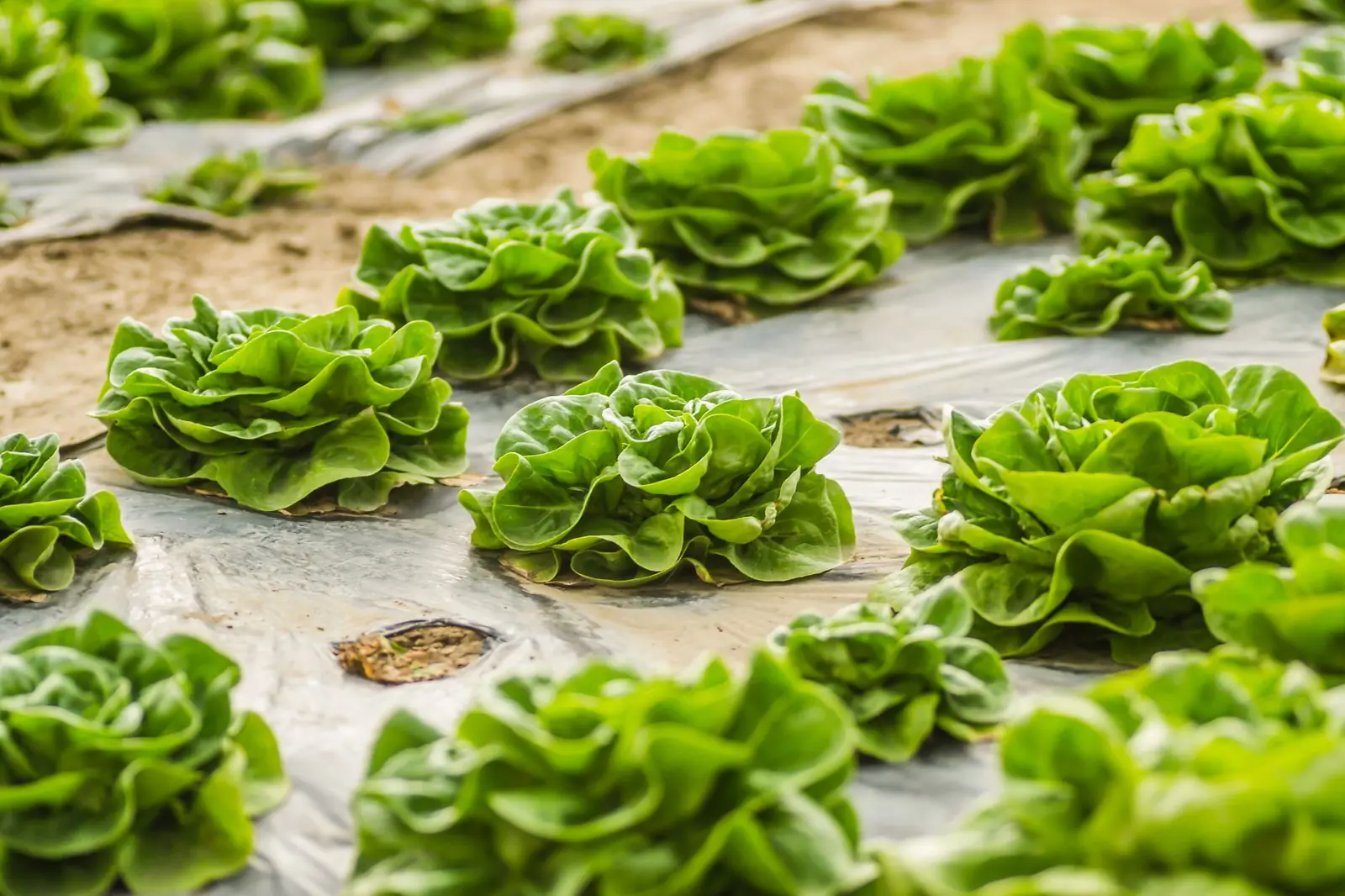 Photo: Zoran Milosavljevic / Pexels
Lettuce
When to start, transplant and harvest lettuce, as 6 university extension services put it, and what that means in each zone.
- Family
- Asteraceae5
- Type
- Leafy
- Rules
- 9
- Last reviewed
Spring timing, source by source
Every rule counts from the last spring frost, so the same rule gives different dates in different gardens. Here are the rules themselves before any dates are worked out.
5 spring rules for lettuce from 4 sources, in weeks relative to the last frost.
- Colorado State
- Utah State
- Oregon State, central OR
- Oregon State, central OR
- Texas A&M (E-502)
- Plant outdoors
- Start indoors
Fall timing, source by source
Fall rules count from the first fall frost.
1 fall rules for lettuce, in weeks relative to the first frost.
- Texas A&M (E-502)
- Plant outdoors
| Source | Written for | What | When |
|---|---|---|---|
| Colorado State1 | CO | Sow outdoors | 2-4 weeks before last frost |
| Utah State2 | UT | Sow outdoors | 2 weeks before last frost |
| Oregon State, central OR7 | central Oregon | Transplant outdoors | 2 weeks before last frost |
| Oregon State, central OR7 | central Oregon | Start indoors | 7 weeks before last frost |
| Texas A&M (E-502)6 | TX | Sow outdoors | From 6 wk before to 2 wk after last frost |
| Texas A&M (E-502)6 | TX | Plant for fall | 10-14 weeks before first frost |
| Purdue (HO-66)3 | IN | Plant for fall | Count back days to maturity from the first frost |
| Nebraska (G1343)4 | NE | Plant for fall | Count back days to maturity + 14-day fall factor (+14 for tender crops) from the first frost |
Lettuce by hardiness zone
Applied to the frost records of every ZIP in each zone. The zone median is a starting point; your own station can be weeks earlier or later.
| Zone | What | Zone median | Across most of the zone |
|---|---|---|---|
| 4a | Transplant outdoors | Apr 28 | Apr 21 – May 10 |
| 4b | Transplant outdoors | Apr 24 | Apr 17 – May 11 |
| 5a | Transplant outdoors | Apr 19 | Apr 12 – May 6 |
| 5b | Transplant outdoors | Apr 17 | Apr 7 – May 3 |
| 6a | Transplant outdoors | Apr 14 | Apr 2 – Apr 26 |
| 6b | Transplant outdoors | Apr 8 | Mar 27 – Apr 19 |
| 7a | Transplant outdoors | Apr 2 | Mar 21 – Apr 14 |
| 7b | Transplant outdoors | Mar 22 | Mar 16 – Apr 3 |
| 8a | Transplant outdoors | Mar 15 | Mar 6 – Mar 24 |
| 8b | Transplant outdoors | Mar 3 | Feb 21 – Mar 18 |
| 9a | Transplant outdoors | Feb 17 | Feb 2 – Mar 4 |
Growing facts
| Fact | Value | Source |
|---|---|---|
| Frost tolerance | hardy | Colorado State1 |
| Frost tolerance | semi hardy | Utah State2 |
| Frost tolerance | semi hardy | Purdue (HO-66)3 |
| Frost tolerance | semi hardy | Nebraska (G1343)4 |
| Minimum soil temperature | 35°F | Colorado State1 |
| Best soil temperature | 70°F | Colorado State1 |
| Days to germinate | 4-10 days | Colorado State1 |
| Days to maturity | 60 days from seed | Colorado State1 |
| Days to maturity | 60-80 days from seed | UF/IFAS Florida5 |
| Days to maturity | 40 days from seed | Purdue (HO-66)3 |
| Days to maturity | 40-80 days from seed | Texas A&M (E-502)6 |
| Spacing | 7-9 in apart each way | Colorado State1 |
| Spacing | 8-12 in in the row, rows 18 in apart | UF/IFAS Florida5 |
| Spacing | 2-3 in in the row, rows 18-24 in apart | Texas A&M (E-502)6 |
| Spacing | 4 in in the row | Purdue (HO-66)3 |
| Heat limit | 70°F | Colorado State1 |
| Heat limit | 85°F | Purdue (HO-66)3 |
| Heat limit | 85°F | Nebraska (G1343)4 |
Companions, and how sure anyone is
Cilantro · Helps Extension guidance
Cilantro flowers attract aphid-eating beneficial insects (lacewings, lady beetles, parasitic wasps, spiders, syrphid flies) that reduce aphids on lettuce.8
Penn State Master Gardener article. It calls its pairings research-based but cites a book (Walliser 2020) rather than a study.
Dill · Helps Extension guidance
Dill flowers attract aphid-eating beneficial insects (lacewings, lady beetles, parasitic wasps, spiders, syrphid flies) that reduce aphids on lettuce.8
Penn State Master Gardener article. It calls its pairings research-based but cites a book (Walliser 2020) rather than a study.
Fennel · Helps Extension guidance
Fennel flowers attract aphid-eating beneficial insects (lacewings, lady beetles, parasitic wasps, spiders, syrphid flies) that reduce aphids on lettuce.8
Penn State Master Gardener article. It calls its pairings research-based but cites a book (Walliser 2020) rather than a study.
Carrots · Helps Extension guidance
Deep-taprooted carrots paired with shallow, wide-rooted lettuce use different soil layers, so their roots compete less.91010
WSU EM128E recommends this root-depth pairing as practical guidance; no study of this pair is cited. The UC tradition chart lists each as the other's companion.
Cucumbers · Helps Traditional pairing10
Onions · Helps Traditional pairing10
Garlic · Helps Traditional pairing10
The chart says "onion family"; garlic is an onion-family (Allium) crop.
Traditional pairings come from a UC Master Gardener chart that traces to the UC Davis Edible Landscaping Handbook and ATTRA. The chart gives no reasons, and we found no trial of these pairs; treat them as garden lore.
All lettuce companions, with sources · The full companion chart
Sources
- Colorado State University Extension, Vegetable Planting Guide (CMG GardenNotes #720), reviewed September 2024. Retrieved 2026-11-02.
- Utah State University Extension, Suggested Vegetable Planting Dates for Utah, January 2018; revised May 2025. Retrieved 2026-11-02.
- Purdue Extension, The Fall Vegetable Garden (HO-66-W), reviewed September 2019. Retrieved 2026-11-02.
- University of Nebraska–Lincoln Extension, Fall Vegetable Gardening (NebGuide G1343), Revised March 2012. Retrieved 2026-11-02.
- University of Florida, IFAS Extension (Department of Horticultural Sciences), Florida Vegetable Gardening Guide (SP 103 / VH021), Original December 1999; revised October 2015, January 2016, May 2018, September 2020, September 2021, and June 2025. Retrieved 2026-11-02.
- Texas AgriLife Extension Service, The Texas A&M System, Texas Home Vegetable Gardening Guide (E-502), 2/09. Retrieved 2026-11-02.
- Oregon State University Extension Service, When to start seeds indoors in central Oregon, reviewed 2024. Retrieved 2026-11-02.
- Penn State Extension, Herbs Make Good Plant Partners and Companions, Updated April 22, 2026. Retrieved 2026-11-02.
- Washington State University Extension, Gardening with Companion Plants (Home Garden Series), EM128E, December 2023. Retrieved 2026-11-02.
- University of California Agriculture and Natural Resources (UCCE Master Gardener Program), Companion Planting Chart: Companion planting in the vegetable garden, File dated 2023-09 in URL path; no date printed. Retrieved 2026-11-02.