 PlantAlong
In short
- Extension educators in Connecticut, Colorado and western North Carolina say fall garlic shoots are nothing to be alarmed about.
- Iowa State says garlic foliage tolerates cold down into the 20s °F and will likely see some damage below 20°F.
- Even if leaves are killed to the ground, Iowa State says garlic usually regrows, though bulbs may be smaller.
- University of Minnesota Extension says a thick straw mulch is particularly important if shoots poke through before a hard frost.
- Wisconsin and Minnesota time planting 1 to 2 weeks after the first killing frost so shoots stay below the soil until winter.
On this page
- Is garlic sprouting in fall normal?
- Why garlic sprouting in fall happens: warmth and early planting
- Will winter kill the leaves, the clove or the roots?
- What to do now if your garlic is up
- When to worry about garlic sprouting in fall
- Plant later next year: timing and depth from extension sources
- FAQ
- Will frost kill garlic plants?
- Should garlic sprout before winter?
- Can I plant sprouted garlic from the grocery store?
- I planted garlic in October. When will it be ready?
- Sources
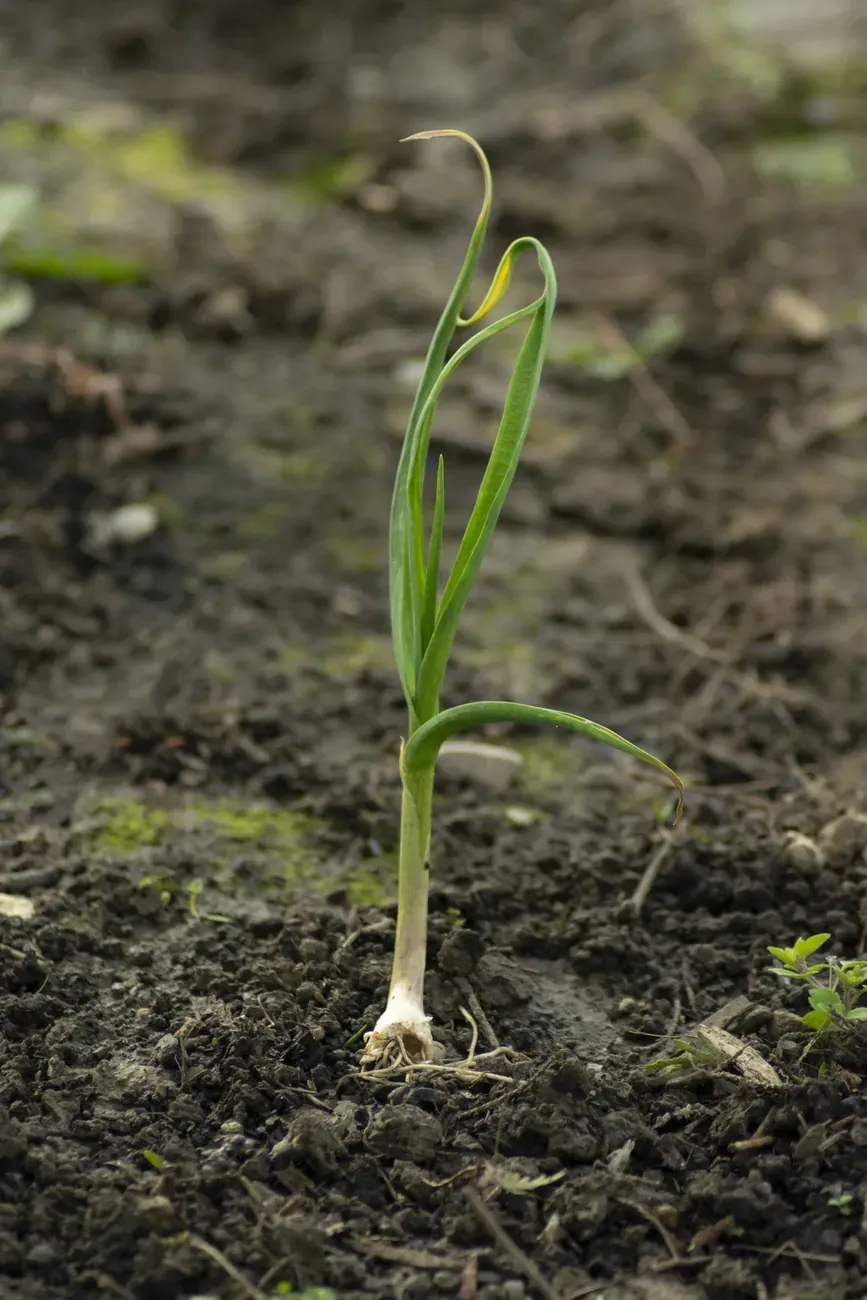
Garlic sprouting in fall is common, and in most gardens it is not a disaster. Extension educators in Connecticut, Colorado and North Carolina tell gardeners not to be alarmed by green shoots before winter, and Iowa State says garlic leaves tolerate cold down into the 20s °F. Even when winter burns the leaves back, the plant usually regrows, so your main job now is a good layer of mulch.
Is garlic sprouting in fall normal?#
It depends on where you garden. Extension sources give two different answers, and both are worth knowing.
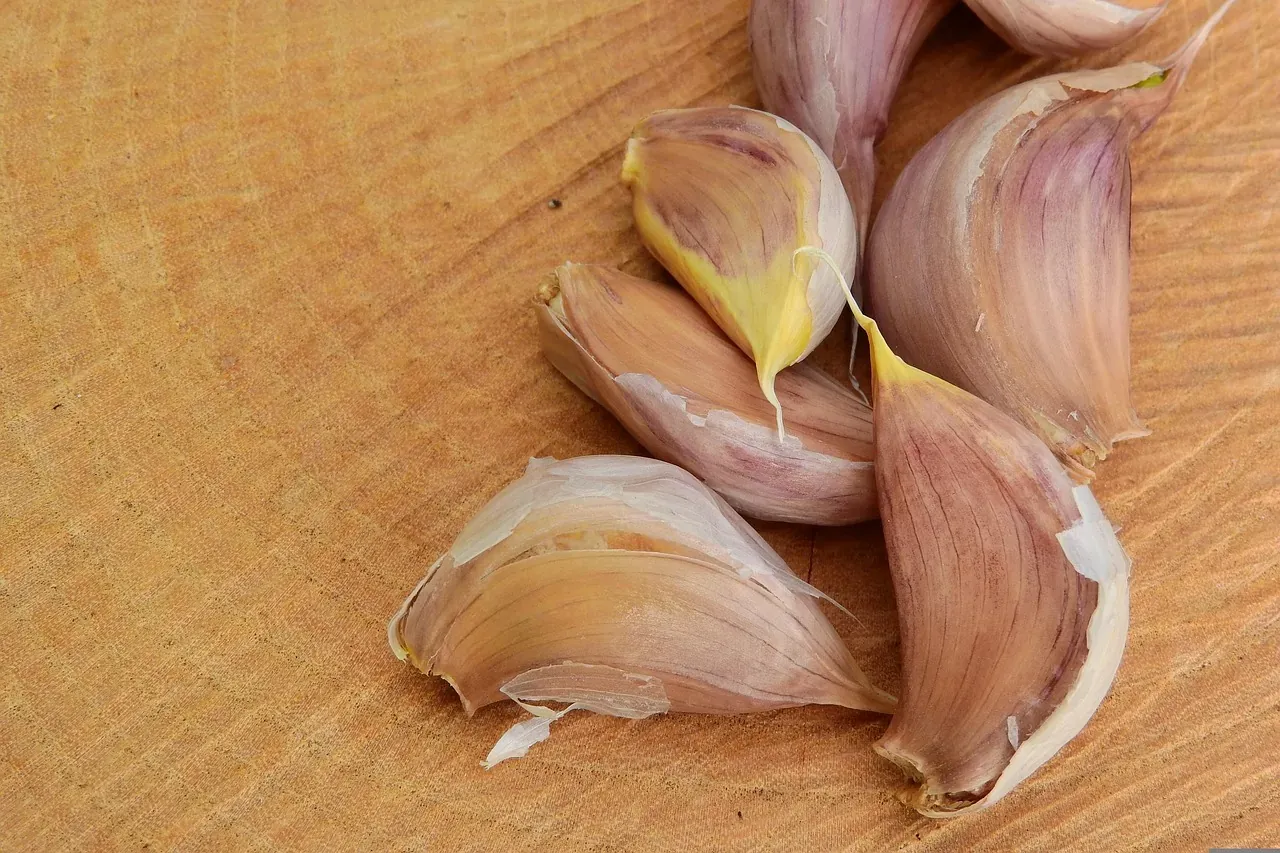 Loose purple-tinged garlic cloves on a wooden board, one with a pale green sprout tip
Photo: MAKY_OREL / Pixabay
In milder areas, fall shoots are expected. A horticulture agent with N.C. Cooperative Extension in Burke County (western North Carolina) tells gardeners who plant in September or October that green sprouts show up in about 4 to 6 weeks, and that once frost hits, those shoots go dormant. UConn's Home & Garden Education Center says not to be "too shocked" if garlic emerges "before the snow." A Colorado Master Gardener column published by CSU Extension says not to be alarmed if cloves sprout during warm fall days, because the shoots can tolerate cold winter temperatures.
In cold climates, the goal is no top growth before winter. Wisconsin Extension times planting so roots develop and shoots emerge from the clove "but not grow above the soil by the first hard freeze." UMaine Extension says not to plant so early that the top emerges above the soil line, where it is prone to winter injury. Utah State notes that the root system develops through fall and winter "even though little top growth occurs."
So garlic sprouting in fall, with green leaves showing in November, is not unusual. In zones with long, hard winters it simply means the cloves got more warm weather than planned.
Why garlic sprouting in fall happens: warmth and early planting#
Two things push garlic up early: planting well ahead of the local recommendation, and a fall that stays warm. In its 2026 garlic note, University of Minnesota Extension described "mild fall conditions across the state" with the first frost "significantly delayed." It warned that planting too early can lead to frost damage if the shoot emerges above the soil before winter. UConn Extension makes the same point: planting too early may produce shoots before winter and expose the plant to cold damage.
Your hardiness zone does not tell you when fall frost arrives. In a PlantAlong analysis of NOAA 1991-2020 climate normals (methodology), the median first fall frost (32°F) across ZIPs in zone 6a runs from Oct 5 to Oct 24 (10th to 90th percentile). In zone 7b it runs from Oct 24 to Nov 14. Two gardens in the same zone can see first frost weeks apart, so look up your own dates in the planting calendar.
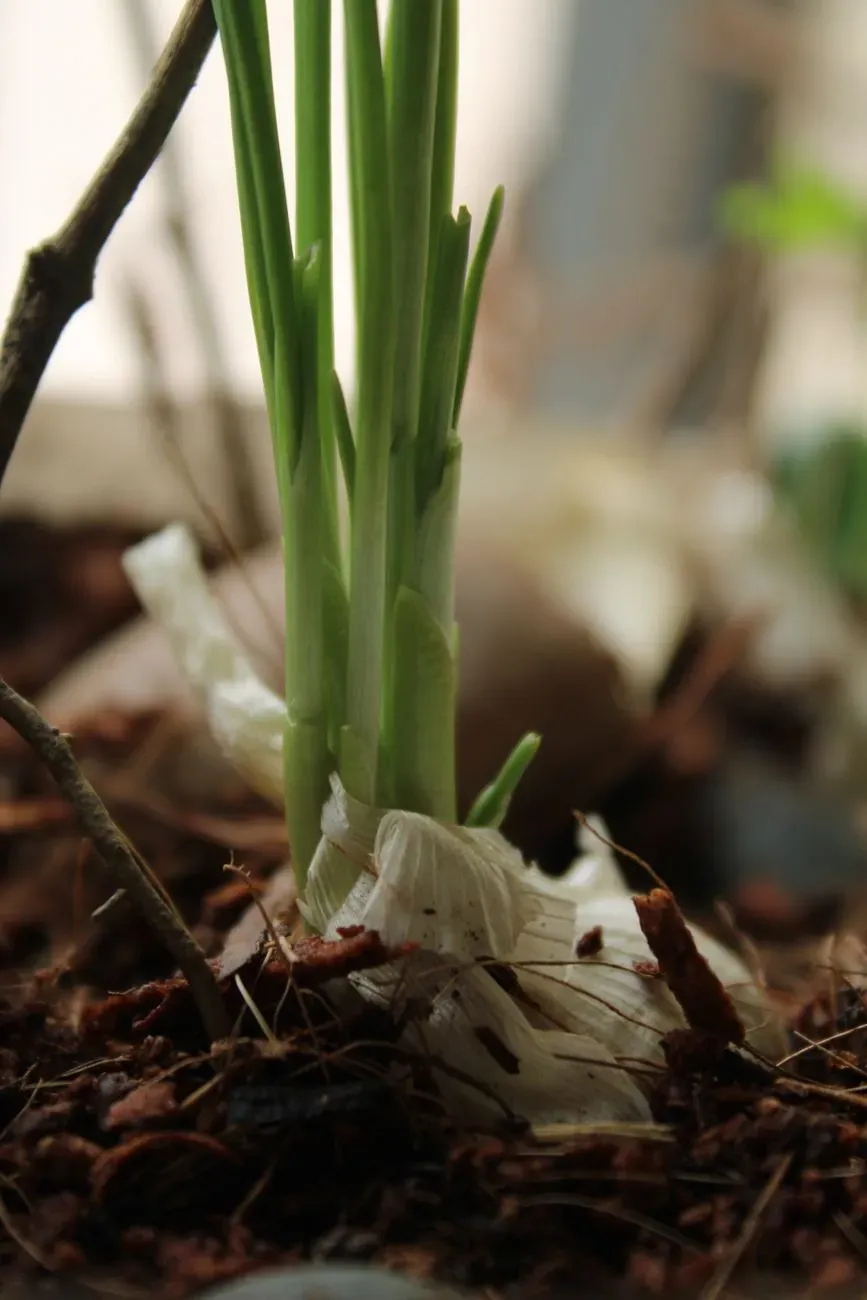 Green garlic shoots rising from a planted clove, with the papery clove skin at the soil surface
Photo: Jahra Tasfia Reza / Pexels
Will winter kill the leaves, the clove or the roots?#
With garlic sprouting in fall, the risk is different for each part of the plant.
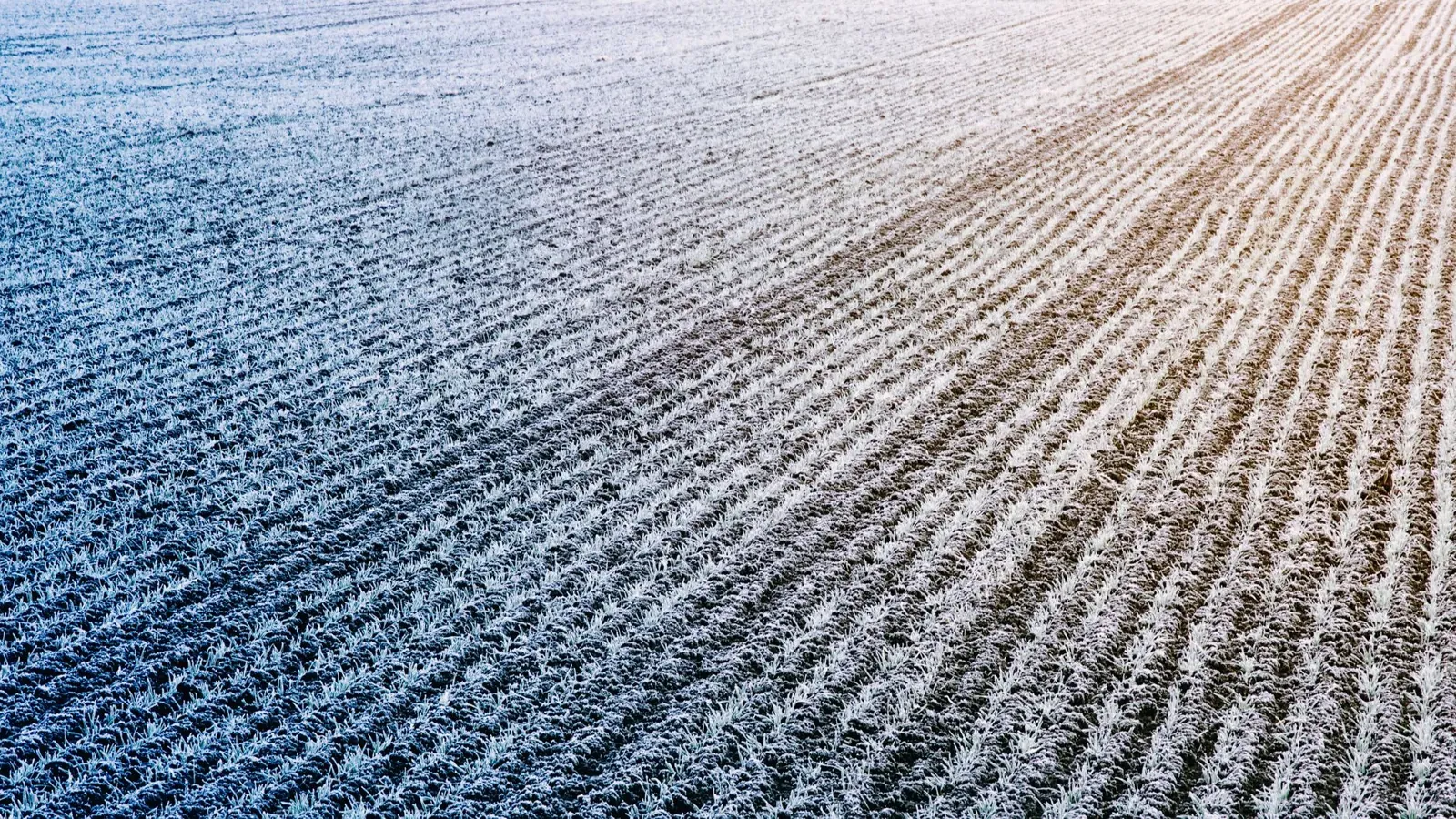 Aerial view of long crop rows in a field covered with white frost
Photo: Johannes Plenio / Pexels
Leaves. Iowa State says garlic foliage can tolerate cold "down into the 20s °F." Below 20°F the foliage will likely see some damage. A blanket of snow helps, because it discourages more growth and protects the leaves from extreme cold.
The whole plant. Even if the foliage is damaged or killed to the ground, Iowa State says garlic usually regrows. The bulb will likely be smaller, because the plant spent energy on leaves it then lost. Iowa State wrote this about garlic that comes up during a midwinter warm-up, but it describes the same situation: green leaves above ground in freezing weather.
Clove and roots. Below ground, the bigger risk is temperature swings. Wisconsin Extension says cloves planted too shallow are prone to injury during winter and early spring, and that mulch helps limit the soil temperature swings that damage developing roots and shoots. UMaine adds that mulch moderates freeze and thaw cycles and the heaving of cloves out of the soil. Illinois Extension recommends straw mulch to prevent frost heaving.
What to do now if your garlic is up#
The sources above that address garlic sprouting in fall point to the same main fix: mulch.
- Mulch it. UMN says a thick layer of straw keeps garlic insulated through winter, and that this is "particularly important" if shoots poke through before a hard frost. Extension depths include 3 to 4 inches of clean straw (Wisconsin), about 4 inches of straw or shredded leaves (Penn State) and 4 to 6 inches of weed-seed-free straw (Iowa State).
- Add more when real cold arrives. Iowa State advises an extra layer of mulch once normal winter temperatures return, especially with poor snow cover, in case temperatures drop into the teens or lower.
- Water during dry spells in dry-winter areas. The Colorado CSU Extension column says garlic needs consistent moisture through winter and suggests 1 inch of water per week during dry periods through mid-June.
- Leave the mulch until spring. Wisconsin Extension says to remove it after the threat of hard freezes has passed.
When to worry about garlic sprouting in fall#
Per Iowa State, the usual cost of garlic sprouting in fall is damaged leaves and smaller bulbs, not a lost crop. These situations deserve more attention:
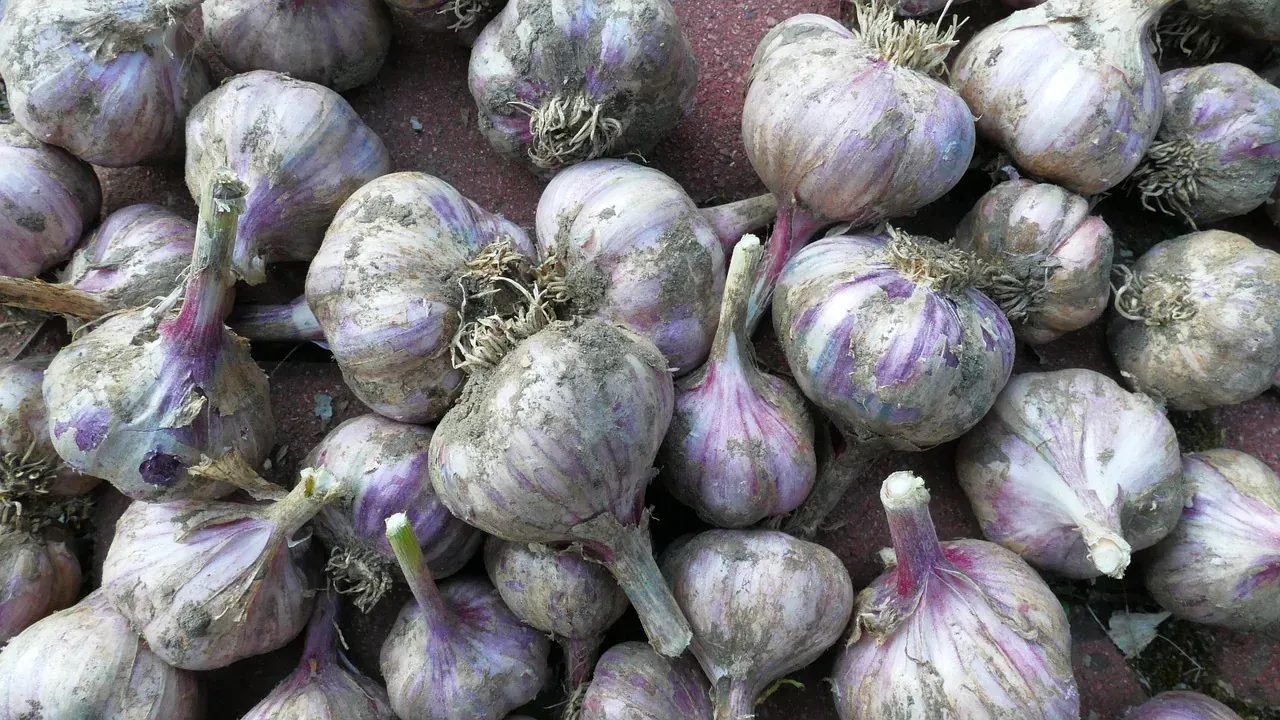 Freshly dug purple-striped garlic bulbs with soil still clinging to their roots
Photo: Jarosik99 / Pixabay
- Leaves brown or flatten after a hard freeze. Expected below 20°F, per Iowa State. Regrowth is likely, but bulbs may be smaller.
- Shallow cloves. Wisconsin links shallow planting to winter injury. Thicker mulch is the tool sources offer for this.
- Softneck garlic in a cold zone. Illinois Extension says softneck garlic is less cold hardy, so hardneck is preferred there. Wisconsin says hardneck types do best where winters are long, and softneck types suit long seasons and mild winters.
- Wet ground. Clemson notes garlic is prone to bulb rot in poorly drained soils.
Plant later next year: timing and depth from extension sources#
If garlic sprouting in fall happens every year in your garden, the fix most sources point to is timing. Here is what extension sources say, roughly north to south. Note the different anchors: some count from first frost, others from when the ground freezes.
| Source (state) | When to plant | Clove depth |
|---|---|---|
| UMN (Minnesota) | 1 to 2 weeks after the first killing frost | not given in that note |
| Wisconsin | 1 to 2 weeks after the first killing frost | 2 to 3 in |
| UMaine (Maine) | mid-September to end of October, north to south | clove tip 2 to 4 in below the surface |
| UVM (Vermont) | late October, about a month before the ground freezes | about 4 in |
| Cornell CCE Monroe (New York) | 3 to 4 weeks before the ground freezes | about 3 in |
| Penn State (Pennsylvania) | a good three weeks before the ground freezes | at least 2 in |
| Illinois | 4 to 6 weeks before the ground freezes | 1 to 2 in |
| Iowa State | October to early November | 1 to 1.5 in |
| Utah State | late September to November | 2 to 3 in |
| Oregon State | September through November | 2 in |
| Texas A&M | 4 to 6 weeks before the first freeze | ½ in |
| Clemson (South Carolina) | in fall, early enough for full development | about 1 in |
The northern sources generally call for deeper planting than the Texas and South Carolina ones. To turn a frost-based rule into a date, start with your ZIP in the planting calendar, then see the garlic guide or a zone page such as garlic in zone 5b or garlic in zone 7a.
FAQ#
Will frost kill garlic plants?#
Usually not. Iowa State says garlic leaves tolerate cold down into the 20s °F and will likely see some damage below 20°F. Even leaves killed to the ground usually regrow, though the bulbs may be smaller.
Should garlic sprout before winter?#
Cold-climate guides from Wisconsin, Minnesota and Maine aim for roots but no top growth before winter. Agents in milder areas, such as western North Carolina, expect shoots a few weeks after planting. Either way, garlic sprouting in fall is a timing signal, not a failure.
Can I plant sprouted garlic from the grocery store?#
Extension sources advise against store garlic for planting. Penn State says grocery cloves may be varieties unsuited to your area, and most are treated to last longer on the shelf. Iowa State says treated store garlic often emerges poorly and may rot before it sprouts.
I planted garlic in October. When will it be ready?#
Next summer. Illinois Extension says harvest usually falls in June to July depending on zone, Iowa State says July or August in Iowa, and UNH says usually mid-July in New Hampshire.
Sources#
- Garlic, Allium sativum (University of Wisconsin-Madison Division of Extension)
- Tips for garlic planting season (University of Minnesota Extension)
- Growing Garlic in the Home Garden (Iowa State University Extension and Outreach)
- It's only February, but my garlic is coming up. What should I do? (Iowa State University Extension and Outreach)
- Growing Garlic (N.C. Cooperative Extension, Burke County Center)
- Got Garlic? (UConn Home & Garden Education Center)
- Garlic Cultivation in Connecticut (UConn Extension)
- It's Time to Plant Garlic (Colorado State University Extension, Colorado Master Gardener column)
- Bulletin #2063, Growing Garlic in Maine (University of Maine Cooperative Extension)
- Growing Great Garlic (University of Vermont Extension)
- Growing Garlic (Cornell Cooperative Extension Monroe County)
- Growing Garlic: Fall Planting (Penn State Extension)
- Planting and Growing Garlic (University of Illinois Extension)
- How to Grow Garlic in Your Garden (Utah State University Extension)
- Fall is the best time to plant garlic in Oregon (Oregon State University Extension Service)
- Texas Home Vegetable Gardening Guide (E-502) (Texas A&M AgriLife Extension)
- Onion, Leek, Shallot & Garlic (HGIC 1314) (Clemson Cooperative Extension)
- Garlic (Info Line Question of the Week) (UNH Cooperative Extension)
Featured photo: Blue 🦋 / Pexels.


No comments yet. Tried this in your garden, or found a date that worked better? Start the thread.
Leave a comment