 PlantAlong

In short
- Cover plants before sunset to hold heat stored in the soil, and remove the covers in the morning (University of Georgia Extension).
- A cover must reach the ground and be weighed down, because daytime soil heat is what protects plants at night (Colorado State, NC State).
- Floating row cover gives 2 to 4°F of protection according to Colorado State, or 2 to 8°F depending on weight according to UW-Madison.
- Plastic must be held off the leaves: plants freeze where plastic touches them, and it can overheat in the sun (Colorado State, UF/IFAS).
- Cardboard boxes, blankets and newspaper can stand in for row cover, and covers should come off when temperatures moderate (WSU HortSense).
- NOAA 1991-2020 frost dates for your nearest station show the median first frost and the date with a 10% chance of frost by then.
On this page
- Quick answer: cover before sunset, uncover in the morning
- Why covers work: trapped ground heat, not insulation
- What to use to cover plants
- Frost cloth (floating row cover)
- Old sheets, blankets and comforters
- Buckets, baskets and cloches
- Cardboard boxes
- Plastic: never touching the leaves
- How to cover plants from frost, step by step
- When to cover: forecast lows, wind and clear skies
- When to uncover
- Which crops need covering
- Your first and last frost dates by ZIP code
- FAQ
- Is frost cloth or plastic better for plants?
- Should I cover my plants at 35 degrees?
- Does watering plants prevent frost damage?
- Will cardboard boxes protect plants from frost?
- Sources
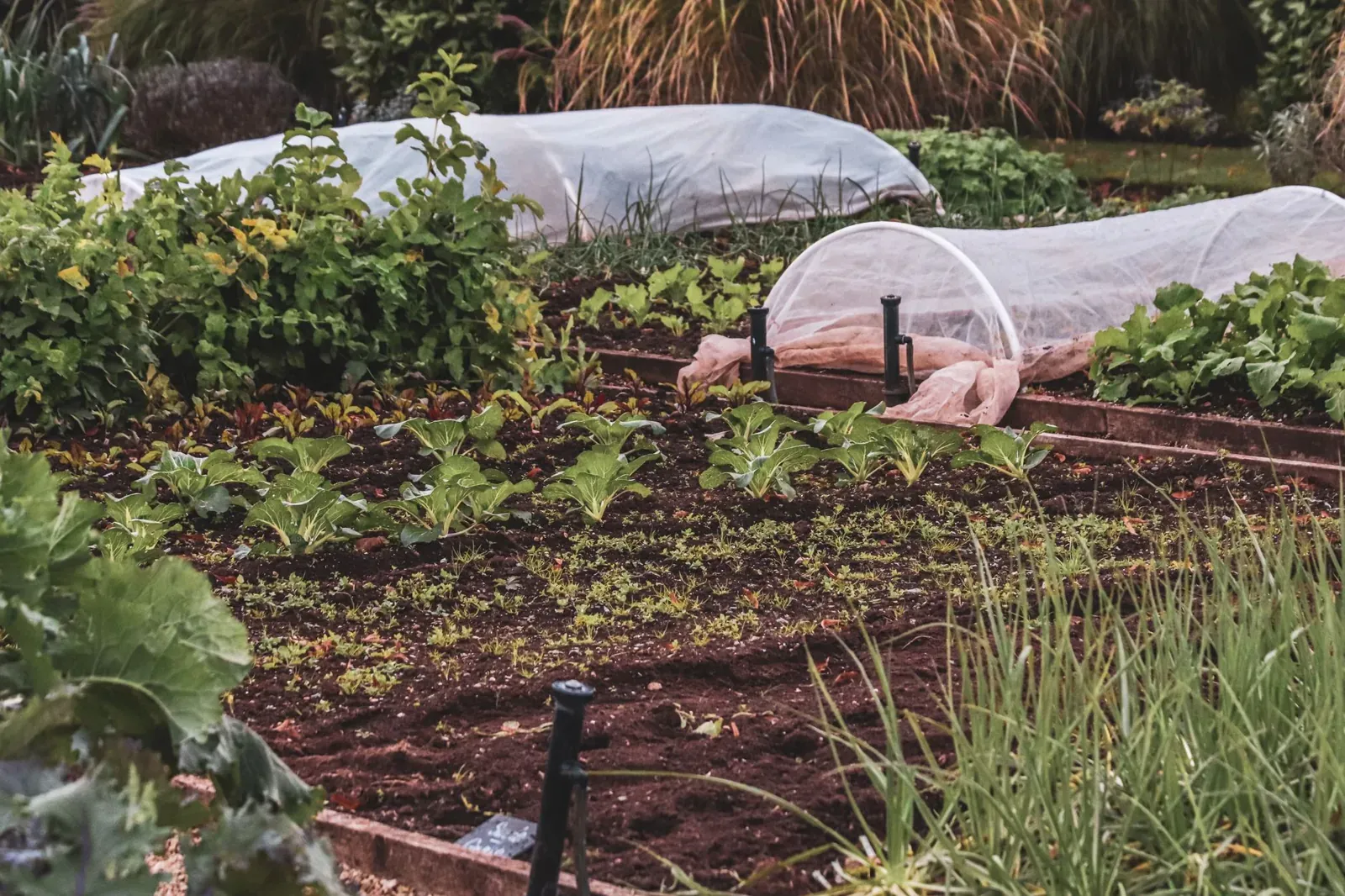
Here is how to cover plants from frost: drape frost cloth, an old sheet or a blanket over the plants before sunset, let it reach the ground on every side, weigh the edges down, and take it off the next morning. The cover works by holding in the heat the soil soaked up during the day, so it has to touch the ground, not just the leaves.
Below: what to use, a step-by-step routine, how cold is cold enough, and when frost usually arrives at your ZIP code.
Quick answer: cover before sunset, uncover in the morning#
The short version of how to cover plants from frost comes from University of Georgia Extension: cover plants before sunset to keep some of the heat trapped in the soil, and remove the coverings in the morning so the plants do not suffocate.
The rest of the routine comes from other extension services:
- Use fabric, not plastic. NC State Extension says to drape a frost cloth or sheet, "NOT plastic tarp."
- Reach the ground. Covers should extend all the way down and be held with bricks or staples (NC State).
- Water first. Wet soil retains more heat than dry soil, so UGA suggests watering two days before the frost, or even the night before.
Why covers work: trapped ground heat, not insulation#
A cover does not make heat. Colorado State University Extension (CMG GardenNotes #722) explains that soil warmed by the sun during the day is the heat source for frost protection at night, and that moist, smooth soil absorbs more heat. A covering that is low to the ground and spreading traps that heat around the plants.
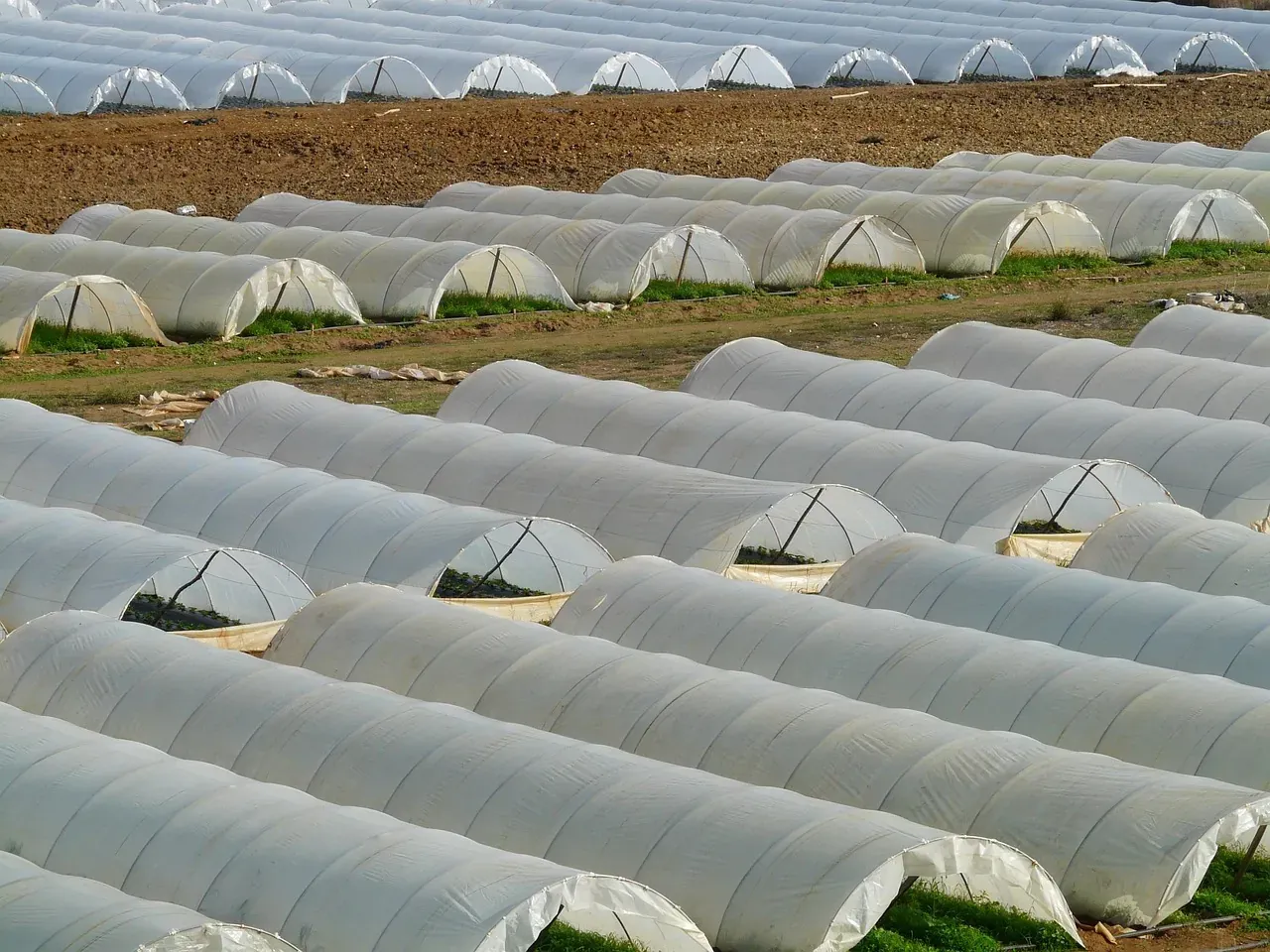 Rows of low white tunnel covers stretched over hoops above crops in a farm field
Photo: Hans / Pixabay
That is the whole idea behind how to cover plants from frost, and why a sheet tied around a plant's stem does little. UF/IFAS Extension calls this "lollipopping" and says it does not protect the plant; the cover has to touch the ground to capture the heat.
Colorado State also separates two kinds of frost:
- Radiation frosts happen on calm, clear nights with no cloud cover to hold in heat. At the start and end of the season they are usually only a few degrees below critical levels, so covering is worthwhile.
- Advective frosts arrive with a cold front, and temperatures can drop far enough below critical levels that protection becomes questionable.
What to use to cover plants#
When it comes to how to cover plants from frost, almost anything that blocks the open sky and reaches the soil helps on a radiation-frost night. These are the options extension sources name.
Frost cloth (floating row cover)#
Floating row cover is lightweight fabric that lets light, water and air through. Sources give different numbers for how much it helps: Colorado State says row covers provide 2 to 4°F of frost protection, while University of Wisconsin-Madison Extension says you gain 2 to 8 degrees depending on the weight of the fabric, with heavyweight covers giving 4 to 8°F.
Because it transmits light, row cover can stay on for longer stretches (Colorado State). For taller crops, Wisconsin suggests hoops, such as bent PVC pipe.
Old sheets, blankets and comforters#
Colorado State says blankets and sheets work well as long as the fabric stays dry; wet fabric causes evaporative cooling and colder air next to the blanket. UGA suggests keeping old comforters or heavy blankets on hand for the first frost.
Buckets, baskets and cloches#
For single plants, UGA names newspapers, baskets and straw, and Purdue Extension (HO-66) lists paper caps and milk jugs. A frost-protection presentation hosted by New Mexico State University lists buckets, cardboard boxes, water bottles and cloches as short-term covers, and warns that any covering needs venting or it can get too hot.
Cardboard boxes#
Yes, a cardboard box counts. Washington State University's HortSense frost-injury fact sheet says lightweight floating row cover is one option, but "blankets, cardboard boxes, newspaper, or other materials may also be used." Set the box over the plant so its open edge sits on the soil, and treat it like any other cover: on at dusk, off in the morning.
Plastic: never touching the leaves#
Colorado State says plastic over a bed must be held up off the plants, because "Plants will freeze where the plastic touches them." UF/IFAS and UGA both advise against plastic because it can overheat once the sun is up.
If plastic is all you have, put it over hoops so it stays clear of the foliage, and open it in the morning. Colorado State reports temperatures under a closed plastic cover can pass 130°F after just an hour of sun.
Shop the essentials
What you'll need
Supplies for the steps in this guide.
 Cold nightsFrost clothLightweight fabric to throw over plants on a cold night.: check price on Amazon (opens in a new tab)
 Cold nightsRow cover hoopsHoops that hold frost cloth above a bed like a low tunnel.: check price on Amazon (opens in a new tab)
 At transplantTomato cagesSturdy supports for tall tomato plants.: check price on Amazon (opens in a new tab)
 Watch the frostMin/max thermometerRecords the overnight low at your own plants.: check price on Amazon (opens in a new tab)
As an Amazon Associate I earn from qualifying purchases. Photos show the type of product, not a specific listing. How we choose
How to cover plants from frost, step by step#
This checklist turns the extension advice above into one evening routine for how to cover plants from frost.
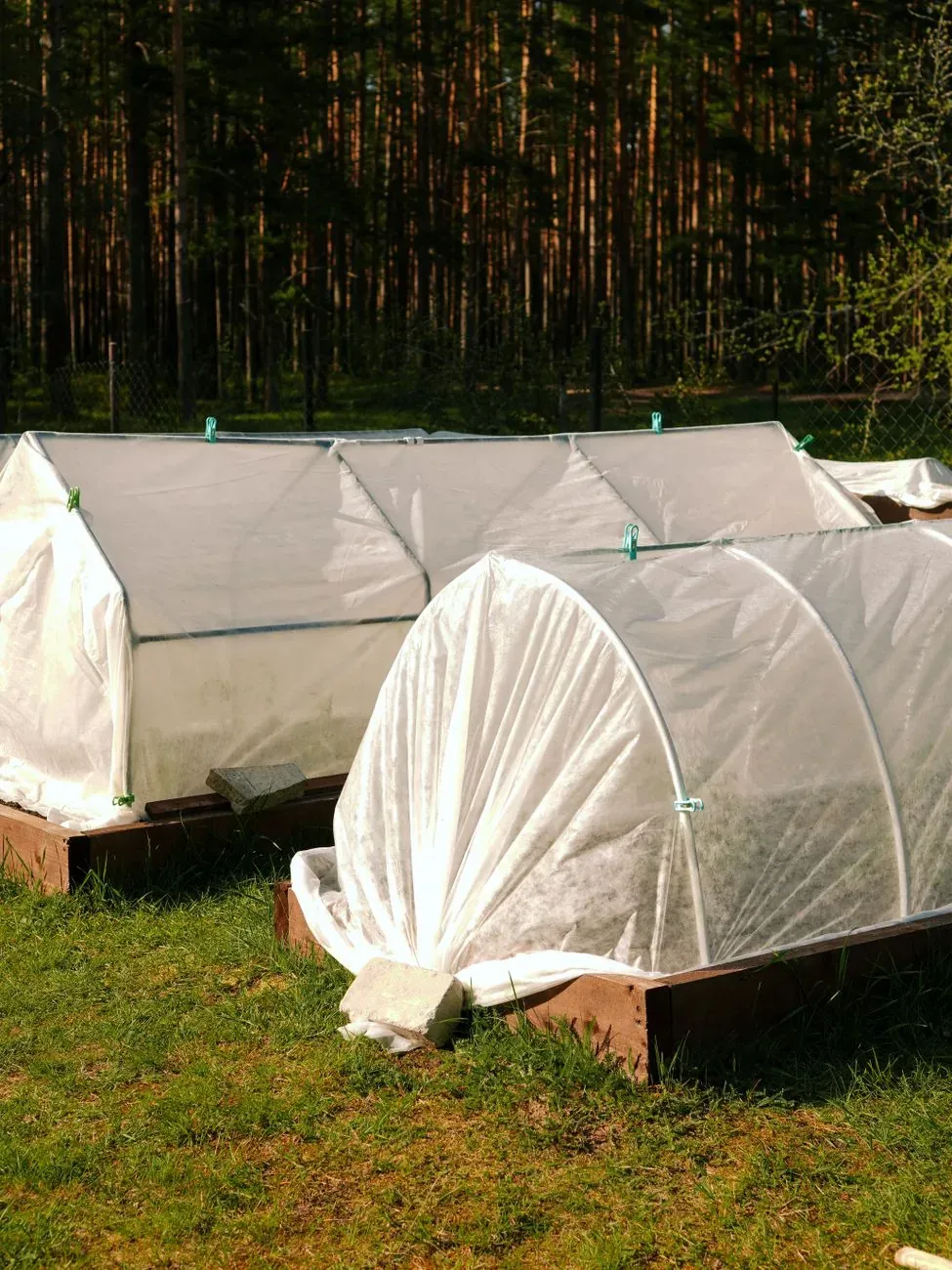 Two raised beds covered with white fabric over hoops, edges held down with stone blocks
Photo: Nadin Sh / Pexels
- Check the forecast in the afternoon. The next section covers which lows matter.
- Water the bed if the soil is dry, ideally a day or two ahead (UGA).
- Set stakes or hoops. Purdue recommends supporting blankets or throw-cloths on stakes or wire to prevent mechanical injury to the plants.
- Drape the cover before sunset, so it holds the soil's heat (UGA).
- Take it to the ground on every side. The cover should extend all the way down (NC State; UF/IFAS).
- Weigh the edges with bricks, stones or staples so wind cannot lift them (NC State).
- Move pots into a garage or shed for the night (NC State).
Done this way, that is how to cover plants from frost: a low, closed tent over warm, moist soil.
When to cover: forecast lows, wind and clear skies#
Frost can form when the forecast low is above freezing. The National Weather Service office in Tallahassee notes that air temperature is measured 2 meters (6.56 feet) up, while the air at plant level is coldest at night, so it issues frost advisories for lows of 33 to 36°F when winds are light and humidity is high.
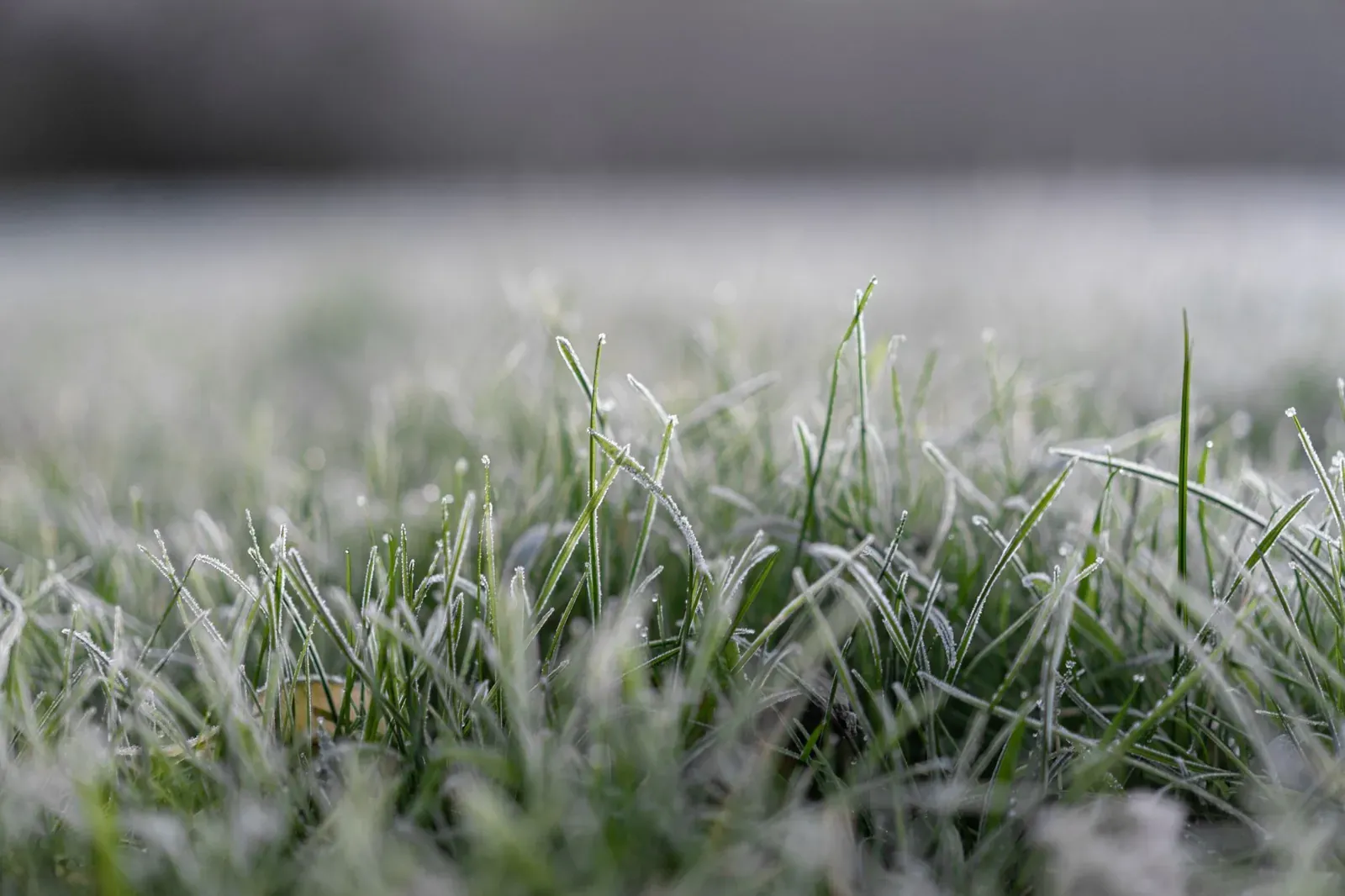 Blades of lawn grass coated in white frost crystals on a cold morning
Photo: Guillaume Meurice / Pexels
Clear, calm nights bring the radiation frosts that covers handle best. A windy night behind a cold front is the advective kind, where protection is questionable (Colorado State).
How cold is too cold depends on the crop. NC State Extension says semi-hardy plants should be covered when temperatures fall below 30°F and hardy crops when lows are predicted below 25°F. Tender crops like tomatoes and peppers are the ones to cover for any frost.
Not everyone uses a single number: a UF/IFAS agent in Leon County, Florida, said it is more about how long it stays below freezing.
When to uncover#
Uncovering is the half of how to cover plants from frost that is easy to forget. Take covers off once it warms up the next morning. UF/IFAS recommends removing cold protection once temperatures are above 32°F, because a cover left on in bright sun can get too hot inside and stress the plants. WSU adds that frost covers left on long term can create moist conditions that favor disease.
Colorado State gives a second reason: the soil has to recharge its heat for the next night, so any covering must let sunlight reach the soil or come off during the day. Row cover can stay on because it transmits light; sheets, blankets, boxes and buckets should come off.
If another cold night is forecast, put the covers back on before sunset.
Which crops need covering#
Before you decide how to cover plants from frost, check which crops need it at all. Extension services sort vegetables by how much frost they can take. Purdue's HO-66 uses three groups: tender vegetables are damaged by light frost, semi-hardy vegetables tolerate light frost, and hardy vegetables tolerate hard frost. NC State gives temperatures: semi-hardy vegetables can survive repeated light frosts in the 30 to 32°F range, and hardy vegetables tolerate temperatures down to 28°F and lower.
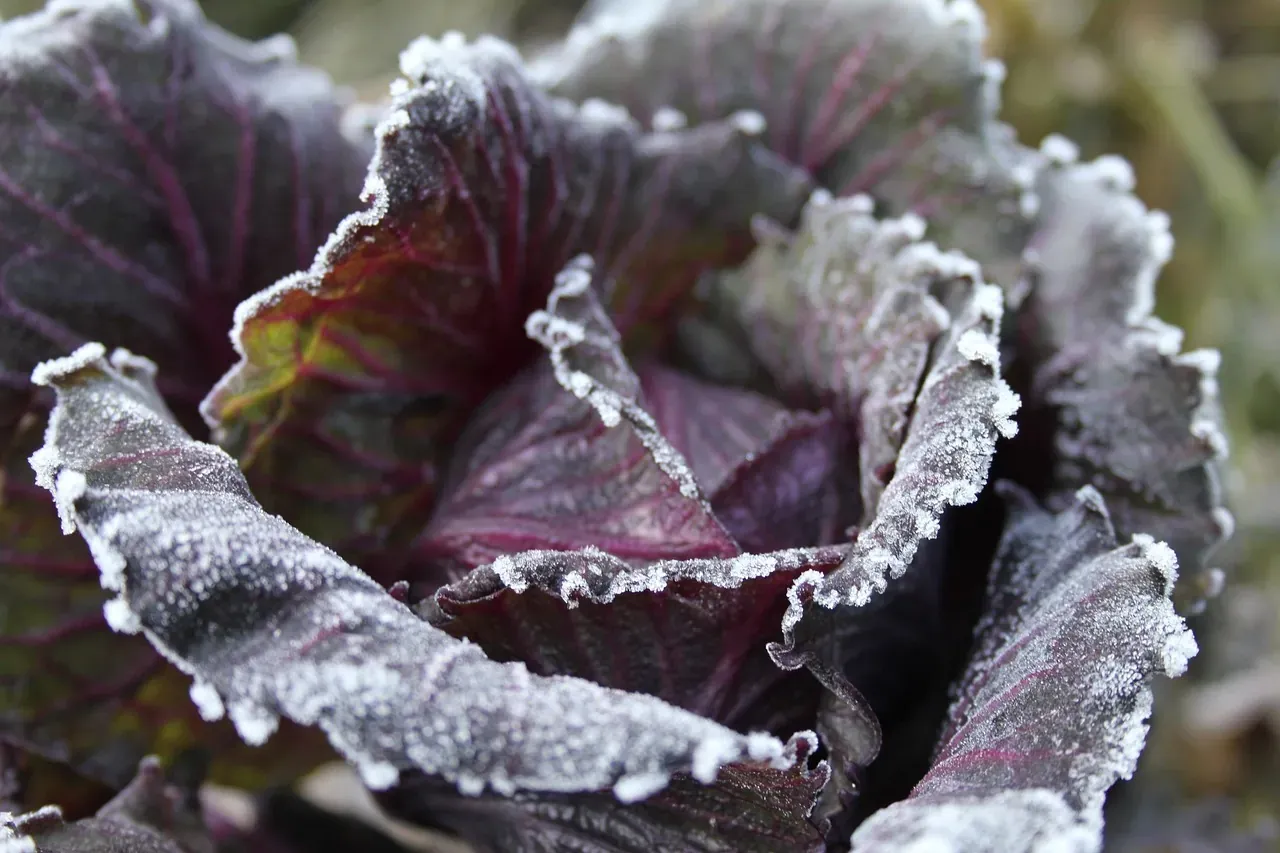 Red cabbage leaves edged with white frost crystals on a cold morning
Photo: selyutinm / Pixabay
Two extension sources mostly agree on the crops PlantAlong tracks, except lettuce:
| Crop | Colorado State (GardenNotes #720) | Purdue (HO-66) |
|---|---|---|
| Tomatoes | Very tender | Tender |
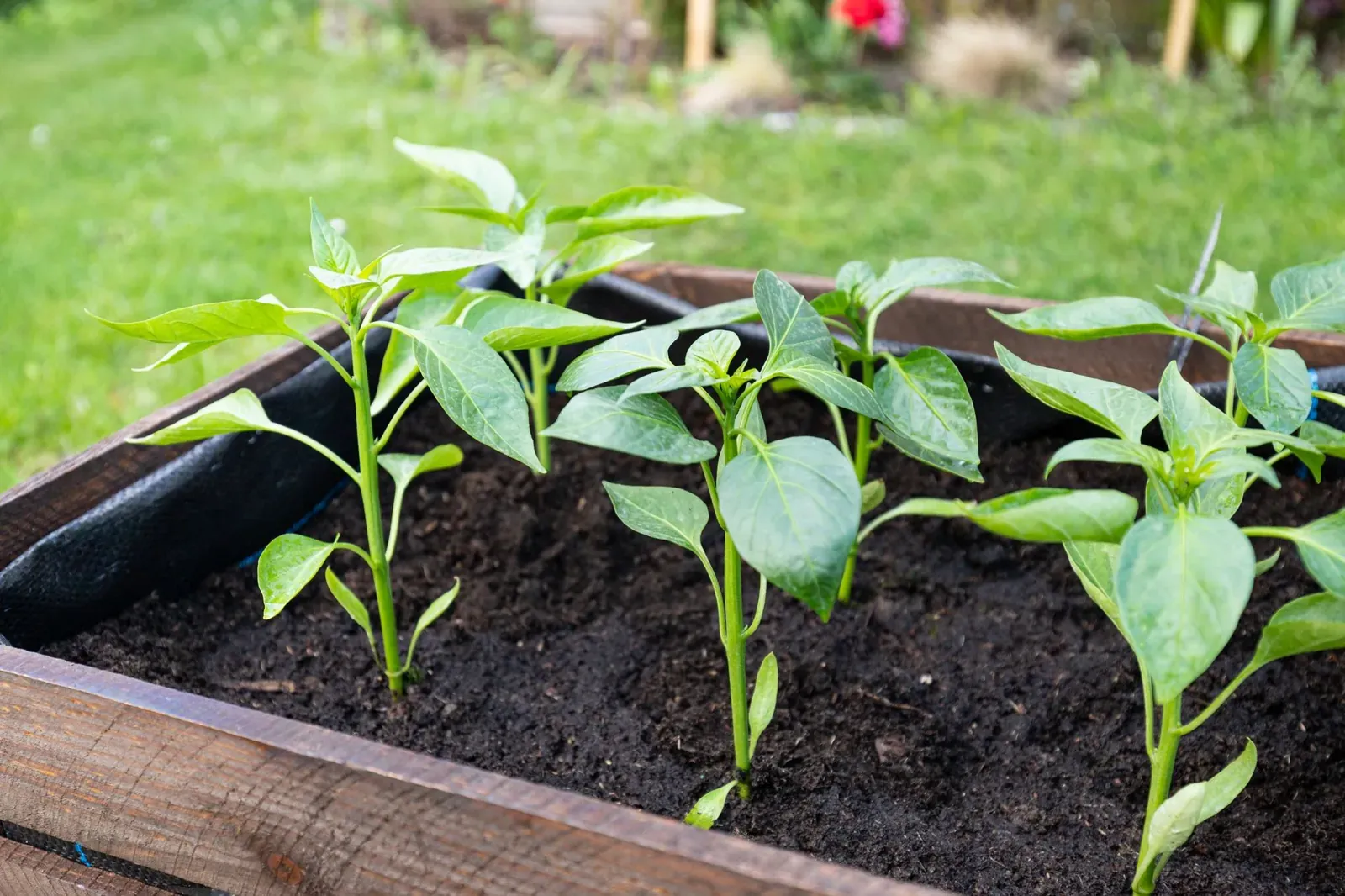
| Peppers | Very tender | Tender |
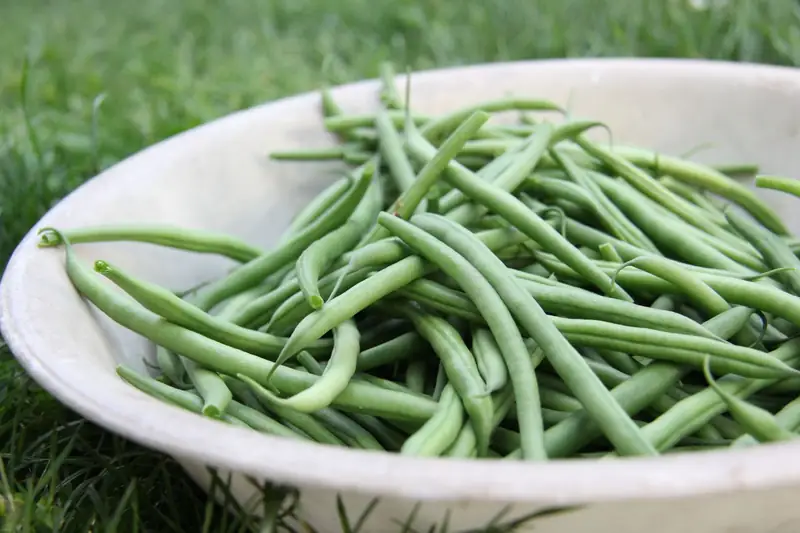
| Beans | Tender | Tender |
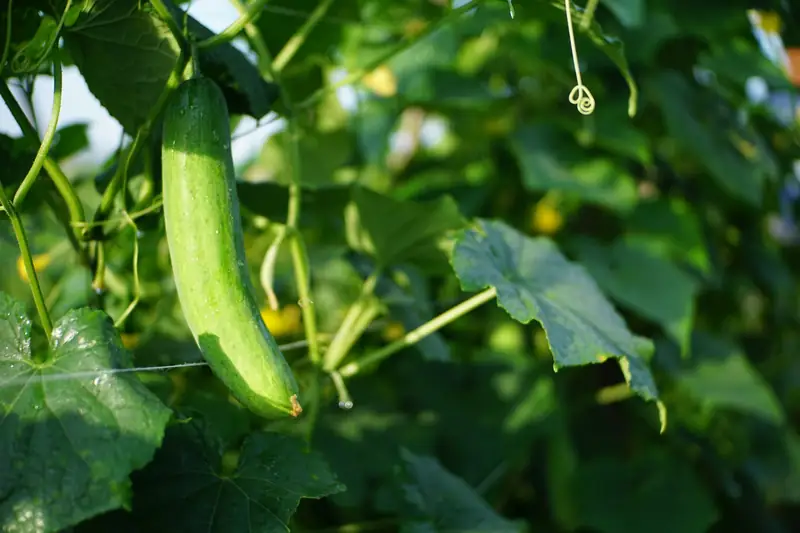
| Cucumbers | Tender | Tender |
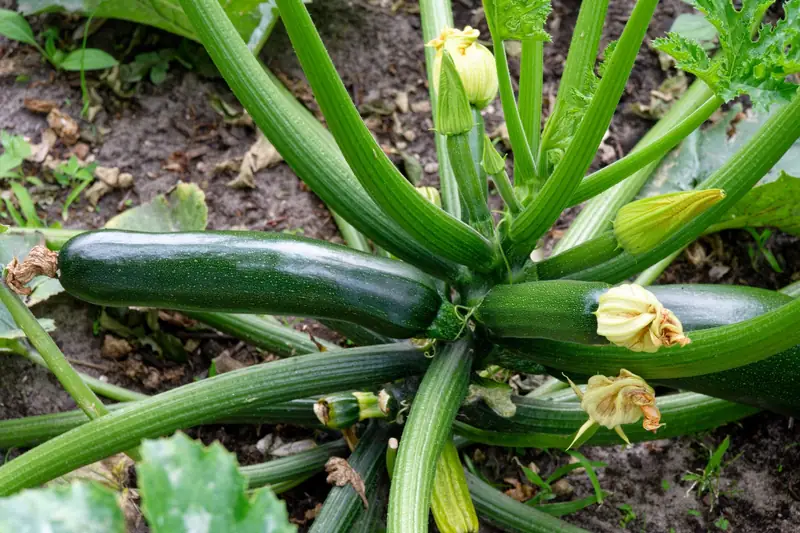
| Zucchini (summer squash) | Tender | Tender |
| Potatoes | Semi-hardy | Semi-hardy |
| Carrots | Semi-hardy | Semi-hardy |
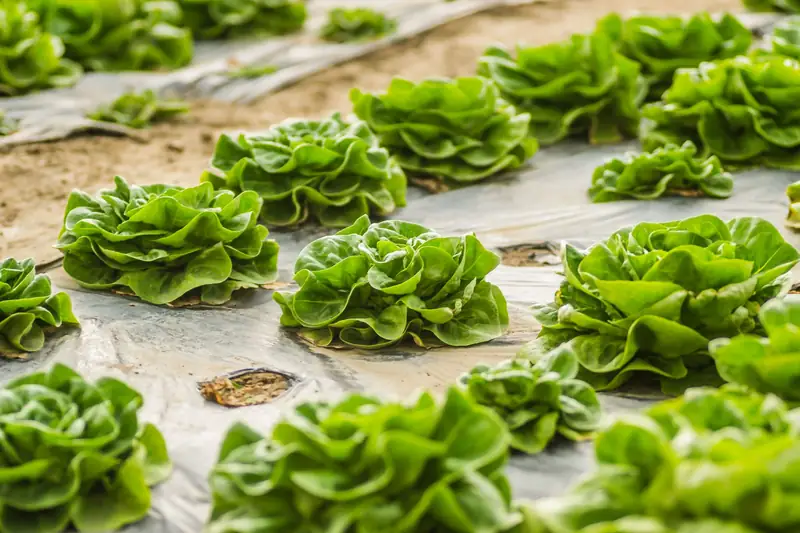
| Lettuce | Hardy | Semi-hardy |
| Onions | Hardy | Hardy |
| Peas | Hardy | Hardy |
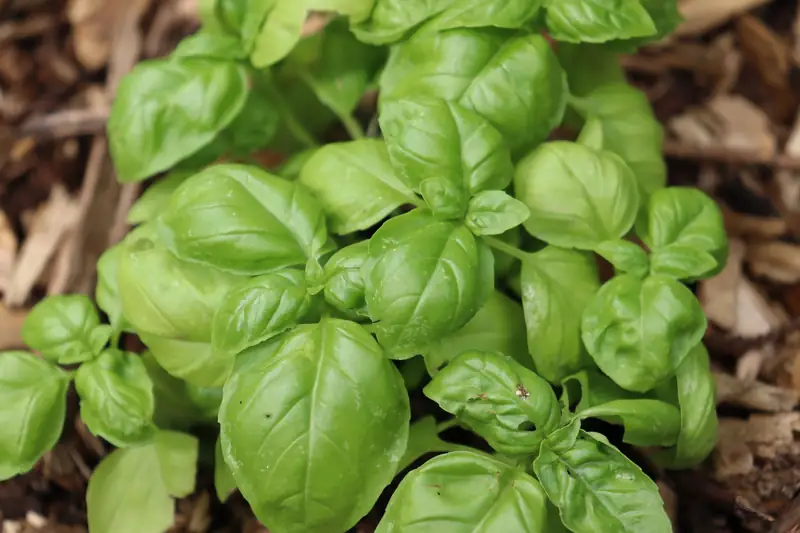
Basil is not in either list; University of Illinois Extension calls it a tender annual. Open blossoms and colored buds are more sensitive to cold than other plant parts (NC State), so flowering plants need covers sooner. Each crop guide shows its sourced frost class next to planting dates.
Your first and last frost dates by ZIP code#
Knowing how to cover plants from frost is half the job; knowing which weeks to watch is the other half. PlantAlong's planting calendar shows the frost dates for the NOAA weather station nearest your ZIP code, from NOAA's 1991-2020 U.S. Climate Normals.
Those are the dates of a 32°F temperature at 10%, 50% and 90% probability. The median (50%) is the "typical" date. In fall, the calendar also shows the date with a 10% chance of frost by then. In spring, the 10% date is the later, safer one: only one year in ten has a frost after it.
For example, ZIP 63101 in St. Louis (zone 7a) matches a station 6.8 km away. Its median first fall frost is Nov 4, with a 10% chance by Oct 24 and a 90% chance by Nov 21.
Zones are a rough guide only. In PlantAlong's analysis of NOAA 1991-2020 climate normals (methodology), the median first fall frost across ZIP codes in each zone (10th to 90th percentile) spans:
- Zone 6a: Oct 5 to Oct 24
- Zone 7a: Oct 16 to Nov 2
- Zone 7b: Oct 24 to Nov 14
- Zone 8a: Oct 31 to Nov 14
- Zone 8b: Nov 4 to Nov 23
That spread is why your ZIP matters more than your zone. For a reminder, sign up for free frost alerts by email. They use long-term averages, not forecasts, so keep checking your local forecast.
FAQ#
Is frost cloth or plastic better for plants?#
Frost cloth is the simpler answer to how to cover plants from frost. It lets light and air through and can rest on the plants. Plastic must be held off the leaves, because plants freeze where plastic touches them (Colorado State), and it can overheat in the sun (UF/IFAS, UGA). If you use plastic, support it on hoops and open it each morning.
Should I cover my plants at 35 degrees?#
For tender crops on a clear, calm night, yes. The National Weather Service issues frost advisories for lows of 33 to 36°F because frost can form at ground level while the air sensor reads above freezing.
Does watering plants prevent frost damage?#
It helps but does not prevent damage on its own. Wet soil retains more heat than dry soil (UGA), and NC State and UF/IFAS both advise watering before a freeze. Water the soil, not the cover.
Will cardboard boxes protect plants from frost?#
Yes, for small plants on a light-frost night. WSU lists cardboard boxes alongside row cover and blankets as frost covers. The box should sit on the soil so it traps ground heat, and it should come off in the morning so the soil can warm again. That is the same rule for how to cover plants from frost with any material.
Sources#
- Frost Protection and Extending the Growing Season, CMG GardenNotes #722 (Colorado State University Extension; copy hosted by UC ANR)
- Vegetable Planting Guide, CMG GardenNotes #720 (Colorado State University Extension)
- Floating Row Cover (University of Wisconsin-Madison Extension)
- Early frosts can take a bite out of late season flowers and veggies (University of Georgia CAES)
- How Do I Protect My Garden From Frost? (N.C. Cooperative Extension, Madison County Center)
- Cold weather expected: Should I cover my plants? (UF/IFAS)
- Common Cultural: Frost injury (Washington State University HortSense)
- The Fall Vegetable Garden, HO-66-W (Purdue Extension)
- Basil (University of Illinois Extension)
- Frost Protection and Season Extension (presentation hosted by New Mexico State University)
- Frost and Freeze Information for the NWS Tallahassee Area (National Weather Service)
- U.S. Climate Normals 1991-2020, annual/seasonal (NOAA National Centers for Environmental Information)
Featured photo: Boys in Bristol Photography / Pexels.



Check your inbox
We sent a confirmation link to . Click it and your planting calendar PDF is on its way. Nothing there in a few minutes? Check your spam or promotions folder.
Crops in this article



No comments yet. Tried this in your garden, or found a date that worked better? Start the thread.
Leave a comment