 PlantAlong

In short
- Wisconsin and Minnesota Extension plant garlic one to two weeks after the first killing frost; Texas A&M lists 4 to 6 weeks before the first freeze date.
- Penn State plants a good three weeks before the ground freezes, and Illinois 4 to 6 weeks before.
- Depth runs from 1/2 inch in Texas A&M's guide to a clove tip 2 to 4 inches down in UMaine's; Wisconsin warns shallow cloves are prone to winter injury.
- Hardneck garlic performs best where winters are long, and softneck garlic suits long seasons and mild winters, according to Wisconsin Extension.
- Penn State, Iowa State and UMaine advise against planting grocery-store garlic, which is often softneck from warmer regions and treated to extend shelf life.
- Penn State mulches with a good four inches of straw or shredded leaves after planting.
On this page
- When to plant garlic
- Your first frost date, by zone
- Choosing garlic to plant
- Preparing the bed
- How to plant garlic: depth and spacing
- Mulching after planting
- What happens next: fall shoots to summer harvest
- FAQ
- How do you plant garlic cloves?
- How deep do you plant garlic?
- Can you plant garlic in the spring?
- Do you soak garlic before planting?
- Sources
How to plant garlic, in short: in fall, push single cloves into the soil pointed end up, about 1 to 3 inches deep and 3 to 8 inches apart, then mulch. Extension services time it from your first fall frost or from when the ground freezes, not one fixed date, so the right week depends on where you live.
This guide covers how to plant garlic from timing to mulch, with every number traced to a US extension source, and shows where sources disagree.
When to plant garlic#
Garlic goes in the ground in fall because it needs cold. Illinois Extension says garlic "needs a cold period to produce bulbs." The aim is roots before winter but no leaves above the soil yet: Wisconsin Extension times planting so shoots do "not grow above the soil by the first hard freeze."
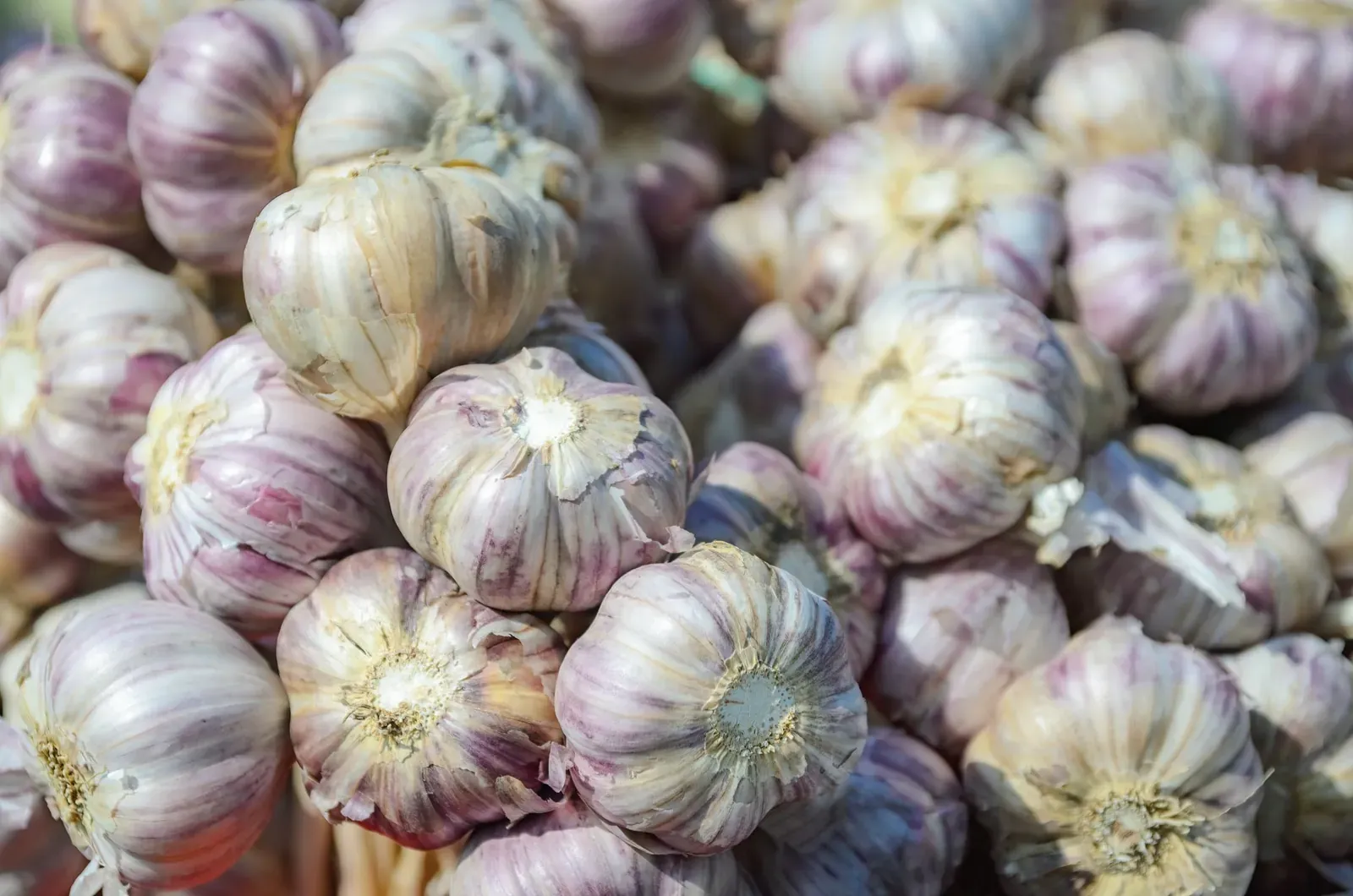 A close pile of whole purple-tinged garlic bulbs with papery skins
Photo: AS Photography / Pexels
Sources anchor that timing to different events:
- After the first frost. Wisconsin plants "usually within a week or two after the first killing frost." Minnesota Extension says the same: typically late September in northern Minnesota, early October in the south.
- Before the ground freezes. Penn State says "a good three weeks" before; Illinois says 4 to 6 weeks.
- Before the first hard frost or freeze. UConn recommends 4 to 6 weeks before the first hard frost, usually early to late November in Connecticut. Texas A&M lists 4 to 6 weeks before the first freeze date.
- Southern calendars. Central North Carolina runs September 15 to November 30 (N.C. Cooperative Extension). UGA gives October through November for Georgia, into January in south Georgia. UF/IFAS says Florida can plant from late fall through early winter.
None of the extension guides we read gave a soil temperature for planting, so we do not give one.
Your first frost date, by zone#
Your hardiness zone measures winter lows, not frost timing. In a PlantAlong analysis of NOAA 1991-2020 climate normals, the median first fall frost (32°F) varies by two to three weeks across ZIP codes in the same zone.
The table shows that spread (10th to 90th percentile of ZIPs) and applies two of the rules above. Treat those columns as illustrations: one rule was written for cold states, the other for Texas.
| Zone | Median first fall frost (most ZIPs) | 1 to 2 weeks after (Wis./Minn.) | 4 to 6 weeks before (Texas A&M) |
|---|---|---|---|
| 4a | Sep 20 to Oct 4 | Sep 27 to Oct 18 | - |
| 4b | Sep 22 to Oct 8 | Sep 29 to Oct 22 | - |
| 5a | Sep 26 to Oct 13 | Oct 3 to Oct 27 | - |
| 5b | Oct 1 to Oct 19 | Oct 8 to Nov 2 | - |
| 6a | Oct 5 to Oct 24 | Oct 12 to Nov 7 | - |
| 6b | Oct 10 to Oct 29 | Oct 17 to Nov 12 | - |
| 7a | Oct 16 to Nov 2 | Oct 23 to Nov 16 | Sep 4 to Oct 5 |
| 7b | Oct 24 to Nov 14 | Oct 31 to Nov 28 | Sep 12 to Oct 17 |
| 8a | Oct 31 to Nov 14 | - | Sep 19 to Oct 17 |
| 8b | Nov 4 to Nov 23 | - | Sep 23 to Oct 26 |
| 9a | Nov 16 to Dec 9 | - | Oct 5 to Nov 11 |
In zone 7 the rules split by weeks, and Georgia's season runs later than the Texas rule, so lean on your state's guidance in the South.
Before you work out how to plant garlic in your yard, get your own date from the ZIP planting calendar and set a frost alert for this fall. See garlic dates for zone 6a or zone 7a. Missed your window? Read is it too late to plant garlic.
Choosing garlic to plant#
The first decision in how to plant garlic is which kind to buy, and climate decides.
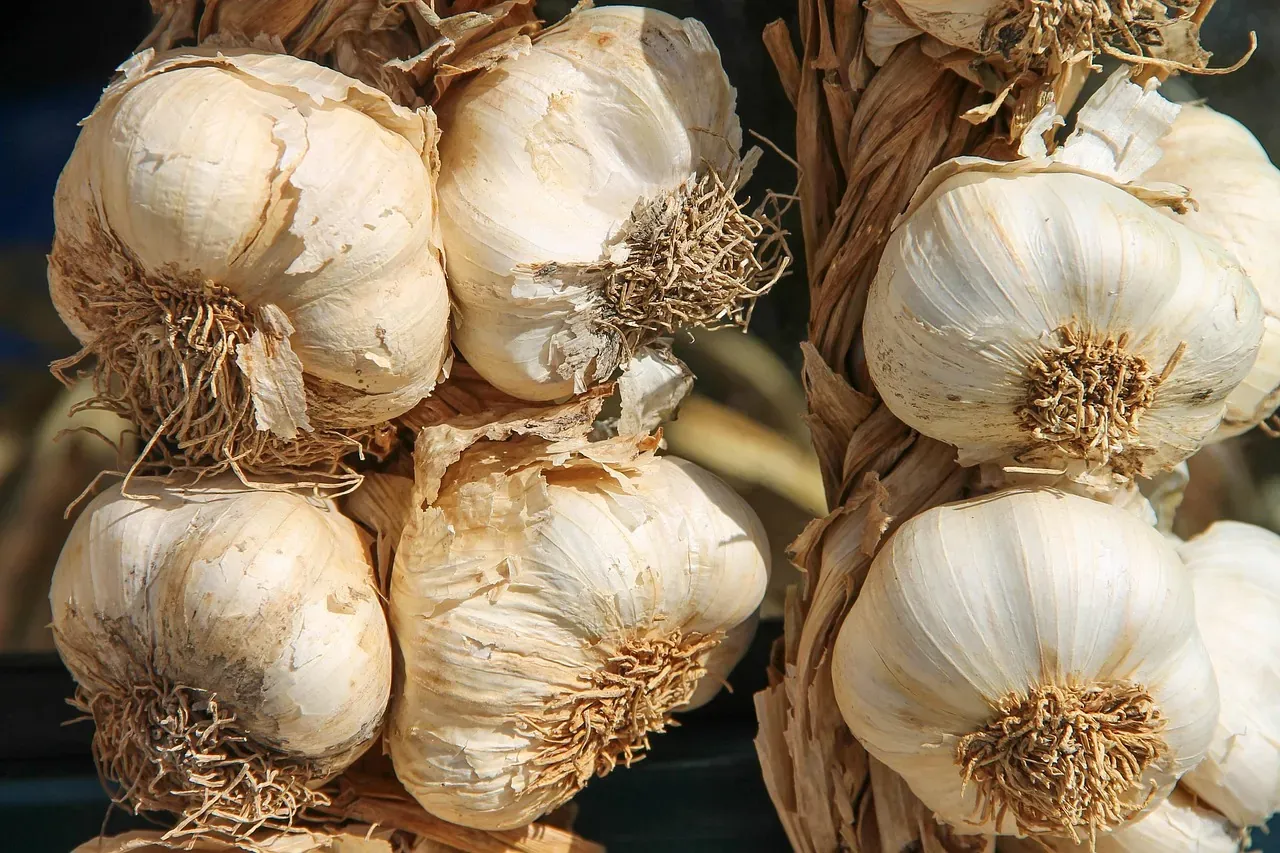 Close-up of white softneck garlic bulbs braided together by their dried stems
Photo: manfredrichter / Pixabay
- Hardneck garlic grows a stiff flower stalk called a scape. Wisconsin says hardnecks "perform best where winters are long," and Illinois prefers them because softnecks are less cold hardy.
- Softneck garlic usually has no scape and can be braided. Wisconsin says it is "better adapted to areas with long seasons and mild winters." UF/IFAS points Florida gardeners to softneck Artichoke or Creole types, and Clemson says Rocambole hardnecks "should not be grown in South Carolina."
Skip grocery-store garlic. Penn State says store cloves may be unsuited to your area and most are treated to extend shelf life, "making them harder to grow." Iowa State says it is usually softneck from warmer regions.
Buy seed garlic from a reliable source. Illinois suggests ordering in June, before suppliers run low, and Minnesota Extension advises seed tested for garlic bloat nematode.
Plant the biggest cloves. Penn State, Wisconsin, Clemson and Iowa State all say larger cloves give larger bulbs.
Shop the essentials
What you'll need
Supplies for the steps in this guide.
 To plantSeed garlicGarlic bulbs sold for planting, not for the kitchen.: check price on Amazon (opens in a new tab)
 After plantingStraw mulchStraw for covering beds after planting.: check price on Amazon (opens in a new tab)
 FeedOrganic vegetable fertilizerA balanced fertilizer for vegetable beds. Follow the bag rate.: check price on Amazon (opens in a new tab)
 Cold nightsFrost clothLightweight fabric to throw over plants on a cold night.: check price on Amazon (opens in a new tab)
As an Amazon Associate I earn from qualifying purchases. Photos show the type of product, not a specific listing. How we choose
Preparing the bed#
Knowing how to plant garlic starts with the bed, since cloves sit there from fall to summer.
- Sun and drainage: Wisconsin, Illinois, Iowa State and Clemson call for full sun and well-drained soil. Clemson says garlic is prone to bulb rot in poorly drained soil, and UConn suggests raised beds for drainage.
- Soil: Wisconsin wants soil high in organic matter and says heavy clay can impede bulb growth. Clemson gives a pH of 6.2 to 6.5.
- Fertilizer: without compost, Illinois applies 3 pounds of 10-10-10 per 100-foot row. Minnesota puts down only a quarter to a third of the season's nitrogen in fall, because nitrogen can leach out before spring.
- Rotation: Penn State leaves at least two years between garlic or its onion-family relatives in one spot.
How to plant garlic: depth and spacing#
Here is how to plant garlic once the bed is ready:
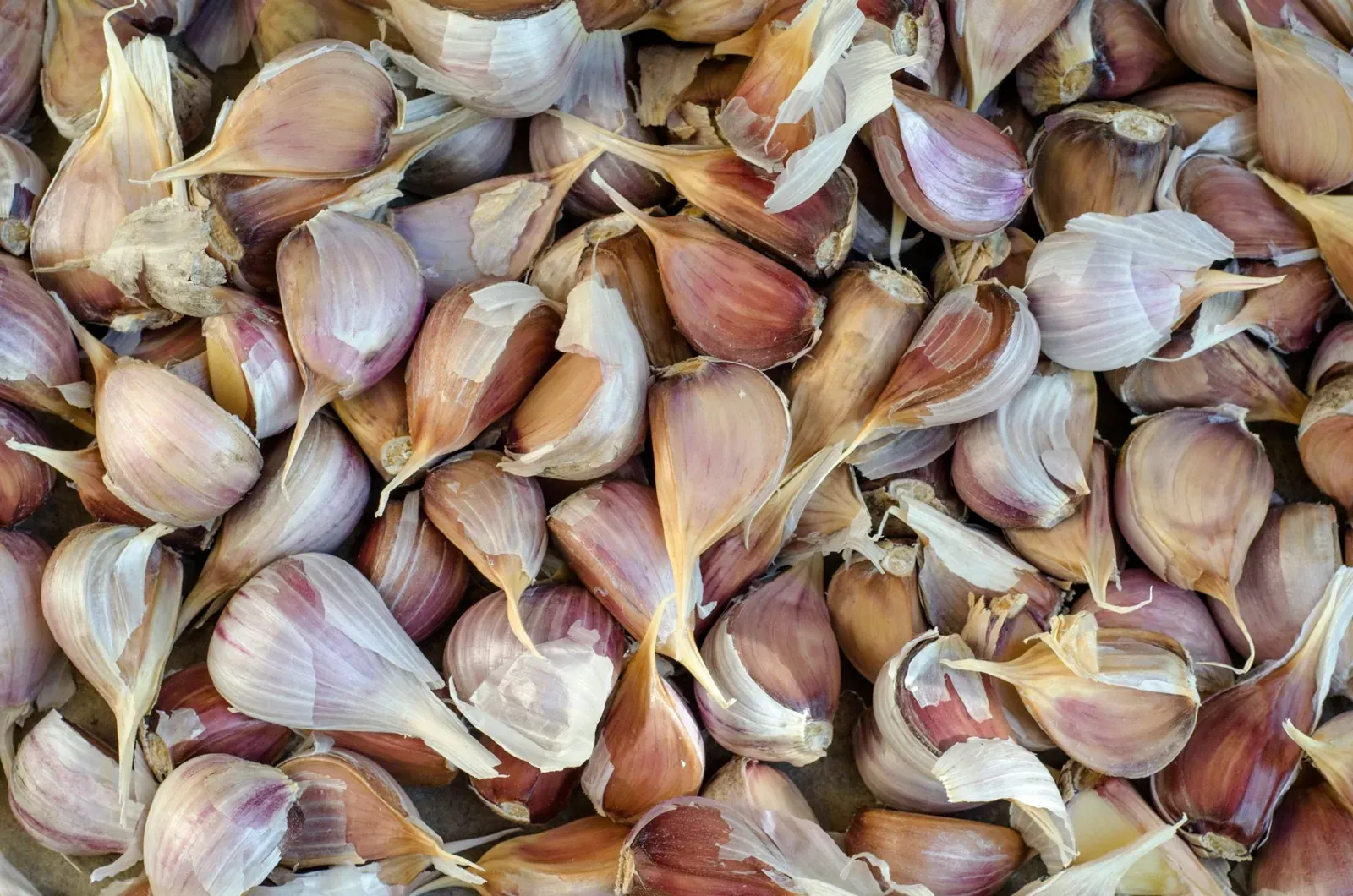 Pile of separated pinkish garlic cloves in papery skins, ready to sort by size
Photo: Vadim Koval / Pexels
- Break the bulb into cloves just before planting; Penn State says no more than a day ahead. Do not peel the cloves (Illinois).
- Set each clove pointed tip up, flat basal plate down (Wisconsin, Illinois).
- Cover to the depth below, then water and mulch.
| Source (state) | Depth | Apart in the row | Between rows |
|---|---|---|---|
| UMaine (Maine) | clove tip 2 to 4 in below surface | 4 to 6 in | 6 to 12 in |
| Wisconsin | 2 to 3 in | about 6 in | - |
| UConn (Connecticut) | 2 to 3 in | 3 to 6 in | - |
| Penn State (Pennsylvania) | at least 2 in | 4 to 8 in | - |
| Utah State | 2 to 3 in | 3 to 4 in | 6 to 10 in |
| Illinois | 1 to 2 in | 4 to 5 in | 15 to 18 in |
| Iowa State | 1 to 1.5 in | 3 to 5 in | 18 to 24 in |
| Clemson (South Carolina) | about 1 in | 3 to 5 in | 12 to 24 in |
| Texas A&M | 1/2 in | 2 to 4 in | 14 to 24 in |
Depth is where sources disagree most, from half an inch in Texas to 4 inches in Maine. Colder states plant deeper, and Wisconsin explains why: "Cloves planted too shallow are prone to injury during the winter and early spring."
UMaine adds that closer spacing gives smaller bulbs. For a block instead of rows, Illinois suggests 5 inches apart in all directions.
Mulching after planting#
The last step in how to plant garlic is mulch. Penn State calls for "a good four inches of straw or shredded leaves," Wisconsin 3 to 4 inches of clean straw, and UMaine three inches. Illinois says straw prevents frost heaving. Our post on mulching garlic for winter compares more states.
What happens next: fall shoots to summer harvest#
Once you know how to plant garlic, the rest is mostly patience.
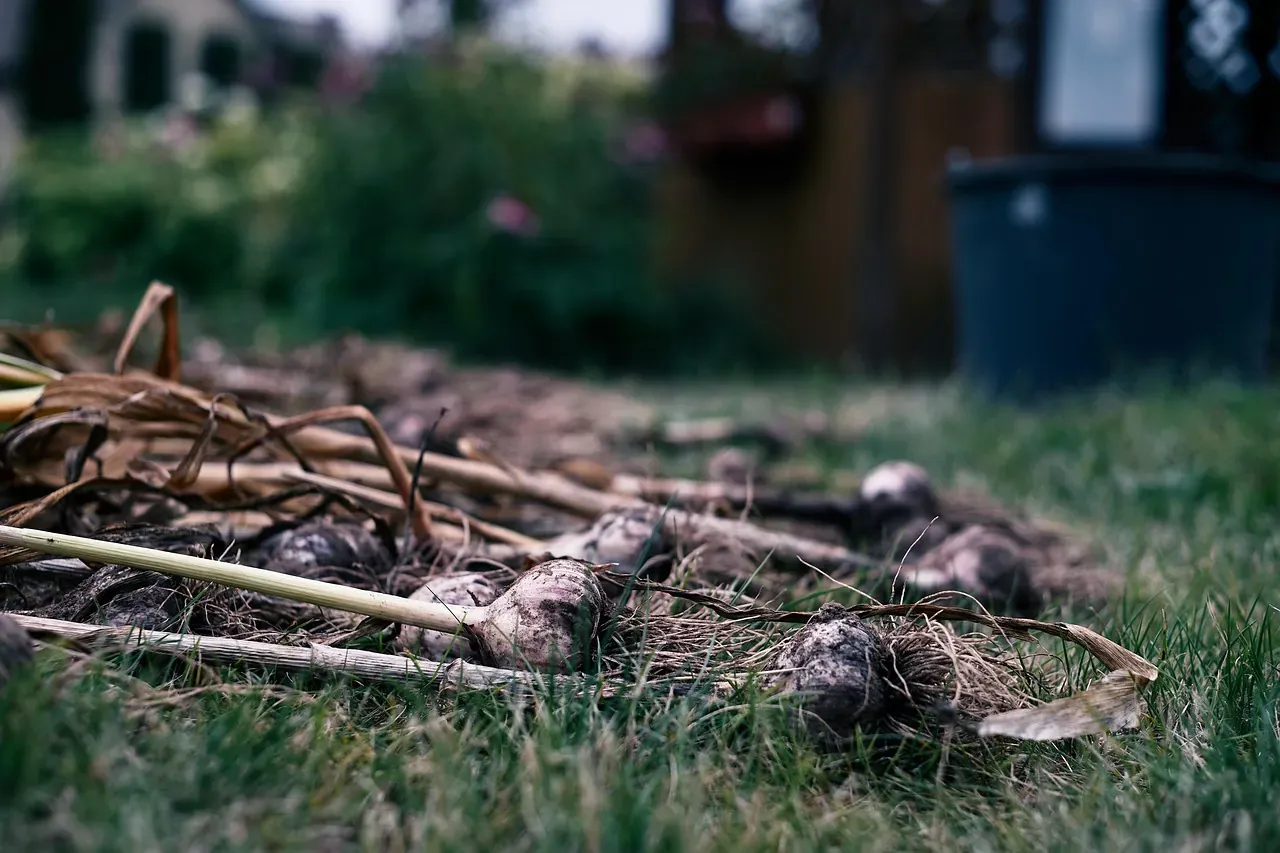 Freshly harvested garlic plants with soil-covered bulbs and dry stems laid on a lawn
Photo: 13741502 / Pixabay
Fall shoots are common. An N.C. Cooperative Extension agent says garlic may show 4 to 8 weeks after planting, and Iowa State says the leaves tolerate cold "down into the 20s °F." See garlic sprouting in fall.
Spring. Iowa State moves the straw between rows as shoots emerge and gives garlic 1 inch of water a week. Wisconsin feeds nitrogen again when shoots are 4 to 6 inches tall.
Scapes. Clemson says leaving hardneck scapes cuts bulb size by an average of 30 percent, and UMaine research found up to 48%. Wisconsin says the loss is under 5% in well-fertilized soil.
Harvest. Illinois digs when half the leaves have turned yellow, usually June to July there. UMaine says that once the lower three leaves are brown, you have about two weeks.
FAQ#
How do you plant garlic cloves?#
Separate the bulb just before planting, keep the papery skins on (Illinois), and set the largest cloves pointed end up, 1 to 3 inches deep in most guides, then mulch. Our garlic crop page sums up how to plant garlic.
How deep do you plant garlic?#
Most guides say 1 to 3 inches: Illinois 1 to 2, Wisconsin and Utah State 2 to 3. UMaine puts the clove tip 2 to 4 inches down.
Can you plant garlic in the spring?#
It is possible, but fall is preferred. Illinois says spring cloves must first be refrigerated for about 8 weeks, Utah State says spring plantings generally produce small bulbs, and Texas A&M lists spring planting as "not recommended."
Do you soak garlic before planting?#
No extension guide we read requires it. Answering a Minnesota gardener, an Ask Extension expert wrote, "You need not soak the garlic cloves before planting, but do keep them watered after planting."
Sources#
- Growing Garlic - Fall Planting (Penn State Extension)
- Garlic, Allium sativum (University of Wisconsin-Madison Division of Extension)
- Tips for garlic planting season (University of Minnesota Extension)
- Planting and Growing Garlic (University of Illinois Extension)
- Growing Garlic in the Home Garden (Iowa State University Extension and Outreach)
- Bulletin #2063, Growing Garlic in Maine (University of Maine Cooperative Extension)
- Garlic Cultivation in Connecticut (UConn Extension)
- Garlic in the Garden (Utah State University Extension)
- Onion, Leek, Shallot, & Garlic, HGIC 1314 (Clemson Cooperative Extension)
- Texas Home Vegetable Gardening Guide, E-502 (Texas A&M AgriLife Extension)
- Growing Garlic in the South (N.C. Cooperative Extension, Lee County Center)
- Great Garlic Grows Slowly, Start Now (University of Georgia CAES)
- Garlic (UF/IFAS Gardening Solutions)
- Growing hardneck garlic in fabric pots in St Paul MN (Ask Extension)
- PlantAlong analysis of NOAA 1991-2020 climate normals (methodology)
Featured photo: domeckopol / Pixabay.
A 5-part series
Everything garlic, chapter by chapter
- Chapter 1
How to Plant Garlic: Timing, Depth and Spacing by Zone
When to plant garlic by your own first frost date, how deep and how far apart, and which garlic to buy, with every number traced to a US extension guide and a zone-by-zone frost table.
You're reading this✓ Read - Chapter 2
Garlic Sprouting in Fall: Is It Normal and What to Do
Green garlic shoots in November? Extension sources say fall sprouting is common, the leaves handle cold into the 20s °F, and mulch is the main fix. Plus next year's planting timing by state.
✓ Read - Chapter 3
Is It Too Late to Plant Garlic? Deadlines by Region
Probably not, if you can still dig. Here is how extension services set garlic deadlines, first-frost dates by zone, and what happens if you plant in December, January or spring.
✓ Read - Chapter 4
Mulching Garlic for Winter: When, How Deep, What to Use
When to mulch garlic, how deep and with what: a state-by-state table built only from extension guidance, plus warm-zone notes and what to do with the mulch in spring.
✓ Read - Chapter 5
How to Grow Garlic in a Container: Pot Size, Soil, Timing
Garlic grows in a pot at least 8 inches deep, planted in fall and left outdoors for the winter chill. Here is pot size, cloves per pot, potting mix, timing and winter protection, all from extension sources.
✓ Read
5 of 5 chapters are out; new ones appear here as they publish.




Check your inbox
We sent a confirmation link to . Click it and your planting calendar PDF is on its way. Nothing there in a few minutes? Check your spam or promotions folder.
Crops in this article
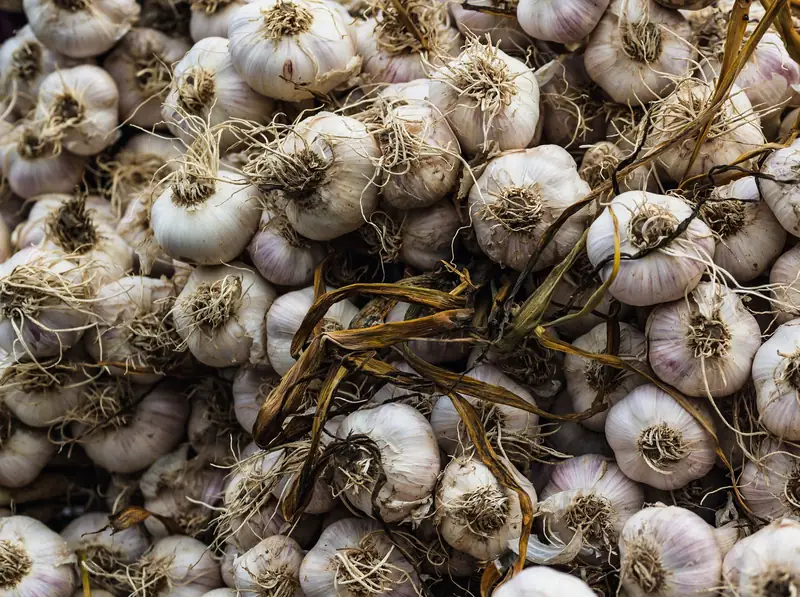



No comments yet. Tried this in your garden, or found a date that worked better? Start the thread.
Leave a comment