 PlantAlong
In short
- Extension sources put pepper sowing about 6 to 8 weeks before the last frost (Purdue 7 weeks, Clemson 8, Maryland 8 to 10).
- PlantAlong's analysis of NOAA 1991-2020 normals puts the median last frost in zone 6a between Apr 16 and May 10 across most ZIPs, and in 6b between Apr 10 and May 3.
- Colorado State lists 80°F as the optimum and 60°F as the minimum soil temperature for pepper germination, with 10 to 20 days to sprout.
- Colorado State and Utah State plant peppers out about 2 weeks after the average last spring frost.
- Penn State Master Gardeners wait for soil above 60°F before setting peppers in the garden.
On this page
- Why "zone 6" does not give you one sowing date
- How many weeks before last frost to start peppers
- Dates to start pepper seeds indoors in zone 6a and 6b
- Germination: temperature and days
- When to move pepper plants outside
- Find your own date to start pepper seeds indoors
- FAQ
- When to start pepper seeds indoors in zone 6a?
- When to start pepper seeds indoors in zone 6b?
- Do hot peppers need an earlier start?
- How long do pepper seeds take to germinate?
- Sources
Most zone 6 gardeners should sow peppers indoors about 6 to 8 weeks before their average last spring frost, then set plants out about 2 weeks after it. The catch: zone 6 has no single frost date, so the right week to start pepper seeds indoors in zone 6 depends on your ZIP code, and it can differ by more than three weeks inside the zone.
Below: extension rules, our NOAA frost analysis for 6a and 6b, and example dates.
Why "zone 6" does not give you one sowing date#
Your hardiness zone comes from winter low temperatures. Your last frost date comes from spring weather records, and it varies a lot inside one zone.
We measured that spread. For every ZIP code, PlantAlong matched a nearby NOAA weather station and took its median (50% chance) last spring frost date at 32°F from the 1991-2020 climate normals. We left out low-confidence matches (such as a distant station or a big elevation difference) and counted each ZIP once. Across the middle 80% of ZIPs (10th to 90th percentile):
- Zone 6a (4,375 ZIPs): median last frost from Apr 16 to May 10
- Zone 6b (4,372 ZIPs): median last frost from Apr 10 to May 3
Source: PlantAlong analysis of NOAA 1991-2020 climate normals (how we built it). That is a 24-day spread in 6a and 23 days in 6b, which is why searches for "start pepper seeds indoors in zone 6" turn up answers from early February to mid-March.
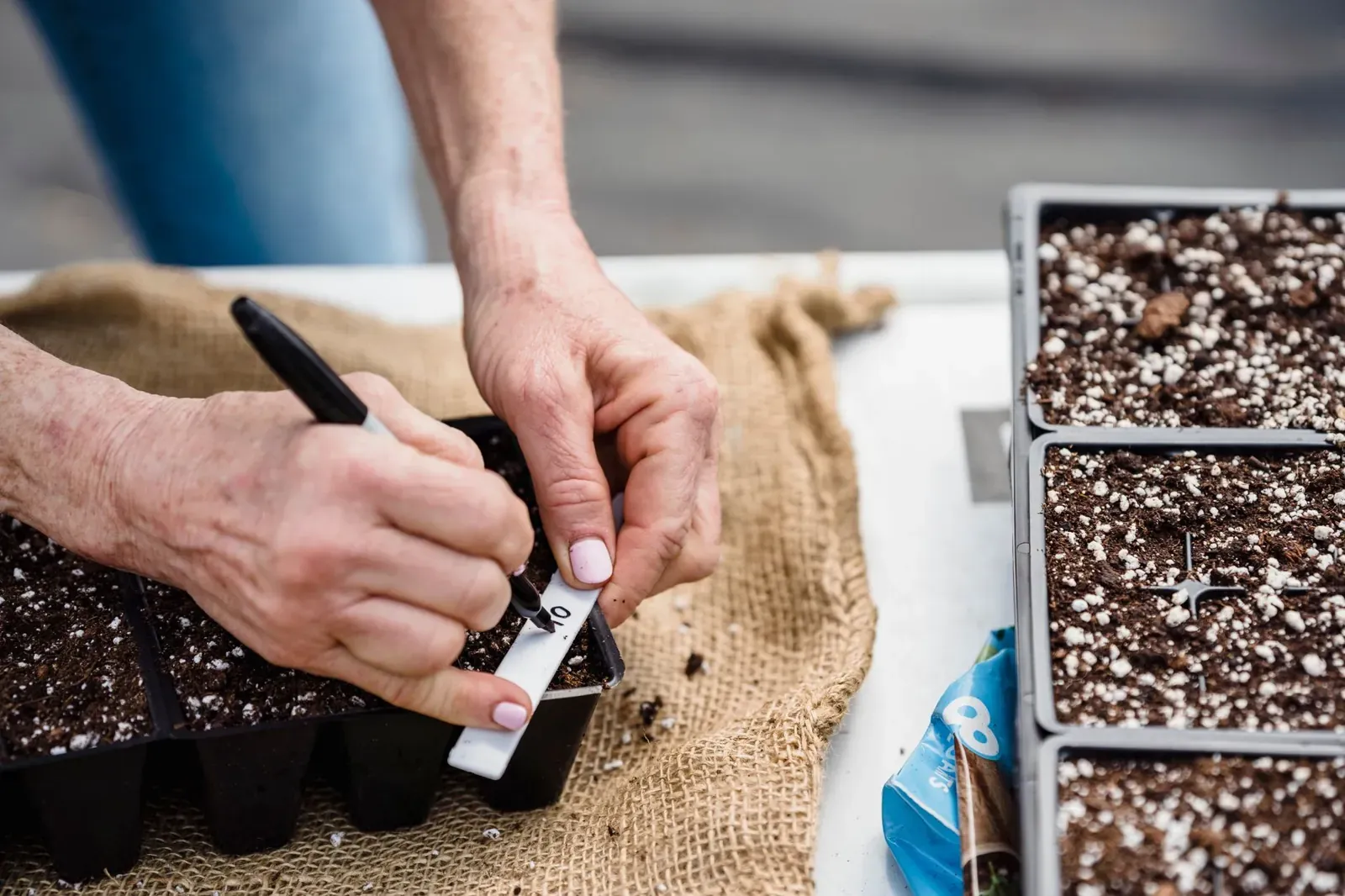 Gardener writing a plant label for a seed-starting tray filled with potting mix
Photo: Greta Hoffman / Pexels
How many weeks before last frost to start peppers#
Extension sources agree peppers need a long head start, but the numbers vary:
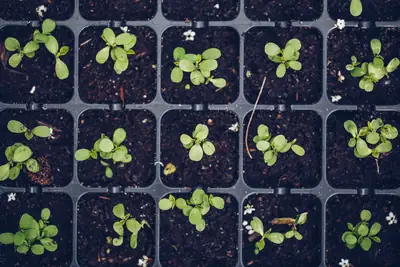
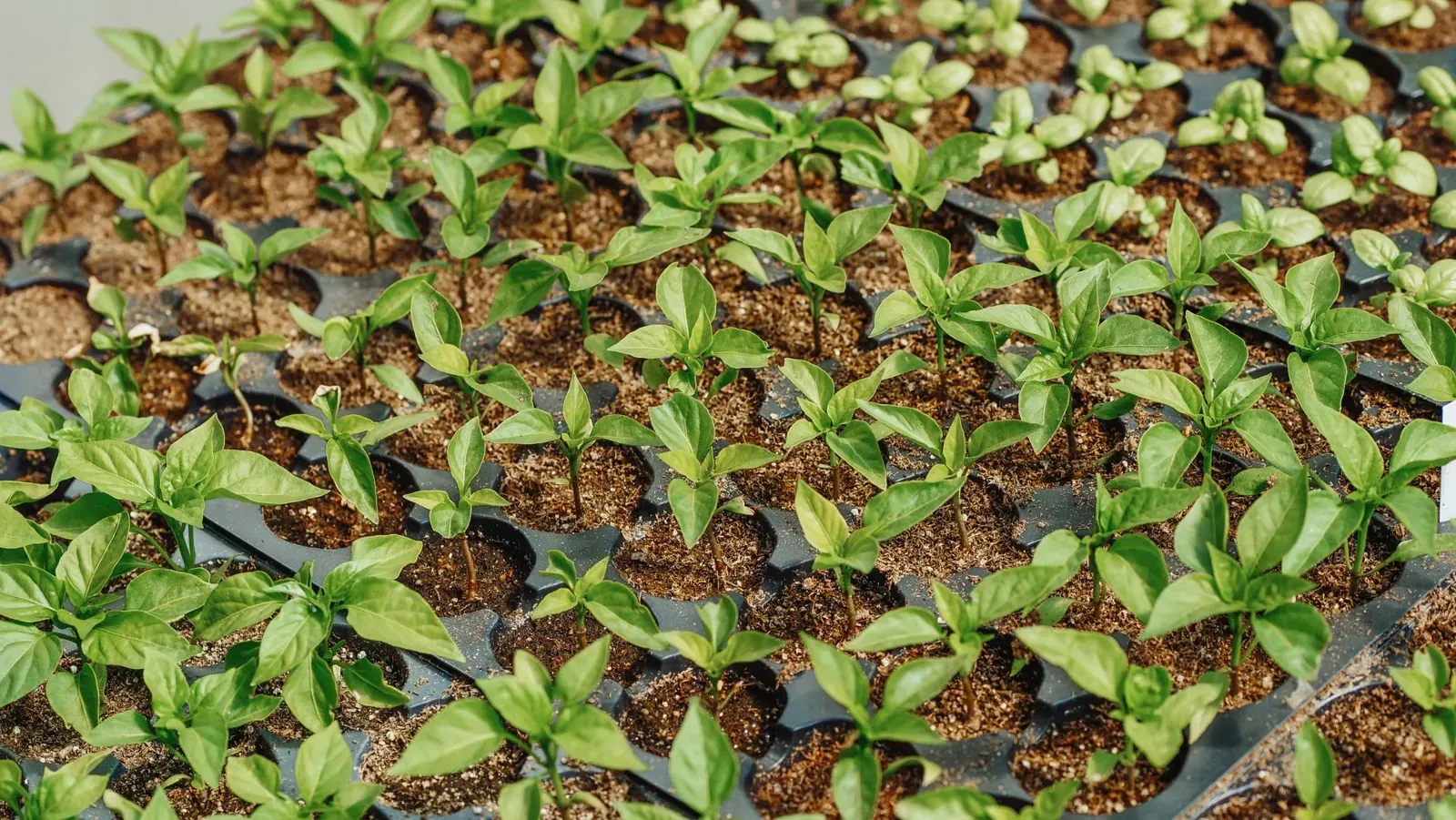 Young pepper seedlings with glossy leaves growing in black plastic cell trays
Photo: Kindel Media / Pexels
- Purdue Extension: 7 weeks before the last frost.
- Clemson HGIC: 8 weeks before the last frost.
- University of Maryland Extension: 8 to 10 weeks before the average frost-free date; "some types and cultivars require 12 weeks."
- Oregon State University (central Oregon): 8 weeks indoors, counted back from a set-out date 2 weeks after the frost-free date, so 6 weeks before it.
- Penn State Master Gardeners: "8 to 10 weeks before being moved permanently into the garden."
- Colorado State University: typical pepper transplant age of 6 to 8 weeks.
The last three count back from planting-out day, not the frost date. Since peppers go out about 2 weeks after the last frost, 8 weeks of growing still means sowing about 6 weeks before your frost date.
So 6 to 8 weeks before your last frost fits nearly every source, with Maryland's 8 to 10 weeks the longest.
Shop the essentials
What you'll need
Supplies for the steps in this guide.
 Start indoorsSeed-starting trays with lidsCell trays with clear domes for sowing seeds indoors.: check price on Amazon (opens in a new tab)
 Start indoorsSeedling heat matWarms seed trays from below. Pick one with a thermostat.: check price on Amazon (opens in a new tab)
 To sowPepper seedsSeed packets from many sellers: compare varieties and days to maturity.: check price on Amazon (opens in a new tab)
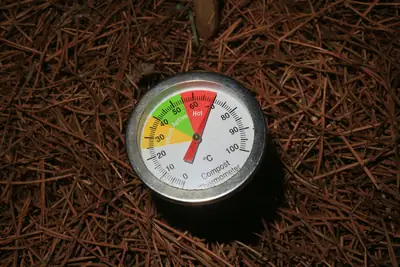 Before sowingSoil thermometerCheck your soil against the minimum temperature on this page before you sow.: check price on Amazon (opens in a new tab)
As an Amazon Associate I earn from qualifying purchases. Photos show the type of product, not a specific listing. How we choose
Dates to start pepper seeds indoors in zone 6a and 6b#
These dates to start pepper seeds indoors are examples only, computed from the early and late ends of each zone's spread. Swap in your own frost date from the ZIP planting calendar and count back: 6 weeks is 42 days, 8 weeks is 56 days.
| Example last frost | Sow (8 weeks before) | Sow (6 weeks before) | Plant out (about 2 weeks after) |
|---|---|---|---|
| 6a, early end: Apr 16 | Feb 19 | Mar 5 | Apr 30 |
| 6a, late end: May 10 | Mar 15 | Mar 29 | May 24 |
| 6b, early end: Apr 10 | Feb 13 | Feb 27 | Apr 24 |
| 6b, late end: May 3 | Mar 8 | Mar 22 | May 17 |
Dates assume a non-leap year such as 2027. In a leap year, February dates land one day later.
This explains the conflicting advice. Early February (Feb 5) is 10 weeks before Apr 16, the top of Maryland's range for an early-frost 6a ZIP. Mid-March (Mar 15) is 8 weeks before May 10, the late end of 6a. Both are right for some zone 6 gardens. See peppers in zone 6a and peppers in zone 6b for half-zone crop pages.
Germination: temperature and days#
Colorado State lists a minimum soil temperature of 60°F, an optimum of 80°F and a maximum of 90°F for pepper germination, with 10 to 20 days to germinate. Texas A&M lists 9 to 14 days "under good growing conditions," and Purdue 7 to 14 days.
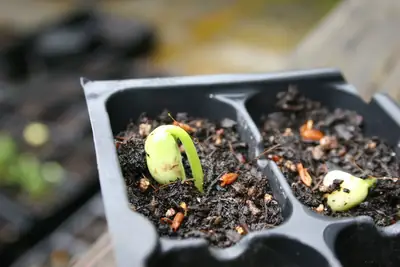
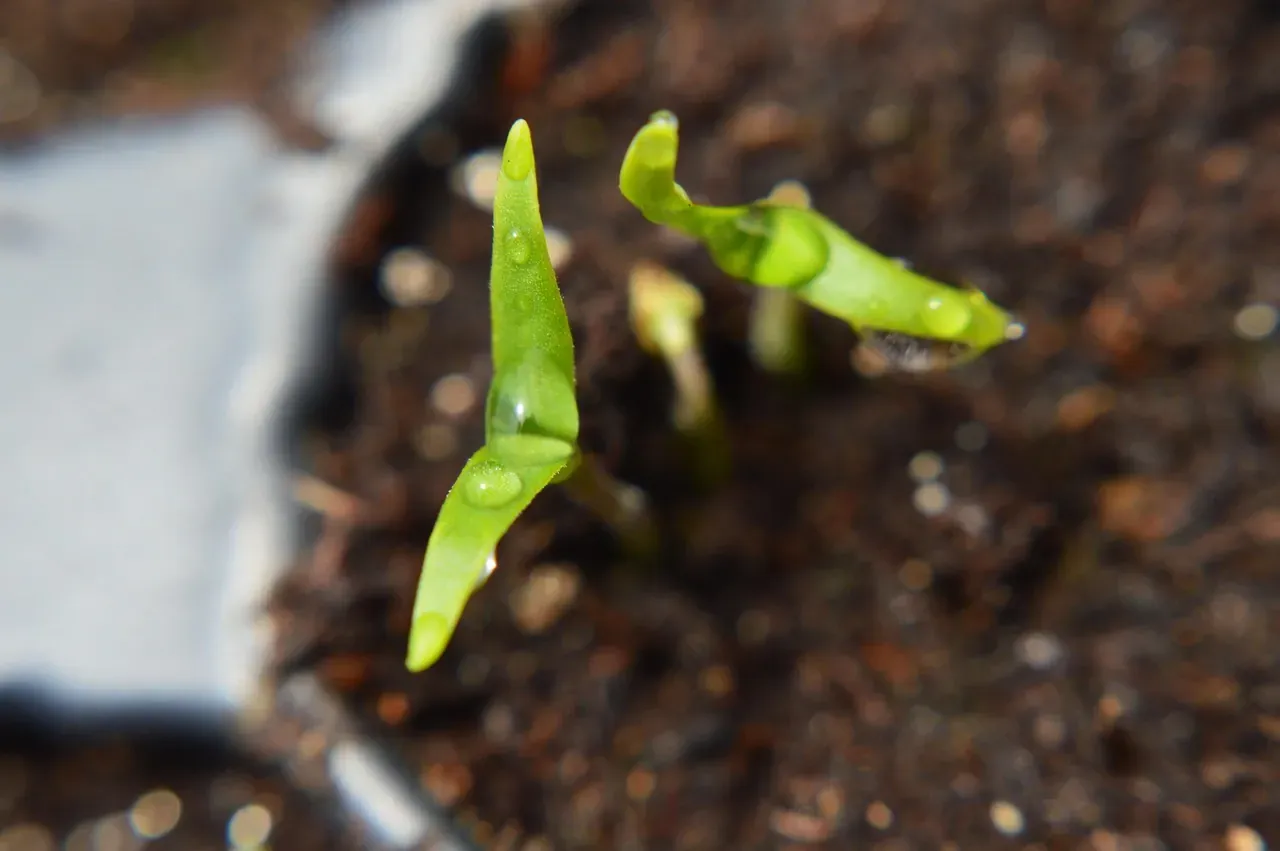 Two pepper seedlings with dew drops just emerging from dark potting mix
Photo: Baccatum0742 / Pixabay
For seed starting in general, Purdue says "65-75°F (18-24°C) is best," and Clemson calls a soil temperature of 65° to 75°F ideal. Clemson's low-cost tip for warmth: drape clear plastic over the frame holding your grow light. None of the sources we checked gives a heat-mat setting.
When to move pepper plants outside#
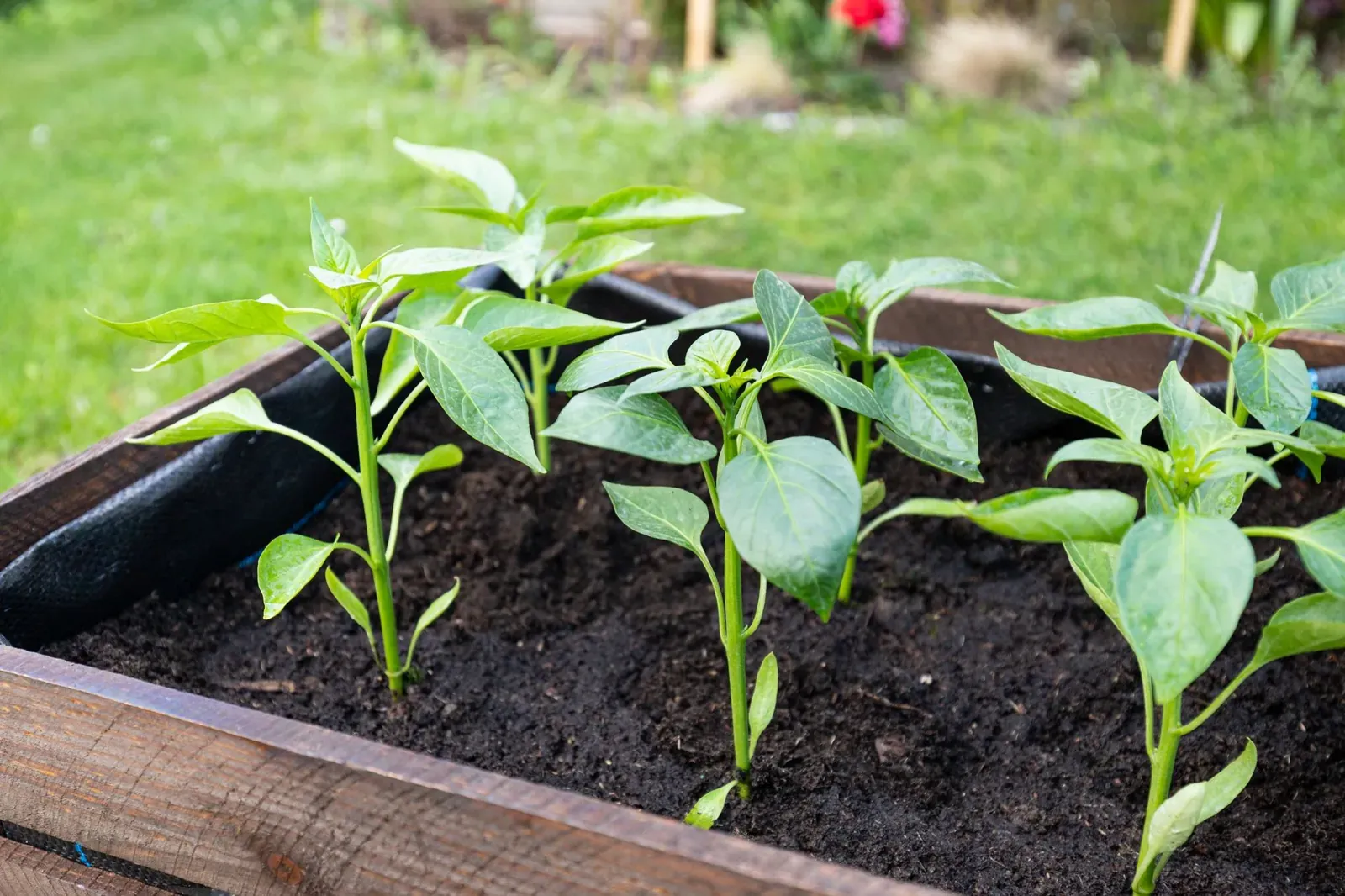
Colorado State and Utah State both class peppers as very tender:
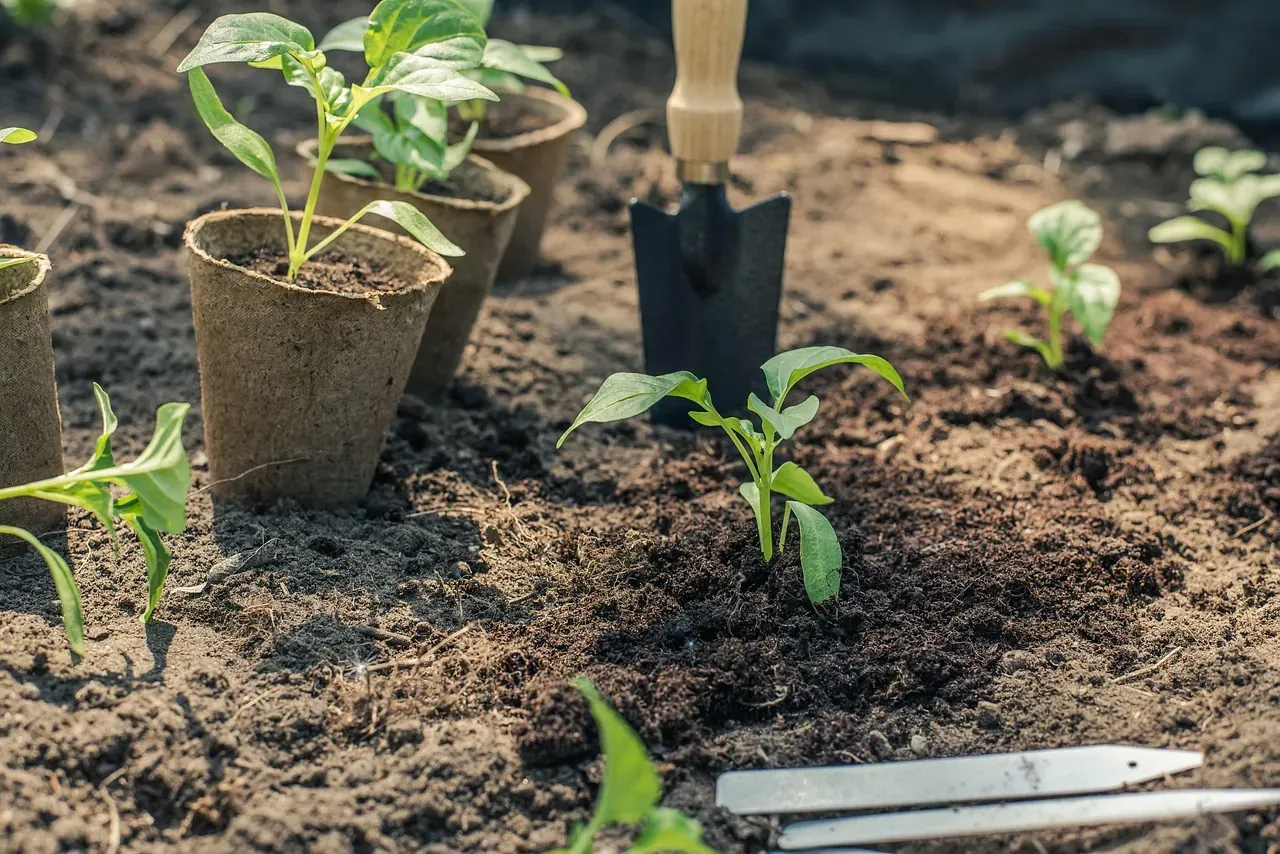 Pepper seedlings in peat pots being planted out into garden soil beside a trowel
Photo: Miller_Eszter / Pixabay
- Colorado State: "Typically 2+ weeks after the average last spring frost date," once days are "consistently above 55°F." A week of daytime temperatures below 55°F may stunt the crop.
- Utah State: plant "when the soil is warm, about 2 weeks after" the tender crops that go in on the average last frost date.
- Penn State Master Gardeners: wait until "soil temperatures are above 60 degrees."
- University of Maryland: in soil below 65°F, plants "just sit there."
The frost date sets your earliest move; soil warmth decides the real one. Harden plants off first: Oregon State's seed-starting schedule describes gradually acclimating seedlings before planting out. Our guide to how to start seeds indoors covers lights, potting up and hardening off.
Find your own date to start pepper seeds indoors#
- Enter your ZIP on the planting calendar to get your median last frost date.
- Count back 6 to 8 weeks for your sowing window.
- Count forward about 2 weeks for planting out, then wait for soil above 60°F.
The zone 6a and zone 6b pages cover each half-zone, and the peppers guide covers spacing and care.
FAQ#
When to start pepper seeds indoors in zone 6a?#
About 6 to 8 weeks before your last frost. With the 6a examples above (Apr 16 to May 10), that is roughly Feb 19 to Mar 29. Sowing in early February gives late-frost 6a gardens 10 or more weeks indoors, past what most of our sources recommend.
When to start pepper seeds indoors in zone 6b?#
Use the same count. With the 6b examples (Apr 10 to May 3), sowing runs roughly Feb 13 to Mar 22. None of our sources treats bell peppers differently from other peppers.
Do hot peppers need an earlier start?#
No source we checked gives hot peppers a separate sowing date. Maryland says some types need up to 12 weeks, and lists habanero types at 90 to 120 days from transplanting to harvest versus 70 to 85 days for other sweet and hot types, so slow habaneros can go at the early end.
How long do pepper seeds take to germinate?#
Colorado State lists 10 to 20 days, Texas A&M 9 to 14 and Purdue 7 to 14. Colorado State gives 80°F as the optimum soil temperature and 60°F as the minimum.
Sources#
- Vegetable Planting Guide (CMG GardenNotes #720) (Colorado State University Extension)
- Suggested Vegetable Planting Dates for Utah (Utah State University Extension)
- HO-14-W: Starting Seed Indoors (Purdue Extension)
- FAQs about Starting Vegetable Seeds Indoors (Clemson Cooperative Extension, HGIC)
- Growing Peppers in a Home Garden (University of Maryland Extension)
- Growing Peppers (Penn State Extension, Chester County Master Gardeners)
- When to start seeds indoors in central Oregon (Oregon State University Extension Service)
- Eastern Oregon seed-starting schedule (Oregon State University Extension Service)
- Texas Home Vegetable Gardening Guide (E-502) (Texas A&M AgriLife Extension)
- PlantAlong analysis of NOAA 1991-2020 climate normals (methodology)
Featured photo: Mateusz Feliksik / Pexels.
A 5-part series
Everything peppers, chapter by chapter
- Chapter 1
Growing Bell Peppers: Planting Dates, Spacing and Care
Bell peppers go out about two weeks after your last frost into warm soil, need 1-2 inches of water a week, and are ready about 70-85 days after transplanting. Here is the full season, sourced from extension guides.
✓ Read - Chapter 2
How to Overwinter Pepper Plants Indoors
Peppers are frost-tender perennials. Bring them in by your ZIP's first-frost P10 date, cut them back, keep them at 40-55°F with little water, and replant two weeks after your last frost.
✓ Read - Chapter 3
When to Start Pepper Seeds Indoors in Zone 6
Peppers go in about 6 to 8 weeks before your last frost, but zone 6 frost dates span more than three weeks. Here are sourced rules and example sowing dates for 6a and 6b.
You're reading this✓ Read - Chapter 4
Fertilizer for Pepper Plants: What to Use and When
Extension rates and timing for feeding peppers: soil test first, a moderate pre-plant dose, a nitrogen side-dress around first fruit set, and liquid feed for pots.
✓ Read - Chapter 5
Growing Peppers in Containers: Pot Size, Soil and Care
What extension guides say about growing peppers in pots: how big a container, which mix, when to move it outside, how often to water and feed, and when to bring it in.
✓ Read
5 of 5 chapters are out; new ones appear here as they publish.
Check your inbox
We sent a confirmation link to . Click it and your planting calendar PDF is on its way. Nothing there in a few minutes? Check your spam or promotions folder.
Crops in this article
No comments yet. Tried this in your garden, or found a date that worked better? Start the thread.
Leave a comment