 PlantAlong
In short
- Colorado State says to plant peppers typically 2 or more weeks after the average last spring frost, once days stay above 55°F.
- Utah State says to transplant when soils reach 60°F, while the University of Maryland sets the mark at 65°F.
- Utah State recommends watering peppers deeply and infrequently, 1 to 2 inches per week.
- NC State says fruit will not set when nights are above 75°F or below 55°F, or when days rise above 90°F.
- Clemson says peppers are ready about 70 to 85 days after transplanting, and fully colored fruit is sweeter than green.
On this page
- When to plant bell peppers
- Your zone is not your frost date
- Start seeds indoors or buy transplants
- Sun, soil and spacing
- Watering and mulch for bell peppers
- Feeding bell peppers
- Growing bell peppers in pots
- Common problems when growing bell peppers
- Blossom drop
- Blossom-end rot
- Sunscald
- When and how to harvest bell peppers
- End of season: frost and overwintering
- FAQ
- How long do bell peppers take to grow?
- Why are my bell peppers not changing color?
- Do bell peppers need full sun?
- How many bell peppers per plant?
- Sources
Growing bell peppers comes down to three things: plant warm, keep the soil evenly moist, and be patient for color. Extension services agree that bell peppers go in the ground after the last spring frost, once the soil has warmed, and are usually ready about 70 to 85 days after transplanting. This guide to growing bell peppers covers dates, spacing, care, common problems and harvest, with every number taken from a university source.
When to plant bell peppers#
Peppers are among the most frost-sensitive crops in the garden. Colorado State University Extension lists pepper as a "very tender" vegetable and says to plant it "typically 2+ weeks after the average last spring frost date," once the weather is "consistently above 55°F (daytime)." Utah State University groups pepper transplants the same way: about two weeks after the average last frost.
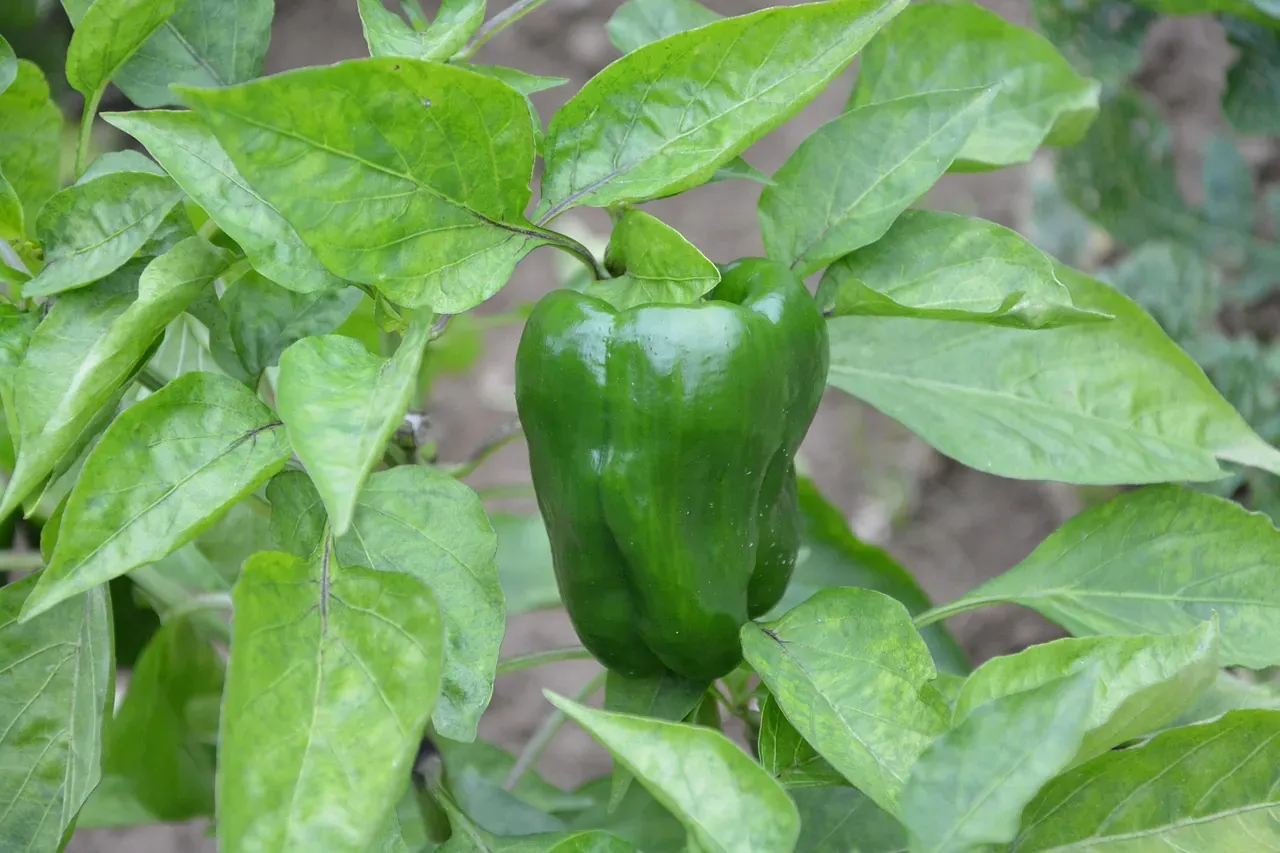 A green bell pepper growing on a leafy pepper plant in a backyard garden bed
Photo: JACLOU-DL / Pixabay
Soil temperature matters as much as the calendar. Utah State says to transplant "when soils are 60ºF or after all frost danger has passed," while the University of Maryland Extension sets the bar higher, warning that "planting before soil temperature reaches 65 degrees F. will cause plants to 'just sit there.'" If you own a soil thermometer, waiting for 65°F covers both.
Air temperature is the third check. Clemson Cooperative Extension says peppers "grow best at temperatures of 70 to 85 °F during the day and 60 to 70 °F during the night," and Colorado State notes that "a week of daytime temperatures below 55°F may stunt the crop."
Your zone is not your frost date#
A hardiness zone tells you how cold your winters get, not when your last spring frost happens. PlantAlong's analysis of NOAA 1991-2020 climate normals shows how wide that gap is: across ZIP codes in zone 6a, the median last frost date runs from April 16 to May 10 (10th to 90th percentile). Two weeks after that means a pepper planting date anywhere from about April 30 to May 24, inside a single zone. See how we calculated this.
When growing bell peppers, use a local date instead of a zone chart: look up your frost dates by ZIP. The tool shows your nearest weather station's last frost date and a pepper calendar built from it. You can also see a zone-level summary on the peppers crop page.
Start seeds indoors or buy transplants#
Peppers are usually set out as transplants. Colorado State notes the tomato family is "traditionally planted from transplants purchased or started from seed indoors." The University of Florida's vegetable gardening guide says plainly that for peppers, "transplants are often more successful than seeds."
If you are growing bell peppers from seed, extension timing varies:
- Clemson: "Start seed indoors six to eight weeks prior to" the last frost date.
- University of Maryland: "8 to 10 weeks before the average frost-free date (some types and cultivars require 12 weeks)."
- Utah State: "Allow 8-10 weeks to grow transplants."
- Oregon State (central Oregon): grow 8 weeks indoors, counted back from a set-out date 2 weeks after the frost-free date.
Seeds are fussy about heat. Colorado State lists a minimum germination soil temperature of 60°F and an optimum of 80°F, with 10 to 20 days to germination. Texas A&M lists 9 to 14 days under good conditions. Utah State suggests germinating "at 80ºF until the seed root emerges," then growing seedlings at 65 to 75°F.
For the full indoor schedule, see how to start pepper seeds indoors in zone 6, and for lights, trays and hardening off, our guide on how to start seeds indoors.
Sun, soil and spacing#
Growing bell peppers starts with your sunniest spot. The University of Maryland defines full sun as "direct light at least 6 hours/day" and says peppers prefer "8 - 10 hours/day." Utah State adds that peppers "need well-drained soil and do poorly in heavy, wet soils," and Clemson recommends following a soil test "to maintain a soil pH between 6.0 and 6.5."
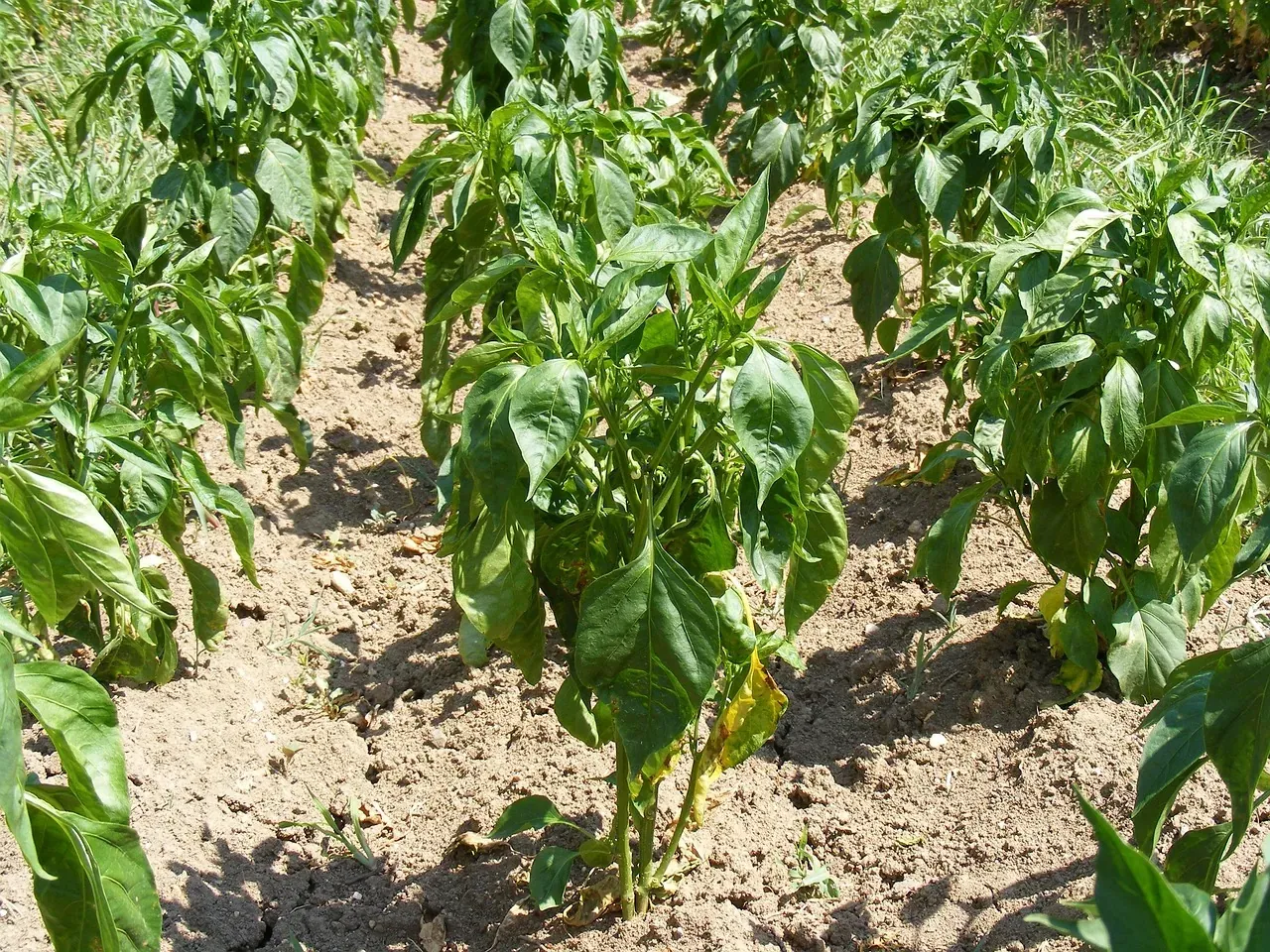 Rows of young pepper plants spaced apart in dry, sunny garden soil
Photo: byrev / Pixabay
Spacing recommendations differ by source and by layout. Colorado State's 15 to 18 inches is equal spacing for block-style raised beds, and it says the closer spacing should be used only on improved soils with 4 to 5% organic matter. Row spacings are wider.
| What | Recommendation | Source |
|---|---|---|
| Spacing in beds (equal spacing) | 15-18 in | Colorado State |
| Spacing in rows | 18-24 in apart, rows 30-36 in | Texas A&M |
| Spacing in rows | 12-24 in apart, rows 30-36 in | U. of Maryland |
| Seed depth | 1/4 in (CSU); 1/2 in (USU, Texas A&M) | as listed |
| Soil temperature to transplant | 60°F (USU); 65°F (UMD) | as listed |
| Transplant age | 6-8 weeks (CSU, Clemson); 8-10 weeks (USU, UMD) | as listed |
| Days to harvest from transplant | 70 (CSU); 70-85 (Clemson, UMD) | as listed |
| Water | 1-2 in per week | Utah State |
Planting in a raised bed? Our raised bed soil calculator tells you how much mix to buy for your bed size.
Shop the essentials
What you'll need
Supplies for the steps in this guide.
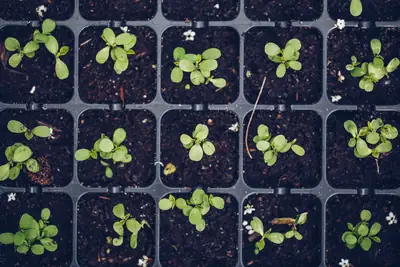 Start indoorsSeed-starting trays with lidsCell trays with clear domes for sowing seeds indoors.: check price on Amazon (opens in a new tab)
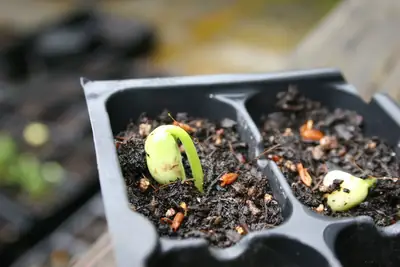 Start indoorsSeedling heat matWarms seed trays from below. Pick one with a thermostat.: check price on Amazon (opens in a new tab)
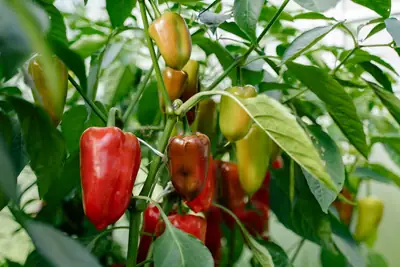 To sowPepper seedsSeed packets from many sellers: compare varieties and days to maturity.: check price on Amazon (opens in a new tab)
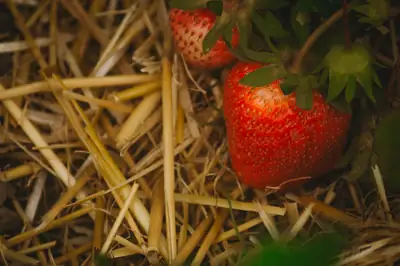 After plantingStraw mulchStraw for covering beds after planting.: check price on Amazon (opens in a new tab)
As an Amazon Associate I earn from qualifying purchases. Photos show the type of product, not a specific listing. How we choose
Watering and mulch for bell peppers#
Steady moisture is the single biggest care factor when growing bell peppers. Utah State says to "water peppers deeply and infrequently, applying 1-2 inches per week." Clemson says to moisten the soil "to a depth of at least 6 inches" and calls fruit set and fruit development "the critical period for moisture."
Extension guides keep coming back to consistency. The University of Maryland puts it simply: "Uniform soil moisture is the goal when watering," and warns that "dry conditions can cause blossom drop, small fruit, and blossom end rot."
Mulch helps hold that moisture, but timing matters. Utah State says, "Do not apply organic mulches until soils have warmed to 75ºF," Once the soil is warm, Maryland suggests "straw, dry grass clippings, or raked tree leaves from the fall." If you saved leaves last autumn, see using leaves as mulch in the garden.
Feeding bell peppers#
When growing bell peppers, start with a soil test, then feed lightly. The University of Maryland's short version is: "Fertilize prior to planting, use starter fertilizer for transplants; side-dress after first fruits set."
Extension side-dressing rates for home gardens:
- Clemson: ½ pound of calcium nitrate (15.5-0-0) per 100 square feet, three to four weeks after planting, placed 4 to 6 inches from the plants to avoid burning the roots.
- Utah State: 1/4 tablespoon of 21-0-0 per plant, 4 and 8 weeks after transplanting.
More is not better. Clemson notes that plants with "a great deal of foliage but few blooms and fruit" show over-fertilization with nitrogen. Our chapter on fertilizer for pepper plants covers products, rates and a full schedule.
Growing bell peppers in pots#
Growing bell peppers in pots works well on a sunny patio or balcony. The University of Maryland Extension lists 5 gallons as the minimum container size for peppers and says every container needs "adequate holes or slits to drain excess water."
Pots dry out much faster than beds. Maryland's advice is to "check containers DAILY to see if they need water, especially in summer." Fill pots with potting mix rather than garden soil. For pot sizes, placement and feeding, see our chapter on growing peppers in containers.
Common problems when growing bell peppers#
Most problems with growing bell peppers trace back to temperature or water. Here are the three you are most likely to see, with what extension sources say about each.
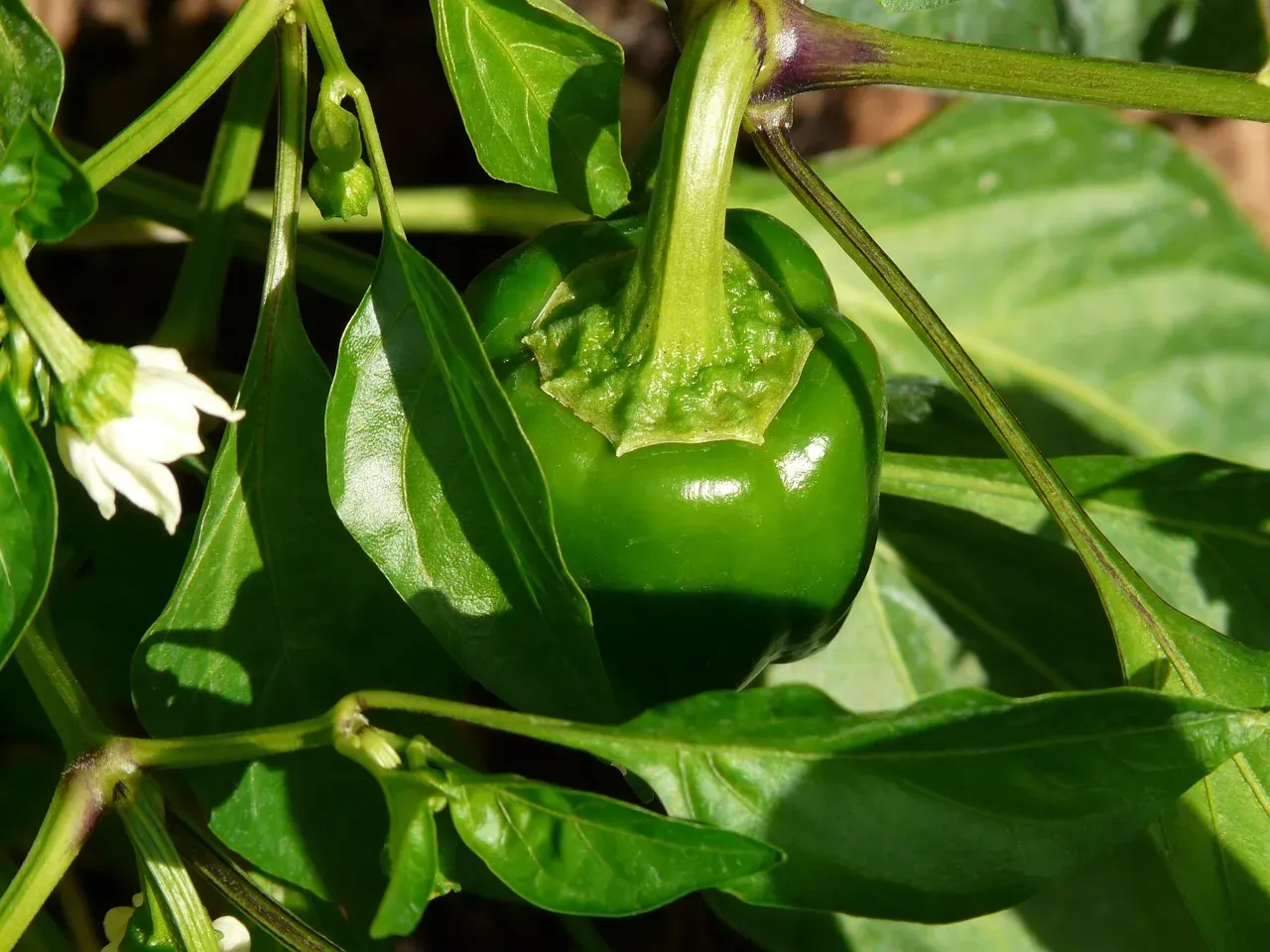 Green bell pepper on the plant beside a small white pepper flower and buds
Photo: Hans / Pixabay
Blossom drop#
Flowers that fall off without setting fruit are usually a temperature problem. NC State Extension says, "When nights are hot-above 75 degrees or too cool below 55, fruit won't set and blooms fall off," and that the same happens "when day temperatures rise above 90." Utah State gives the same 55°F night and 90°F day limits for peppers.
The fix is mostly patience. NC State says "when the weather moderates, the problem corrects itself," and suggests heavy mulching to keep soil moisture up. Maryland adds that very hot weather, "especially when evening temperatures are above 75 degrees F., will slow or stop pod production," and suggests a spot "where they will receive some late afternoon shade" in hot areas.
Blossom-end rot#
Blossom-end rot damages the blossom end of the fruit, the end opposite the stem. Clemson explains that it "is caused by a calcium deficiency within the plant," and the advice is about water more than fertilizer: "keep the soil uniformly moist, but not saturated." Clemson also suggests a soil test before planting to make sure the soil has enough calcium.
Sunscald#
Sunscald hits fruit exposed to direct sun in hot weather, leaving areas that "may become papery and bleached or tan colored," according to a University of Delaware report. The report notes it "is most prevalent on green fruit" and on plants with sparse foliage. Utah State says, "Plants with good leaf cover have less sunscald problems."
Staking helps. In the Delaware field observation, a staked and tied section had "less than 2% of fruit sunscald damaged," compared with 17% in the section that was not tied. That was a commercial planting, but the idea carries over: keep plants upright so fruit stays under its own leaves.
When and how to harvest bell peppers#
One perk of growing bell peppers is choice: you can pick them green or leave them to change color. The University of Maryland notes that "all fruits are green in color at first," and "when allowed to mature on the plant most varieties turn red, yellow, purple, orange, or brown." Clemson adds that "fully colored peppers are sweeter than green peppers."
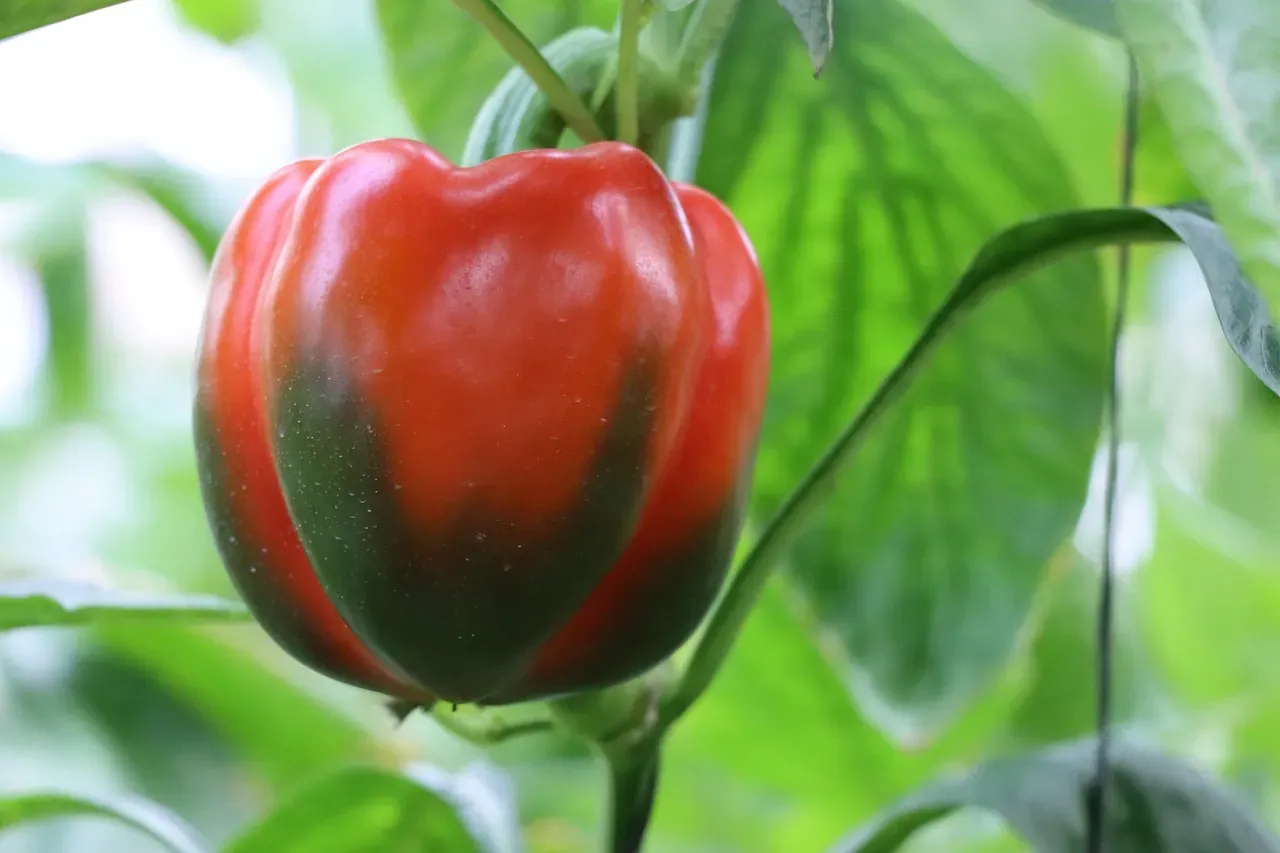 Bell pepper turning from green to red while still on the plant
Photo: drvivasayam / Pixabay
Timing from Clemson: peppers "should be ready for harvest in about 70 to 85 days after transplanting." For full color, plan on more time. Maryland says bell peppers "require an additional 2-3 weeks to fully ripen," and Utah State says fruit needs "35-45 days to mature from flowering to full color."
Pick sweet peppers "when they reach full size" with firm walls, according to Clemson and Maryland. Always cut rather than pull: Clemson advises to "cut the stems instead of pulling to avoid breaking branches." If you want colored fruit, leave it on the plant, because Maryland notes that peppers "don't ripen further after harvesting."
End of season: frost and overwintering#
The season for growing bell peppers ends at the first fall frost. Purdue Extension lists pepper among the tender vegetables "damaged by light frost," so watch the forecast in fall. Sign up for free frost alerts to get a short email before each step of the season for your ZIP, including frost, and our guide on how to cover plants from frost can buy you a few more weeks of harvest.
Before a killing frost, the University of Maryland suggests that "entire plants may be pulled just before a killing frost and hung upside down in a warmer area." Or keep the plant itself: see how to overwinter pepper plants to bring a potted pepper indoors and replant it next spring.
FAQ#
How long do bell peppers take to grow?#
From transplanting, extension sources put harvest at about 70 days (Colorado State) to 70 to 85 days (Clemson, Maryland). From seed, Clemson says to "expect 100 to 120 days to maturity," and the University of Florida lists 90 to 100 days. Add 2 to 3 more weeks if you want fully colored fruit.
Why are my bell peppers not changing color?#
Usually they just need more time. Utah State says pepper fruit needs "35-45 days to mature from flowering to full color," and Maryland says bell peppers need "an additional 2-3 weeks to fully ripen" after reaching full green size. Check the seed packet too: Maryland notes ripe peppers can be red, yellow, purple, orange or brown, so your variety may not be a red one.
Do bell peppers need full sun?#
Yes. The University of Maryland says peppers need direct light for at least 6 hours a day and prefer 8 to 10 hours. In very hot regions, Maryland suggests a site with some late afternoon shade.
How many bell peppers per plant?#
It varies a lot by variety and weather. The University of Georgia says "a good-yielding pepper plant may produce up to seven or eight, 8-ounce jumbo peppers." In a small Penn State Master Gardener trial in Butler County, five green bell varieties gave from 5 to 11 peppers per plant in 2023, while in a hot, dry 2024, with a single plant of each variety, counts ran from 1 to 23 per plant.
Sources#
- Vegetable Planting Guide (CMG GardenNotes #720) (Colorado State University Extension)
- Peppers in the Garden (Utah State University Extension)
- Suggested Vegetable Planting Dates for Utah (Utah State University Extension)
- Growing Peppers in a Home Garden (University of Maryland Extension)
- Growing Vegetables in Containers and Salad Tables (University of Maryland Extension)
- Pepper (Clemson Cooperative Extension, Home & Garden Information Center)
- Blossom Drop (NC State Extension, Burke County Center)
- Sunscald Very Prevalent in Peppers this Year (University of Delaware, Weekly Crop Update)
- Florida Vegetable Gardening Guide (UF/IFAS Extension)
- Texas Home Vegetable Gardening Guide (E-502) (Texas A&M AgriLife Extension)
- When to start seeds indoors in central Oregon (Oregon State University Extension)
- The Fall Vegetable Garden (HO-66-W) (Purdue Extension)
- Bell peppers a popular choice for home gardeners (University of Georgia CAES Field Report)
- Pepper plant trials produce positive payoffs (Penn State Extension, Butler County Master Gardeners)
- Frost date spreads by zone: PlantAlong analysis of NOAA 1991-2020 climate normals (see the methodology page)
Featured photo: NIDEO_NICS / Pixabay.
A 5-part series
Everything peppers, chapter by chapter
- Chapter 1
Growing Bell Peppers: Planting Dates, Spacing and Care
Bell peppers go out about two weeks after your last frost into warm soil, need 1-2 inches of water a week, and are ready about 70-85 days after transplanting. Here is the full season, sourced from extension guides.
You're reading this✓ Read - Chapter 2
How to Overwinter Pepper Plants Indoors
Peppers are frost-tender perennials. Bring them in by your ZIP's first-frost P10 date, cut them back, keep them at 40-55°F with little water, and replant two weeks after your last frost.
✓ Read - Chapter 3
When to Start Pepper Seeds Indoors in Zone 6
Peppers go in about 6 to 8 weeks before your last frost, but zone 6 frost dates span more than three weeks. Here are sourced rules and example sowing dates for 6a and 6b.
✓ Read - Chapter 4
Fertilizer for Pepper Plants: What to Use and When
Extension rates and timing for feeding peppers: soil test first, a moderate pre-plant dose, a nitrogen side-dress around first fruit set, and liquid feed for pots.
✓ Read - Chapter 5
Growing Peppers in Containers: Pot Size, Soil and Care
What extension guides say about growing peppers in pots: how big a container, which mix, when to move it outside, how often to water and feed, and when to bring it in.
✓ Read
5 of 5 chapters are out; new ones appear here as they publish.
Check your inbox
We sent a confirmation link to . Click it and your planting calendar PDF is on its way. Nothing there in a few minutes? Check your spam or promotions folder.
Crops in this article
No comments yet. Tried this in your garden, or found a date that worked better? Start the thread.
Leave a comment