 PlantAlong

In short
- NC State Extension says overwatering is the common cause of rosemary decline or death.
- Rosemary wants 6 or more hours of direct sun a day, so use a south-facing window or a grow light (NC State, Penn State).
- Wisconsin Extension recommends a cool, bright spot no warmer than 65°F and checking the soil an inch deep once or twice a week.
- Move the plant outdoors in spring only after the danger of frost has passed (Penn State, Wisconsin, Arkansas).
- Penn State lists rosemary as hardy in USDA zones 8 to 10, with cultivars such as 'Arp' reaching zone 7, or 6b with protection.
On this page
- Why rosemary Christmas trees die in January
- Light: the brightest window or a grow light
- Watering: never bone dry, never soggy
- Temperature and humidity
- Pruning and harvesting
- After the holidays: repot, then outdoors after last frost
- Can a rosemary Christmas tree live outside?
- FAQ
- How do I keep a rosemary Christmas tree alive?
- Will rosemary survive winter in pots?
- Why is my rosemary tree turning brown?
- Can I plant my rosemary tree outside?
- Sources
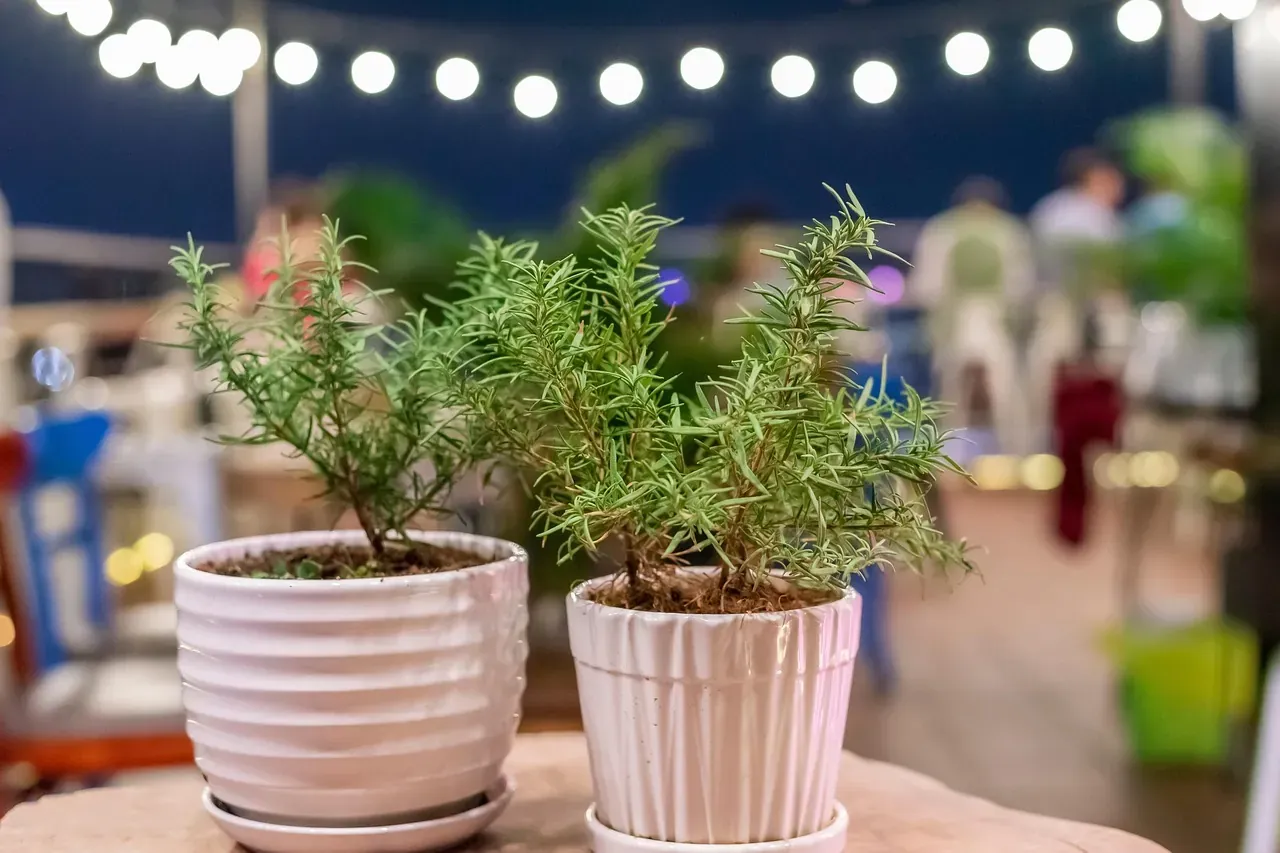
A rosemary Christmas tree stays alive past New Year if you give it the brightest light you have, a cool room, and soil that is checked often but never kept soggy. Most of these plants die from too much water, too little light, or a warm, dry house. Once all chance of frost has passed in spring, it can move outdoors, and in mild-winter areas it can live outside year-round.
Why rosemary Christmas trees die in January#
A rosemary Christmas tree is a sheared rosemary shrub. A University of Georgia Extension article notes that most holiday rosemary is grown in greenhouses, so the plants "don't react kindly" to being shipped, displayed, and carried into a dry, heated home.
University of Arkansas Extension says rosemary does not take indoor conditions well, and that low light and lack of humidity "do not bode well" for it. Penn State Extension says overwintering it indoors is hard because of low light and too little or too much water.
The biggest killer is water. NC State's Extension Gardener Plant Toolbox says overwatering is the common cause of rosemary decline or death.
Light: the brightest window or a grow light#
Rosemary is a full-sun plant. NC State and Illinois Extension both describe full sun as 6 or more hours of direct sunlight a day, which is hard to find indoors in December.
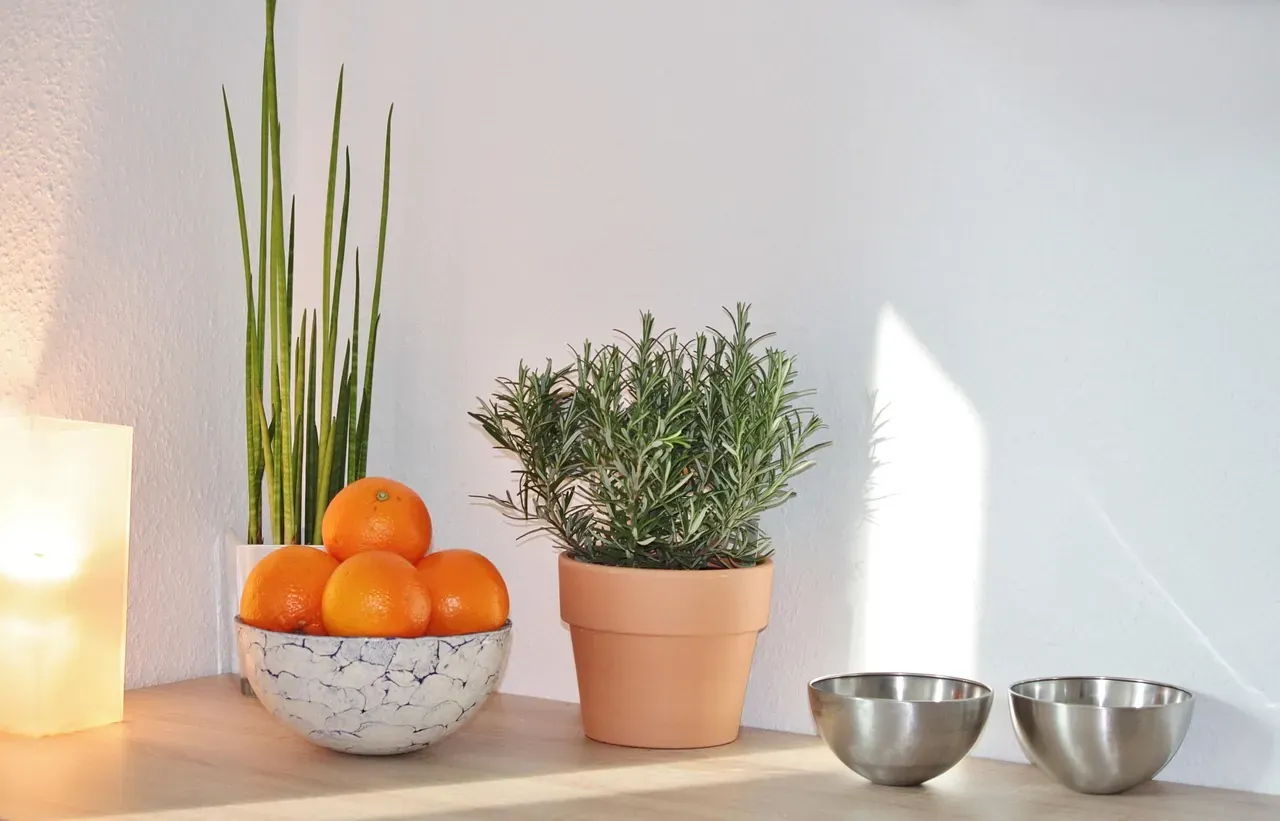 Potted rosemary in a terracotta pot on a bright shelf beside a bowl of oranges
Photo: cocoparisienne / Pixabay
Penn State recommends a south-facing window in full sun or supplemental lighting, with good air circulation. Wisconsin Extension (Kenosha County) suggests a south or west window and turning the pot once a week so every side gets light.
If no window is bright enough, use a grow light. Wisconsin Extension specifies supplemental light "that doesn't emit heat," and Illinois Extension suggests a grow light in a cool spot.
One source differs: the UGA article advises keeping holiday rosemary away from direct sunlight as well as heat registers and fireplaces. Every source agrees on the heat part, so keep your rosemary Christmas tree away from vents and radiators.
Shop the essentials
What you'll need
Supplies for the steps in this guide.
 FeedHouseplant fertilizerLiquid food for indoor flowering plants. Follow the label rate.: check price on Amazon (opens in a new tab)
 Start indoorsLED grow lightLight for seedlings while they grow indoors.: check price on Amazon (opens in a new tab)
 Before wateringSoil moisture meterA probe that shows whether a pot is wet or dry.: check price on Amazon (opens in a new tab)
 To plantPots with drainage holesPlanters with drainage holes for herbs, bulbs and houseplants.: check price on Amazon (opens in a new tab)
As an Amazon Associate I earn from qualifying purchases. Photos show the type of product, not a specific listing. How we choose
Watering: never bone dry, never soggy#
Start by removing the foil wrap. Wisconsin Extension says to take it off to prevent waterlogging and set the pot in a drip tray instead.
Then check the soil instead of watering on a schedule. Wisconsin Extension's routine:
- Check the soil once or twice a week by pushing a finger about an inch deep.
- If it feels dry, water thoroughly.
- Heated homes dry the pot out faster, so keep checking through winter.
The same source warns that rosemary "can get iffy" if it is over- or under-watered. Penn State notes that clay pots dry out faster, and Wisconsin Extension says a clay pot works best for rosemary.
Do not feed it now. Wisconsin Extension says not to fertilize rosemary during winter.
Temperature and humidity#
Cool is better than warm. Wisconsin Extension recommends a cool, bright spot where the temperature does not go above 65°F. Illinois Extension describes the ideal overwintering spot as about 50 to 60 degrees with very bright sunlight, such as a sunny basement window or a partially heated porch.
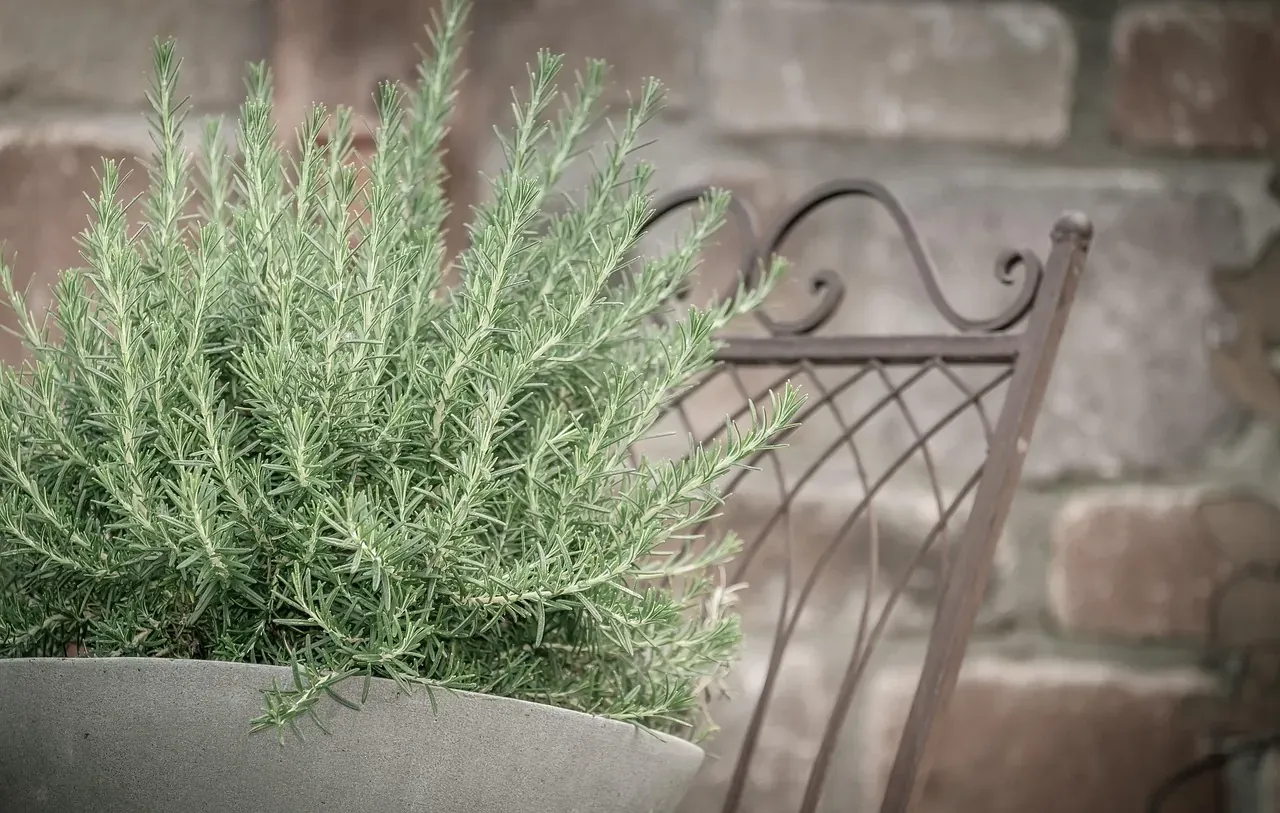 Silvery green rosemary in a wide gray planter beside a brick wall and iron chair
Photo: Couleur / Pixabay
Wisconsin Extension says a garage also works as long as it stays above freezing and gets decent sunlight. Arkansas Extension suggests a garage, or keeping it "as cool as possible," for a struggling plant.
| Factor | What extension sources say |
|---|---|
| Light | 6+ hours of direct sun (NC State, Illinois); south window or grow light (Penn State) |
| Room temperature | Not above 65°F (Wisconsin); about 50 to 60°F (Illinois) |
| Lowest safe spot | A bright garage that stays above freezing (Wisconsin) |
| Watering check | Finger test about 1 inch deep, once or twice a week (Wisconsin) |
| Fertilizer | None in winter (Wisconsin) |
| Humidity | Mist, pebble tray, or humidifier (UGA, Wisconsin) |
For humidity, the UGA article suggests misting, setting the pot on a tray of stones, and grouping houseplants together. Wisconsin Extension suggests misting once a week or running a humidifier.
Balance that with airflow. NC State says poor circulation and high humidity can cause powdery mildew on rosemary, and Penn State lists powdery mildew and root rot as its main problems.
Pruning and harvesting#
You can snip your rosemary Christmas tree for the kitchen. Penn State says rosemary leaves can be cut at any time during the growing season to use fresh, and Clemson's Home & Garden Information Center says regular pruning or harvesting promotes vigorous, well-shaped, sturdy growth.
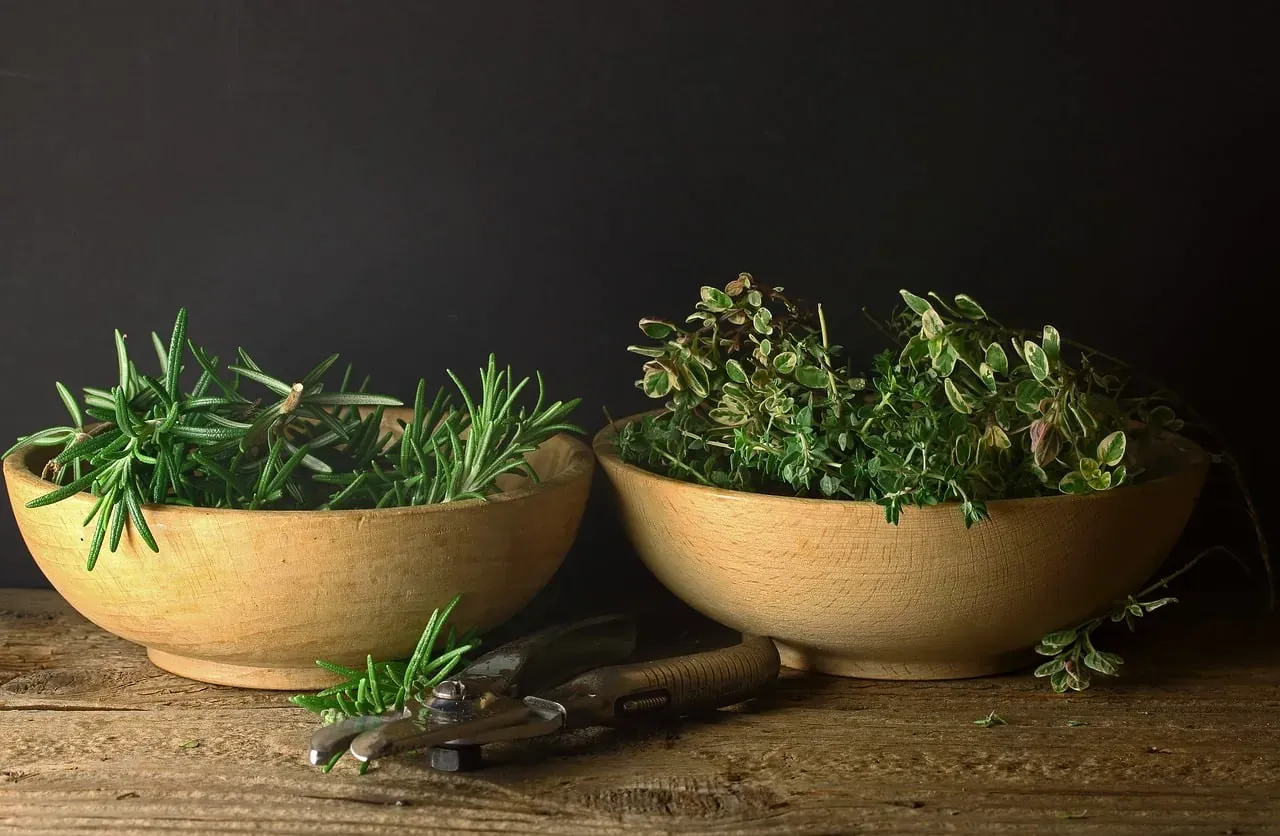 Freshly cut rosemary and thyme sprigs in wooden bowls beside a pair of pruning shears
Photo: Bluesnap / Pixabay
Keep the cuts modest. Clemson's herbal tea garden guide says never to take more than one-third of an herb plant at one time. Trimming tips evenly keeps the rosemary Christmas tree in its cone shape.
If the plant is already struggling, Arkansas Extension says to cut it back and keep it a little on the dry side. Penn State's general advice for rosemary is to prune after flowering.
After the holidays: repot, then outdoors after last frost#
Keep your rosemary Christmas tree in its cool, bright spot until spring. The key date is your last spring frost.
Wisconsin Extension says that in spring, after the threat of frost, you can move the pot outside and repot it with fresh potting mix. For rosemary in pots, the same source recommends a well-drained potting mix with some extra perlite. Penn State likewise says to move pots outside in spring after the danger of frost.
The UGA article suggests easing the move: start setting the plant outside in a sheltered spot during the day, protect it from drying winds, and let it acclimate before planting it out. Arkansas Extension says to move it outdoors once all chance of frost has passed, into a well-drained, sunny spot.
Frost dates vary a lot even within one hardiness zone, so look up yours. Enter your ZIP in the planting calendar to see your average last frost date, and sign up for frost alerts so a late cold night does not catch the plant outside.
If you grow it in a pot again next fall, Penn State says to bring rosemary indoors 2 to 3 weeks before your first fall frost date.
Can a rosemary Christmas tree live outside?#
It depends on your hardiness zone and on the cultivar. Hardiness zones are based on average winter low temperatures, and you can look yours up on our hardiness zone pages.
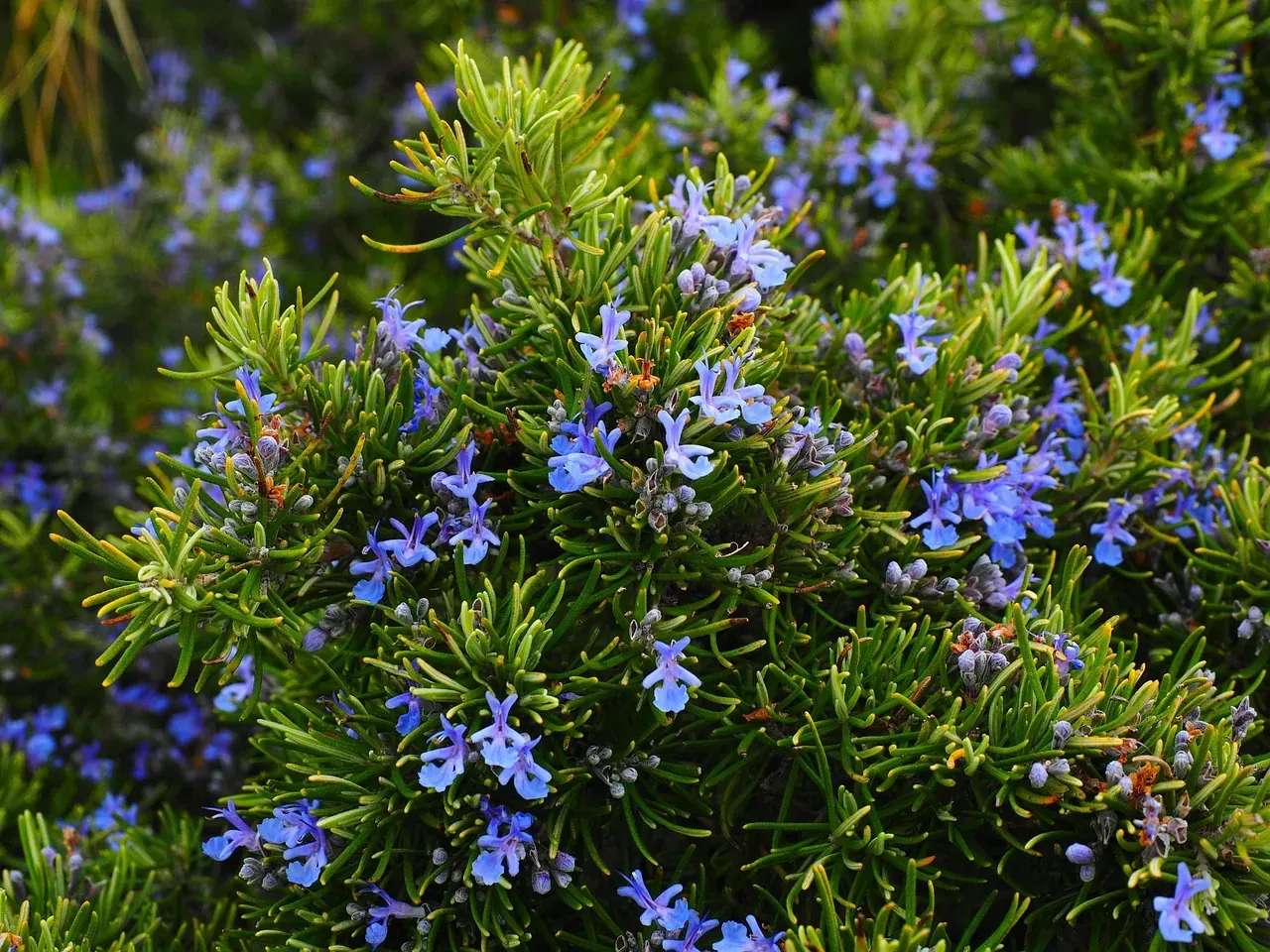 Outdoor rosemary shrub covered in small blue flowers among dense needle-like leaves
Photo: Hans / Pixabay
Sources do not give one number for rosemary:
- Penn State Extension: a tender perennial for USDA zones 8 to 10. Hardier cultivars ('Arp', 'Athens Blue Spire', 'Madalene Hill', 'Miss Jessop's Upright') can survive to zone 7, or 6b with protection.
- NC State Plant Toolbox: USDA zones 8a through 10b.
- Illinois Extension: typically hardy to zone 7, with 'Arp' and 'Hills Hardy' (also sold as 'Madalene Hill') noted as hardy to zone 6. Single-digit temperatures are often fatal.
- Clemson HGIC: rosemary varies in hardiness; prostrate (trailing) cultivars are not as cold hardy as upright ones, and 'Arp' or 'Hill Hardy' are the reliable choices for South Carolina's Upstate.
Arkansas Extension also notes "a bit of difference in varietal hardiness," and that roots in a small pot get much colder than roots in the ground or a large container. If your rosemary Christmas tree came with a tag naming a cultivar, compare it with the lists above.
In zone 6 or 7, Illinois Extension suggests a protected spot such as a sunny, south-facing wall, plus a heavy layer of mulch at first frost. Colder than that, treat it as a potted plant that comes indoors each fall. Wisconsin Extension, for example, says rosemary is not hardy there and is grown in pots that move indoors before the first frost.
FAQ#
How do I keep a rosemary Christmas tree alive?#
Give it the brightest window you have or a grow light, keep it cool (Wisconsin Extension says no warmer than 65°F), and water only when the soil is dry about an inch down. Remove any foil wrap and skip fertilizer until spring.
Will rosemary survive winter in pots?#
Indoors, yes, with enough light and careful watering, though Penn State and NC State both say it can be difficult. Outdoors, Arkansas Extension says a small pot exposes the roots to more cold than the ground does.
Why is my rosemary tree turning brown?#
Penn State says browning of the tips is a sign of root rot from overwatering. Dry indoor heat is the other cause named by UGA and Illinois Extension. Check whether the soil is staying wet before you water again.
Can I plant my rosemary tree outside?#
Yes, after all chance of frost has passed in spring. Whether it stays outside through the next winter depends on your zone: Penn State lists zones 8 to 10, with hardier cultivars reaching zone 7 or 6b with protection.
Sources#
- Herb Garden Plants: Rosemary (Penn State Extension)
- Salvia rosmarinus (Rosemary) (North Carolina Extension Gardener Plant Toolbox)
- Rosemary (University of Illinois Extension, The Garden Scoop)
- Holiday Rosemary (University of Wisconsin-Madison Division of Extension, Kenosha County)
- Rosemary Trees (University of Arkansas Cooperative Extension Service)
- Rosemary shrubs make their debut as tiny Christmas trees (University of Georgia CAES)
- Herbs (Clemson Home & Garden Information Center)
- Planting an Herbal Tea Garden in South Carolina (Clemson Home & Garden Information Center)
Featured photo: ThinhLa / Pixabay.




Check your inbox
We sent a confirmation link to . Click it and your planting calendar PDF is on its way. Nothing there in a few minutes? Check your spam or promotions folder.




No comments yet. Tried this in your garden, or found a date that worked better? Start the thread.
Leave a comment