 PlantAlong

In short
- Texas A&M groups onions as short day (11 to 12 hours), intermediate day (12 to 13 hours) and long day (14 to 16 hours) by the daylight that triggers bulbing.
- K-State places short day onions at latitudes 25 to 35, intermediate at 32 to 42 and long day at 37 to 47.
- A University of Maryland Extension article splits short-day and long-day onions at about 36 degrees north instead.
- Applying K-State's bands to PlantAlong's 41,195 ZIP codes puts 16,815 ZIPs in the 37 to 42 degree overlap where intermediate or long day onions fit.
- Clemson says long day onions cannot be grown successfully in the South, and Iowa State says short-day onions make small bulbs in the North.
- Short-day onions are planted in fall in the South, while long-day onions go in during early spring in the North.
On this page
- Short day vs long day onions in one table
- Latitude decides: the bands extension sources give
- Short day vs long day onions by ZIP code
- Intermediate day onions
- What happens with the wrong type
- When to plant each type
- FAQ
- What happens if you plant long day onions in the South?
- Can you grow short day onions in the North?
- What are intermediate day onions?
- How do I know what onion to plant?
- Sources
Short day vs long day onions comes down to one trigger: the number of daylight hours that tells an onion to stop making leaves and start making a bulb. Short-day onions bulb at about 10 to 12 hours of daylight and suit the South. Long-day onions need about 14 to 16 hours and suit the North, with intermediate types in between.
Because summer days get longer the farther north you go, latitude settles the short day vs long day onions question. Below: the hours each source gives, two sets of latitude bands, and how they land on real ZIP codes.
Short day vs long day onions in one table#
Every extension source we checked uses the same three groups, but the hour ranges differ a little.
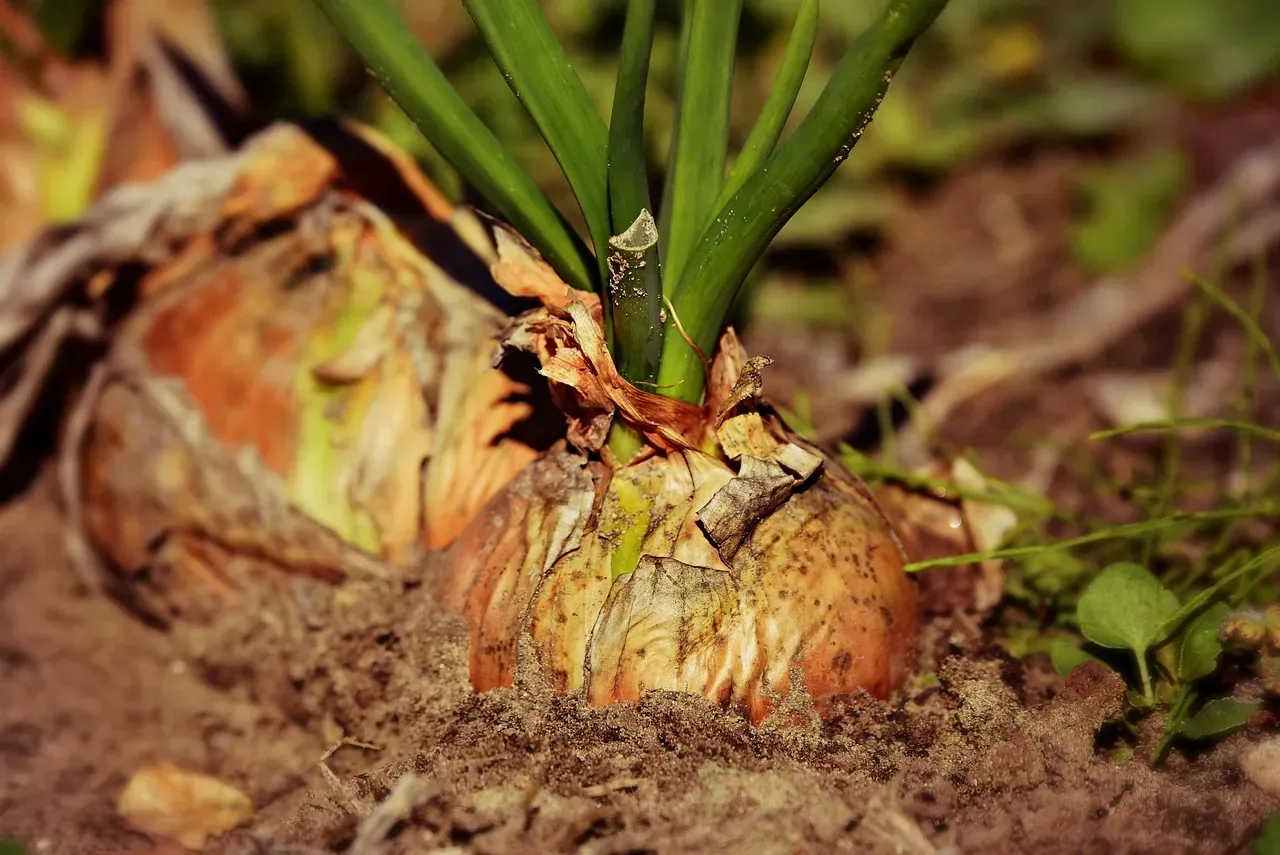 Close view of a yellow onion bulb swelling at the soil surface with green leaves
Photo: MabelAmber / Pixabay
| Group | Texas A&M AgriLife (EHT-037) | Maryland Grows (UMD) | Other extension sources |
|---|---|---|---|
| Short day | 11 to 12 hours | 10 to 12 hours | About 12 hours (UMD Extension, Clemson) |
| Intermediate day | 12 to 13 hours | 12 to 15 hours | No hours given |
| Long day | 14 to 16 hours | 14 to 16 hours | 15 to 16 hours (UMD Extension, K-State); about 14 hours (Cornell) |
The Maryland Grows article explains that at the trigger length, onions "will stop growing leaves and start thickening their below-ground structures." Leaves matter: Texas A&M says "More leaves means more rings and larger bulbs."
Latitude decides: the bands extension sources give#
Two sources put the short day vs long day onions split into degrees of latitude, and they draw the lines differently.
- K-State Research and Extension (Butler County): short day varieties "perform best in latitudes 25 to 35," intermediate day varieties in latitudes 32 to 42, and long day varieties in latitudes 37 to 47. The bands overlap, so 32° to 35° fits short or intermediate, and 37° to 42° fits intermediate or long.
- University of Maryland Extension (Maryland Grows blog, written by a Montgomery County Master Gardener): short-day onions are grown in the South, "generally below latitude 36° N," and long-day onions "do best north of 36° N." It gives no latitude band for intermediate types.
So the sources disagree in the middle. Between 35° and 37°, K-State points to intermediate onions, while the Maryland line puts short day below 36° and long day above it. Treat both as fuzzy lines, not borders.
Shop the essentials
What you'll need
Supplies for the steps in this guide.
 To plantOnion setsSmall onion bulbs for planting.: check price on Amazon (opens in a new tab)
 To sowOnion seedsSeed packets from many sellers: compare varieties and days to maturity.: check price on Amazon (opens in a new tab)
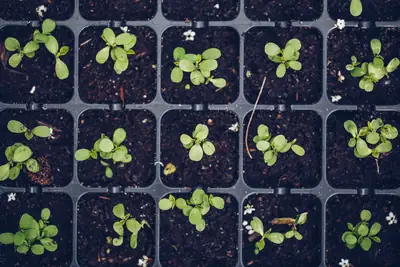 Start indoorsSeed-starting trays with lidsCell trays with clear domes for sowing seeds indoors.: check price on Amazon (opens in a new tab)
As an Amazon Associate I earn from qualifying purchases. Photos show the type of product, not a specific listing. How we choose
Short day vs long day onions by ZIP code#
Every ZIP code in PlantAlong's data has a latitude (its Census or GeoNames center point). The table is PlantAlong's application of K-State's bands to those latitudes: our arithmetic on a cited rule, not an extension recommendation for any single ZIP.
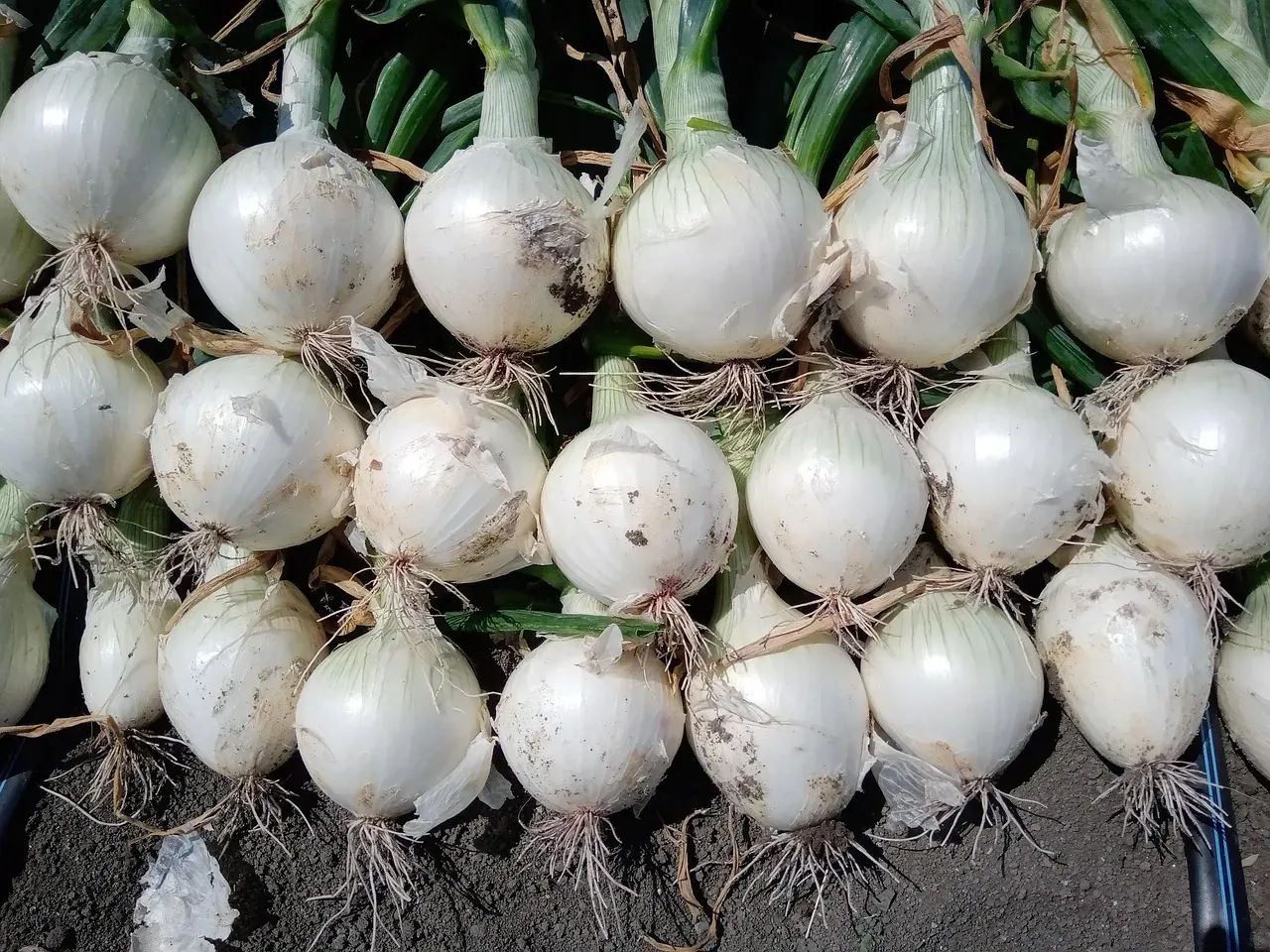 Rows of freshly pulled white onions with roots still attached, laid out after harvest
Photo: jcesar2015 / Pixabay
| ZIP latitude | K-State band | ZIPs | Examples (latitude) |
|---|---|---|---|
| Below 25° | Outside the bands | 365 | Honolulu (21.3°), Key West (24.5°) |
| 25° to under 32° | Short day | 4,234 | Miami (25.8°), Houston (29.8°), New Orleans (30.0°) |
| 32° to 35° | Short day or intermediate | 5,736 | Dallas (32.8°), Phoenix (33.5°), Atlanta (33.8°), Los Angeles (34.1°) |
| Over 35° to under 37° | Intermediate | 4,110 | Memphis (35.2°), Oklahoma City (35.5°), Raleigh (35.8°), Nashville (36.1°) |
| 37° to 42° | Intermediate or long day | 16,815 | San Francisco (37.8°), St. Louis (38.6°), Denver (39.8°), New York (40.8°), Chicago (41.9°) |
| Over 42° to 47° | Long day | 8,421 | Detroit (42.3°), Boston (42.4°), Minneapolis (45.0°), Portland, Ore. (45.5°) |
| Over 47° | North of the bands | 1,514 | Seattle (47.6°), Anchorage (61.2°) |
That covers all 41,195 ZIP codes in our data. K-State gives no band below 25° or above 47°, so we do not assign those ZIPs a type. For Florida, UF/IFAS says bulbing onions "must be planted in fall and be short-day varieties."
With the Maryland article's single 36° line instead, 12,417 ZIPs (30%) sit below 36° N and 28,778 (70%) sit at or above it. Nashville (36.15°) and Las Vegas (36.17°) land just north of that line, and Raleigh (35.77°) just south of it.
Latitude is not the whole story: the Maryland article stresses that onions are "photothermoperiodic," so temperature matters too. For frost dates, enter your ZIP in the PlantAlong planting calendar.
Intermediate day onions#
Intermediate onions sit between the two poles of the short day vs long day onions choice. Texas A&M lists them at 12 to 13 hours of daylight, with varieties such as Cimarron, Sierra Blanca and Fuego.
- Kansas: K-State says "intermediate day varieties are best for all of Kansas," while some long day varieties may do well in the north of the state.
- Maryland: the Maryland Grows author names intermediate varieties such as Sierra Blanca, Superstar and Candy as the most reliable there. UMD Extension says Mid-Atlantic gardeners "can experiment with all groups, although long day and intermediate types will probably perform best."
- South Carolina: Clemson says intermediate day onions "may be grown in the Upstate."
What about "day-neutral" onions? The Maryland Grows article lumps them with intermediate onions at 12 to 15 hours. We found no extension source that defines day-neutral as a separate group.
What happens with the wrong type#
Getting short day vs long day onions backwards rarely kills the plants. The usual result is a poor bulb.
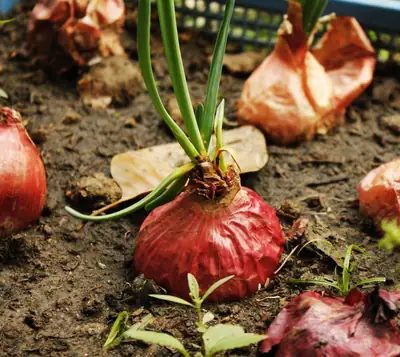
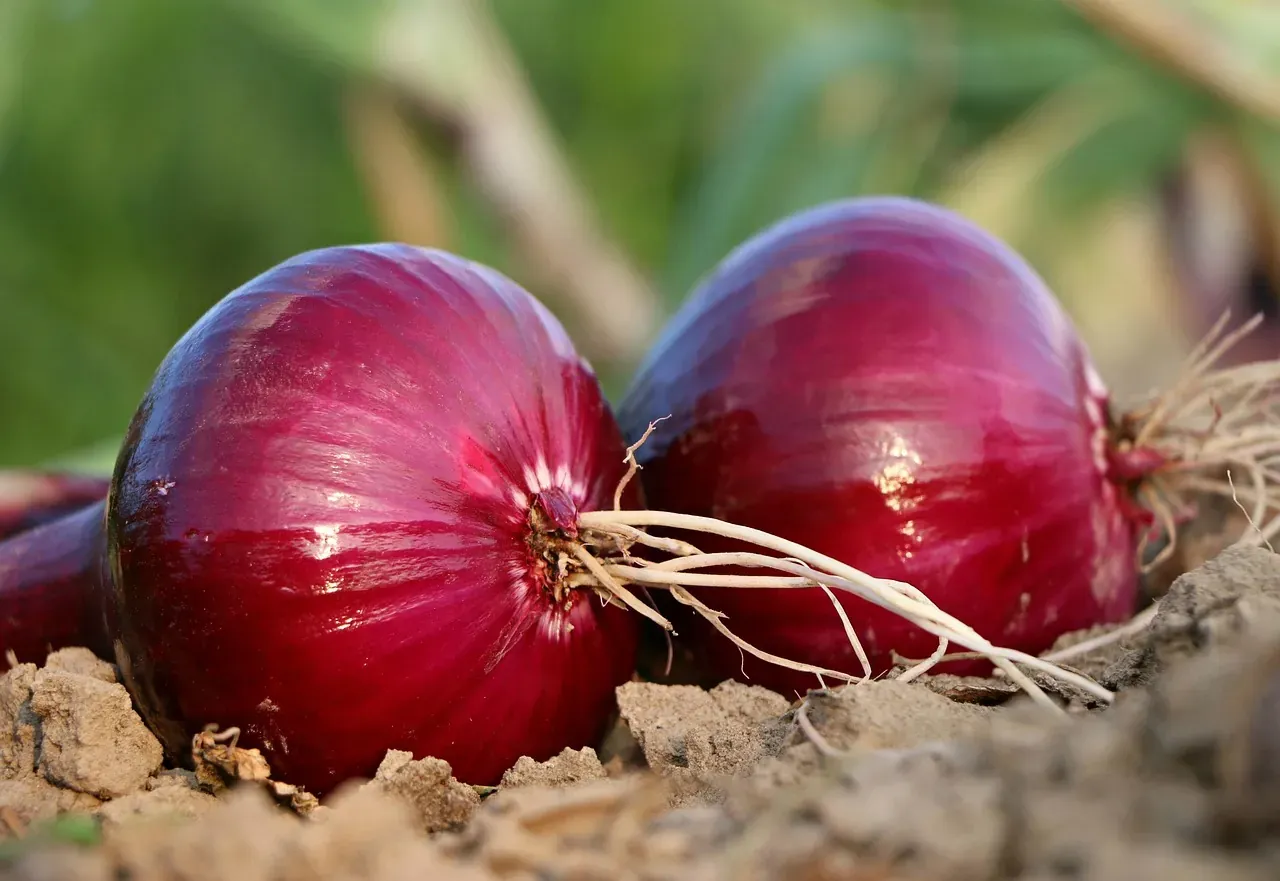 Two red onion bulbs with dry roots resting on loose garden soil
Photo: klimkin / Pixabay
Long-day onions in the South. Clemson is direct: "Long day onions cannot be successfully grown in the South." Even in Maryland, the Maryland Grows author found that the longest day in Rockville is 14 hours and 55 minutes, so long-day varieties "that prefer 16-hour days are not going to bulb up very well."
Short-day onions in the North. Here the sources differ on how bad it gets:
- Iowa State says short-day cultivars "generally produce small bulbs when grown in northern areas because of the small amount of foliage present at bulb initiation."
- South Dakota State says to avoid short-day varieties there, "as they will not form bulbs under the long days of our summer."
- K-State says gardeners along the southern edge of Kansas could try short day varieties as an experiment, but "they likely will not produce large onions in most years."
Bolting. The Maryland Grows article says warm soil (over 75°F) can cause bolting if bulbing has not started. Clemson says onions bolt after "a prolonged cold period following a favorable growing period."
When to plant each type#
The two main groups are planted in different seasons, which is the other half of the short day vs long day onions choice.
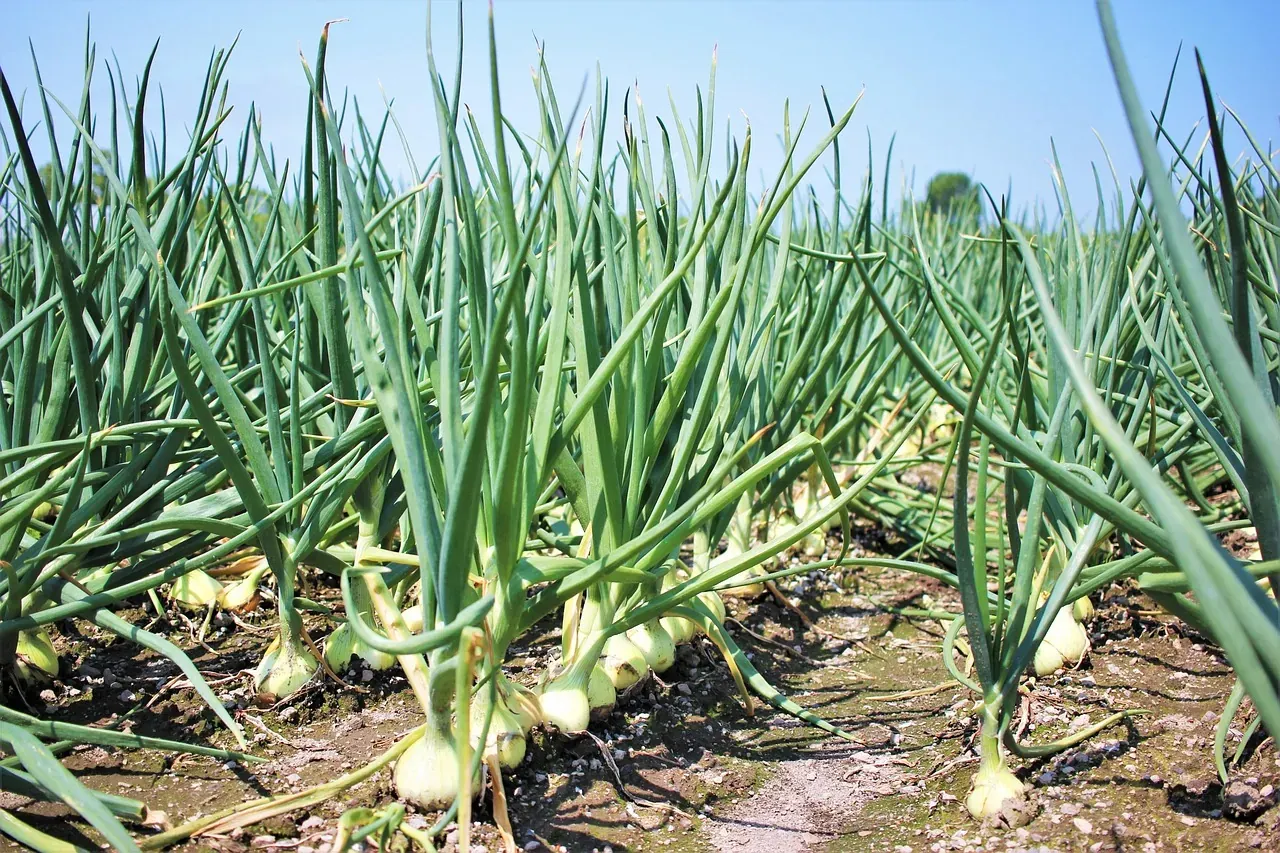
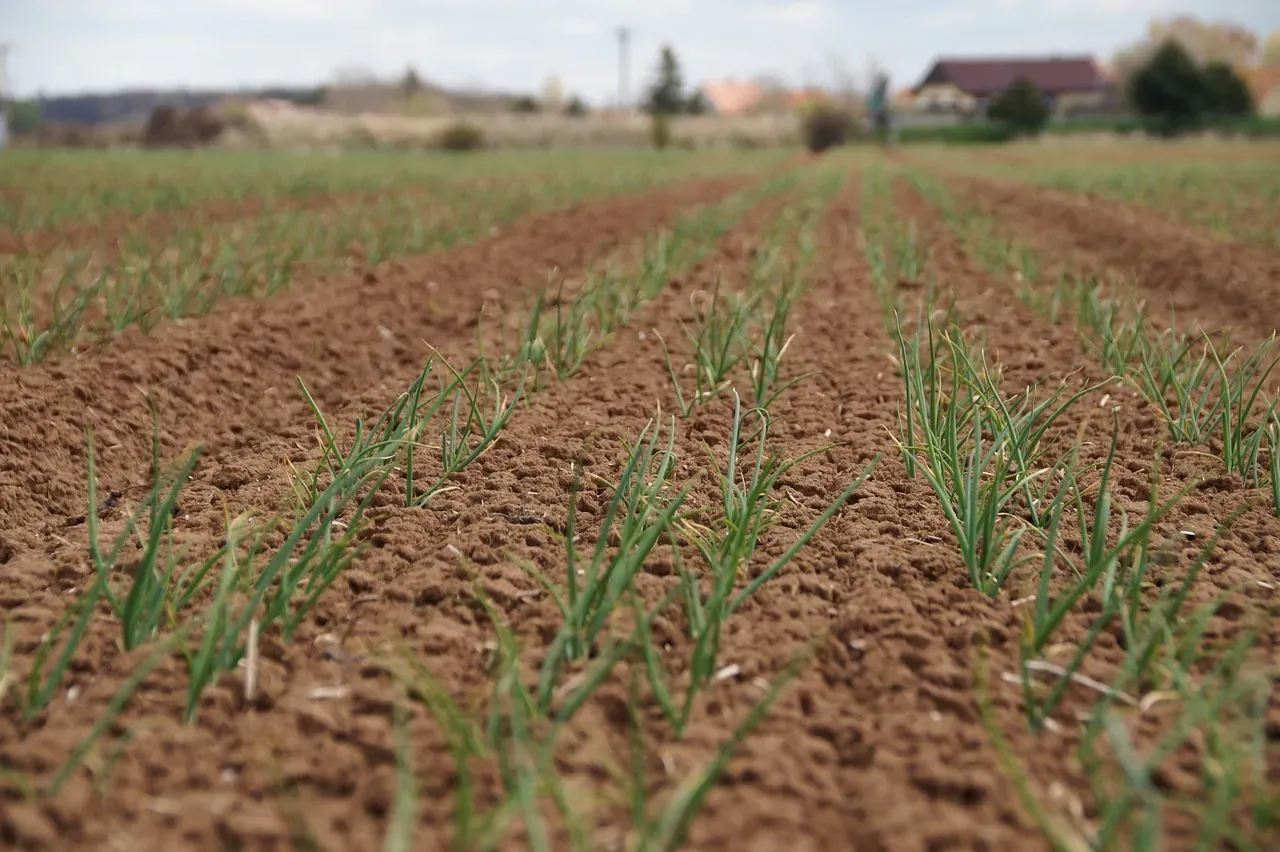 Young onion plants growing in long rows of brown tilled soil in spring
Photo: ivabalk / Pixabay
Short day: fall, in the South.
- Texas A&M says to sow seed for bulbs ¼ inch deep from October through December, or transplant in January or February, for bulbs in May to July.
- Clemson plants onion sets Sept 15 to Oct 15 in the Piedmont and Sept 15 to Nov 15 on the coast. It sets out transplants from late December through February.
- UF/IFAS says Florida bulbing onions must go in during fall.
Intermediate: early spring, in the middle latitudes. K-State says onion plants or sets "need to be planted in mid- to late March" in Kansas.
Long day: spring, in the North.
- UMD Extension says to "plant onions in early spring as soon as you can cultivate your garden."
- Iowa State plants transplants and sets from early April to early May.
- Colorado State classes onions as hardy and plants hardy crops as early as 2 to 4 weeks before the average last spring frost.
Spring windows hang on your last frost date, which varies a lot inside one zone. See the onion growing guide for spacing and timing, and check the onion companion planting notes before you choose a bed.
FAQ#
What happens if you plant long day onions in the South?#
Clemson says long day onions "cannot be successfully grown in the South." Texas A&M puts their bulbing trigger at 14 to 16 hours of daylight, and southern days do not reach that before the heat arrives, so expect poor or no bulbs.
Can you grow short day onions in the North?#
You can, but on the short day vs long day onions question the North belongs to long-day types. Iowa State says they "generally produce small bulbs" in northern areas, and South Dakota State says they will not form bulbs under its long summer days. Choose long-day or intermediate varieties instead.
What are intermediate day onions?#
They are the middle ground between short day vs long day onions, starting bulbs at 12 to 13 hours per Texas A&M, or 12 to 15 hours per the Maryland Grows article. K-State places them at latitudes 32 to 42, and says they are best for all of Kansas.
How do I know what onion to plant?#
Find your latitude, then match it to a cited band. K-State says short day at 25 to 35°, intermediate at 32 to 42° and long day at 37 to 47°, and the Maryland article splits short day vs long day onions at 36° N. Seed catalogs label each variety, and the Maryland Grows author suggests your local garden center "should sell the best varieties for your location."
Sources#
- Onions (Seed Library Resources) (K-State Research and Extension, Butler County)
- Onions and day length (University of Maryland Extension, Maryland Grows)
- Growing Onions in a Home Garden (University of Maryland Extension)
- Easy Gardening: Onions (EHT-037) (Texas A&M AgriLife Extension)
- Onion, Leek, Shallot, & Garlic (HGIC 1314) (Clemson Cooperative Extension)
- Yard and Garden: Start Onions the Right Way (Iowa State University Extension and Outreach)
- Onions: How to Grow It (South Dakota State University Extension)
- Growing Guide: Onions (Cornell University, Home Gardening)
- Florida Vegetable Gardening Guide (SP 103) (UF/IFAS Extension)
- Vegetable Planting Guide (GardenNotes #720) (Colorado State University Extension)
- PlantAlong ZIP code data (latitude of each ZIP center point; see our methodology)
Featured photo: NIDEO_NICS / Pixabay.
A 4-part series
Everything onions, chapter by chapter
- Chapter 1
Short Day vs Long Day Onions: Which One for Your ZIP?
Short-day onions bulb at about 10 to 12 hours of daylight, long-day onions at about 14 to 16. Here are the latitude bands extension sources give, and how they fall across US ZIP codes.
You're reading this✓ Read - Chapter 2
Starting Onions From Seed: When and How by Zone
Onion seed goes in indoors in late winter, weeks before any other crop. Here are the sourced sowing rules turned into dates for each zone, plus germination, trimming and planting out.
Coming soon · November 25✓ Read - Chapter 3
How to Grow Onions From a Sprouted Onion
A sprouted onion will not grow a new full-size onion, but it can give you green onions or a few small bulbs. What extension sources say, plus when onions can go outside.
Coming soon · November 30✓ Read - Chapter 4
How Long Do Onions Take to Grow? Seed, Sets, Transplants
Bulb onions take about 90 to 120 days in the garden in most extension guides, and green onions one to two months. Days by method, why day length decides when bulbs form, and harvest and curing signs.
Coming soon · December 4✓ Read
1 of 4 chapters are out; new ones appear here as they publish.


Check your inbox
We sent a confirmation link to . Click it and your planting calendar PDF is on its way. Nothing there in a few minutes? Check your spam or promotions folder.
Crops in this article


No comments yet. Tried this in your garden, or found a date that worked better? Start the thread.
Leave a comment