 PlantAlong

In short
- Illinois Extension says lettuce needs 6 to 8 hours of bright light a day and loose-leaf types can usually be harvested at about 4 weeks.
- Under two 40-watt cool white fluorescent tubes, Illinois recommends 6 to 12 inches above the plants for 14 to 16 hours a day.
- UVM Extension says containers about 3 to 4 inches deep are fine for greens, as long as they drain.
- CSU lists leaf lettuce germination at 4 to 10 days, with a 35°F minimum and 70°F optimum soil temperature.
- Harvest outer leaves once plants reach 3 to 4 inches and sow a new container every 2 to 3 weeks (UVM Extension).
On this page
- Best lettuce types for growing lettuce indoors
- Light: window vs grow light
- Containers, mix and spacing
- Sowing: germination days and soil temperature
- Watering and feeding
- Cut-and-come-again harvests
- Moving lettuce outside: it is frost hardy
- FAQ
- Can you grow lettuce indoors all year?
- What is the best container for lettuce?
- How many lettuce plants in a 5 gallon bucket?
- Does lettuce need a grow light indoors?
- Sources
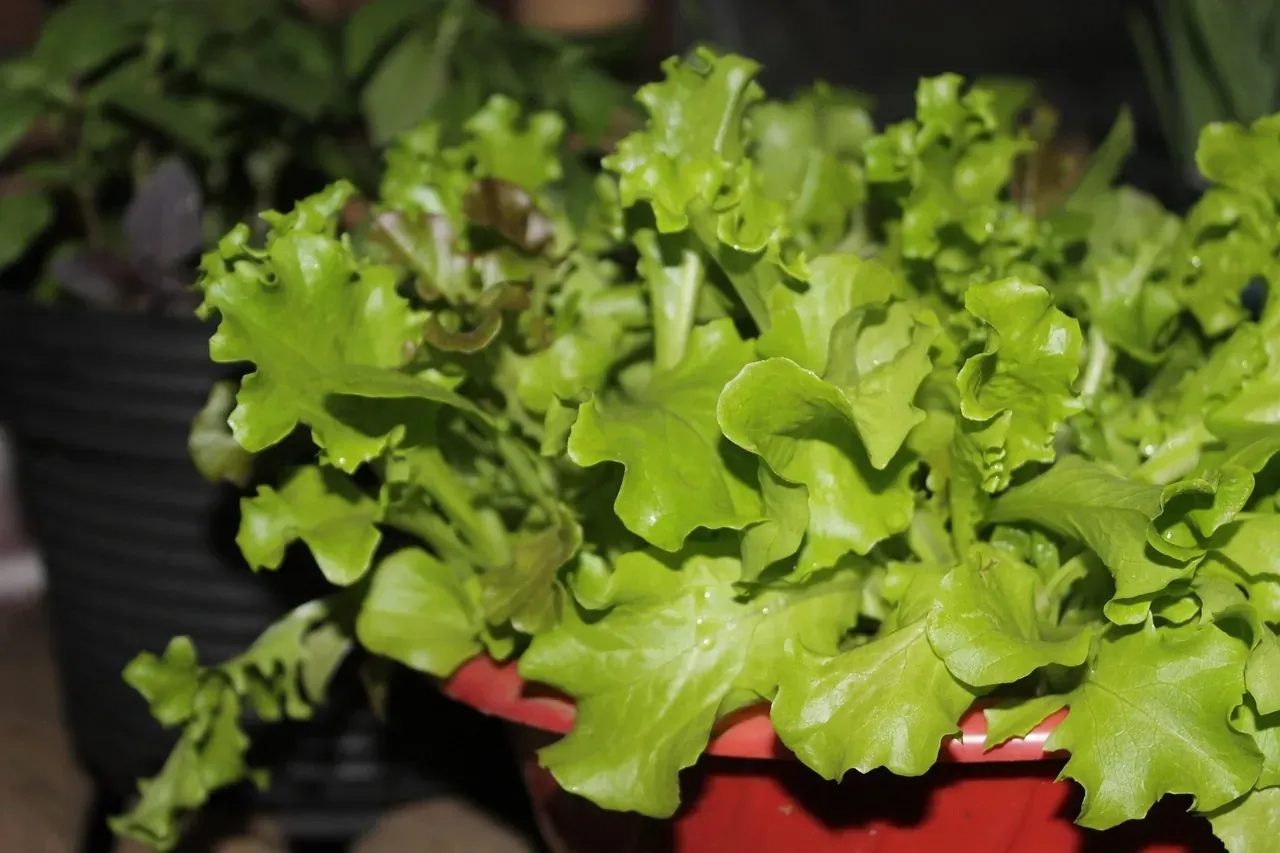
Growing lettuce indoors works best with loose-leaf types, a cool room and either a bright south-facing window or a grow light. Illinois Extension says lettuce needs 6 to 8 hours of bright light a day and that loose-leaf lettuce can usually be harvested at about 4 weeks. Here are the sourced numbers for light, containers, germination and harvest.
Best lettuce types for growing lettuce indoors#
Pick loose-leaf lettuce. Illinois Extension calls it "your best bet" for indoor growing in winter, and University of Vermont Extension lists leafy green lettuce and mesclun mix among the greens that do well in containers.
Loose-leaf types do not need to form a head before you can eat them. You pick leaves as they grow, which suits growing lettuce indoors on a windowsill or shelf.
Full-size plants take longer. Colorado State University (CSU) lists about 60 days to harvest for leaf lettuce, and Purdue's fall garden guide lists 40 days. The Illinois 4-week figure is for picking young leaves, not a mature plant.
| Indoor lettuce at a glance | Number | Source |
|---|---|---|
| Bright light per day | 6 to 8 hours | Illinois Extension |
| Fluorescent light (2 x 40-watt, 6 to 12 in above plants) | 14 to 16 hours a day | Illinois Extension |
| Best room temperature | 70°F and below (65 to 70°F) | Illinois Extension |
| Container depth | 3 to 4 in works for greens; 6 to 8 in for most plants | UVM Extension; Clemson HGIC |
| Planting depth | 1/4 in (very shallow) | CSU; UF/IFAS |
| Days to germination | 4 to 10 | CSU |
| Soil temperature to germinate | 35°F minimum, 70°F optimum | CSU |
| First harvest | about 4 weeks (loose-leaf) | Illinois Extension |
Light: window vs grow light#
Light is the main limit for growing lettuce indoors in winter. Illinois Extension names light levels and humidity as the two restricting factors, and recommends 6 to 8 hours of bright light per day. Southern exposure windows are the best spot.
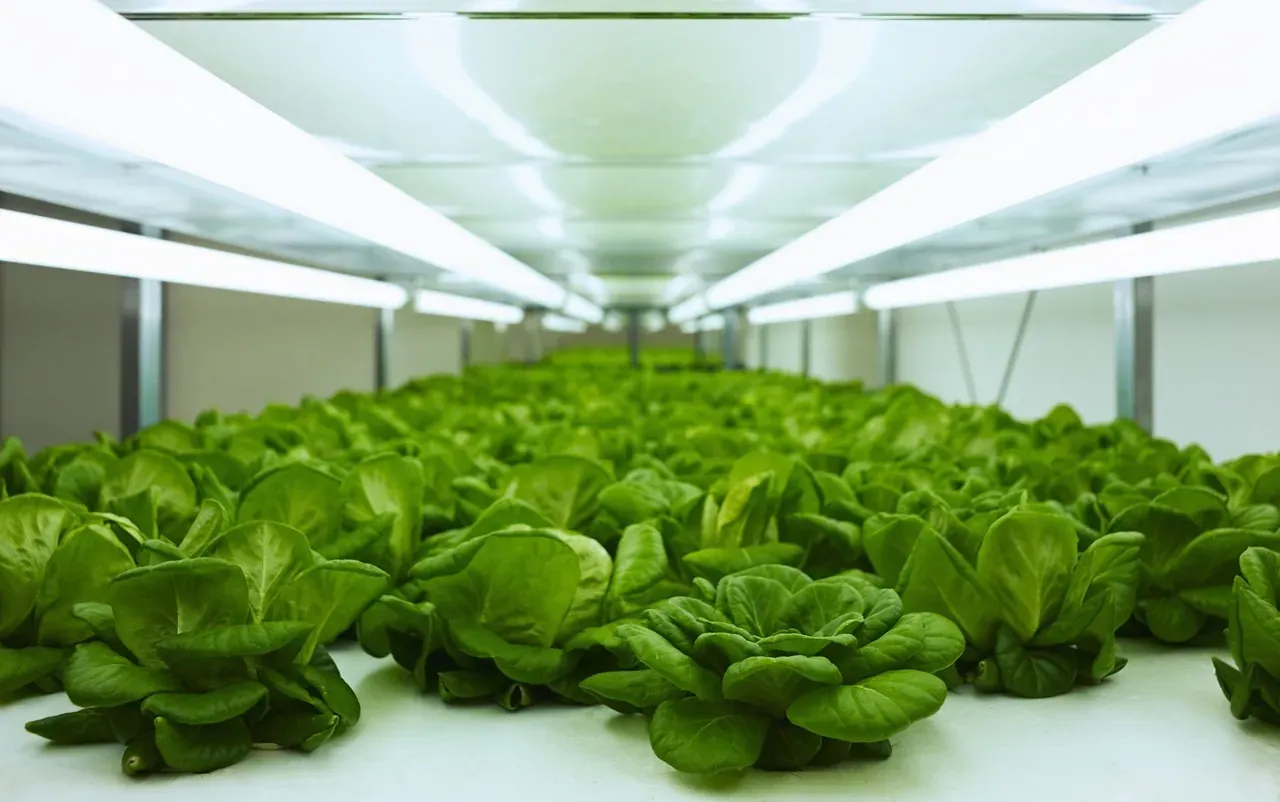 Rows of green lettuce plants growing under long white tube lights in an indoor grow room
Photo: jayy / Pixabay
If your window cannot give that much light in winter, add a light. Illinois suggests two 40-watt cool white fluorescent lights held 6 to 12 inches above the plants for 14 to 16 hours a day. Supplemental light is weaker than sunlight, so Illinois estimates about 2 hours of lamp light for every 1 hour of natural light you are replacing.
University of Vermont Extension adds two practical tips. Hang shop lights from an adjustable chain so you can keep them within a few inches of the plant tops as they grow, and choose a spot away from hot or cold drafts.
On a windowsill, turn the pots every few days. Illinois explains that plants lean toward the light (phototropism), so rotating them keeps growth even.
Keep the room cool. Illinois says room temperatures of 70°F and below are best and warns against placing lettuce near a direct heat source. Its lettuce handout puts the ideal range at 65 to 70°F, and the University of Florida notes that warm temperatures cause bitterness.
Shop the essentials
What you'll need
Supplies for the steps in this guide.
 Start indoorsLED grow lightLight for seedlings while they grow indoors.: check price on Amazon (opens in a new tab)
 Start indoorsSeed-starting trays with lidsCell trays with clear domes for sowing seeds indoors.: check price on Amazon (opens in a new tab)
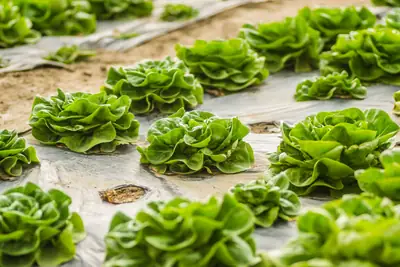 To sowLettuce seedsSeed packets from many sellers: compare varieties and days to maturity.: check price on Amazon (opens in a new tab)
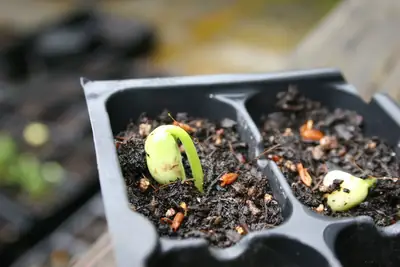 Start indoorsSeedling heat matWarms seed trays from below. Pick one with a thermostat.: check price on Amazon (opens in a new tab)
As an Amazon Associate I earn from qualifying purchases. Photos show the type of product, not a specific listing. How we choose
Containers, mix and spacing#
Lettuce roots are shallow, so growing lettuce indoors does not take a deep pot. UVM Extension says shallow containers of approximately 3 to 4 inches deep are fine for greens. Clemson's container guide gives a more general rule that most plants need containers at least 6 to 8 inches deep, so a deeper pot gives you more margin between waterings.
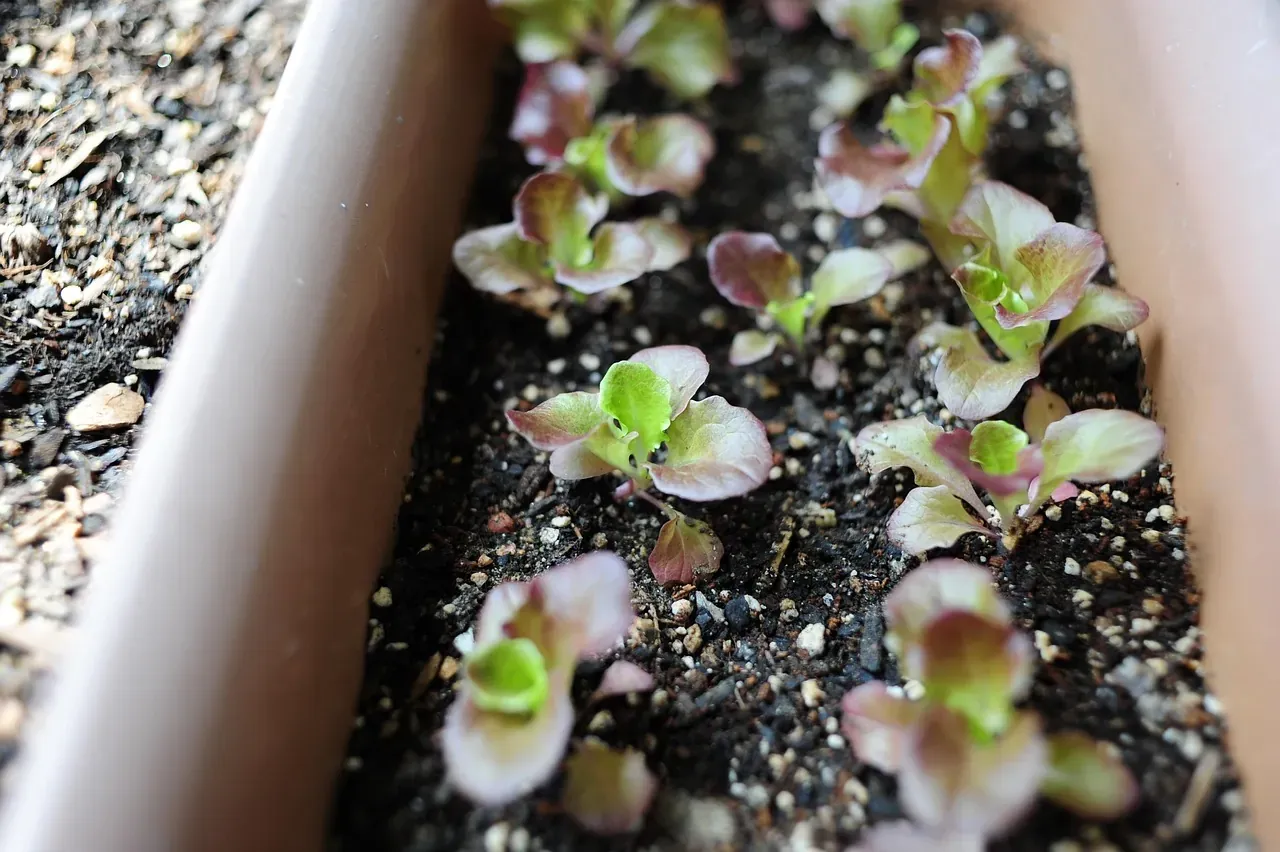 Young red-tinged lettuce seedlings growing in dark potting mix inside a narrow planter box
Photo: anykeep / Pixabay
Whatever you choose, it needs drainage holes. Illinois says to use a good-quality potting mix and not topsoil. Clemson explains why: garden soil, especially clay, holds too much water in a container and leaves too little air for roots.
For spacing, the sources give a range:
- Alabama Extension: 5 to 6 lettuce plants per 2- to 3-gallon container.
- UC Integrated Pest Management (UC IPM): thin leaf lettuce to 6 inches between plants in the garden.
- CSU: 7 to 9 inches between leaf lettuce plants in an equal-distance layout.
For cut-and-come-again leaves you can crowd plants more. UVM says to sow generously, then clip extra seedlings at the soil line with scissors. Those thinnings are your first harvest, eaten as microgreens.
Sowing: germination days and soil temperature#
PlantAlong's lettuce crop page uses CSU's planting table: leaf lettuce germinates in 4 to 10 days, needs a soil temperature of at least 35°F, and germinates best at 70°F. CSU lists a planting depth of 1/4 inch.
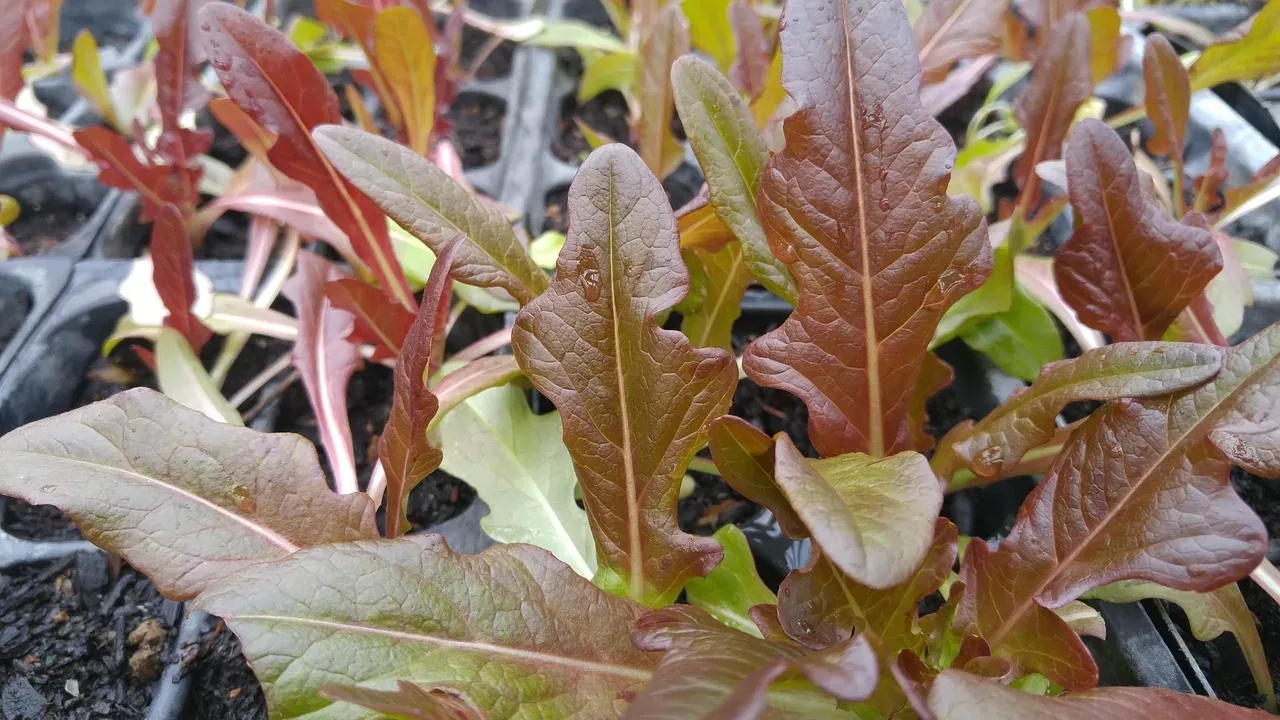 Bronze-red leaf lettuce seedlings with long leaves growing in black plastic cell trays
Photo: Nayuta / Pixabay
Do not bury the seed deeply. The University of Florida says lettuce seed needs light to germinate, so sow it very shallow. Illinois's lettuce handout covers seed with only 1/8 inch of soil.
When growing lettuce indoors, heat is a bigger risk than cold. CSU lists 70°F as the maximum germination temperature for leaf lettuce, Purdue and Nebraska say lettuce will not germinate well in soil around 85°F or warmer, and UC IPM says germination is inhibited above 86°F. Keep seed trays off radiators and heat vents.
Starting other seeds this winter too? Our guide on how to start seeds indoors covers trays, mix and lights in more detail.
Watering and feeding#
Keep the mix evenly moist, not soaked. Illinois's handout says not to let the soil dry out or get soaked. Clemson notes that in cool weather, container plants can get root rot if kept too wet, and recommends feeling the soil to check before you water.
Dry winter air is the other challenge of growing lettuce indoors. Illinois suggests clustering pots (with some space between them for air flow) or setting them on a tray of pebbles with water just below the pebble tops.
Clemson says a potting mix with fertilizer added gives plants enough nutrients for 8 to 10 weeks. After that, add a water-soluble fertilizer at the label rate every 2 to 3 weeks. Do not go over the label rate, because containers have no soil buffer against fertilizer burn.
Cut-and-come-again harvests#
Growing lettuce indoors pays off in many small harvests, so start picking early. UVM Extension says to begin harvesting when greens reach 3 to 4 inches tall: cut off the outer leaves and leave the inner leaves to keep growing. Alabama Extension gives a slightly later cue for garden lettuce, when outer leaves are 4 to 6 inches long.
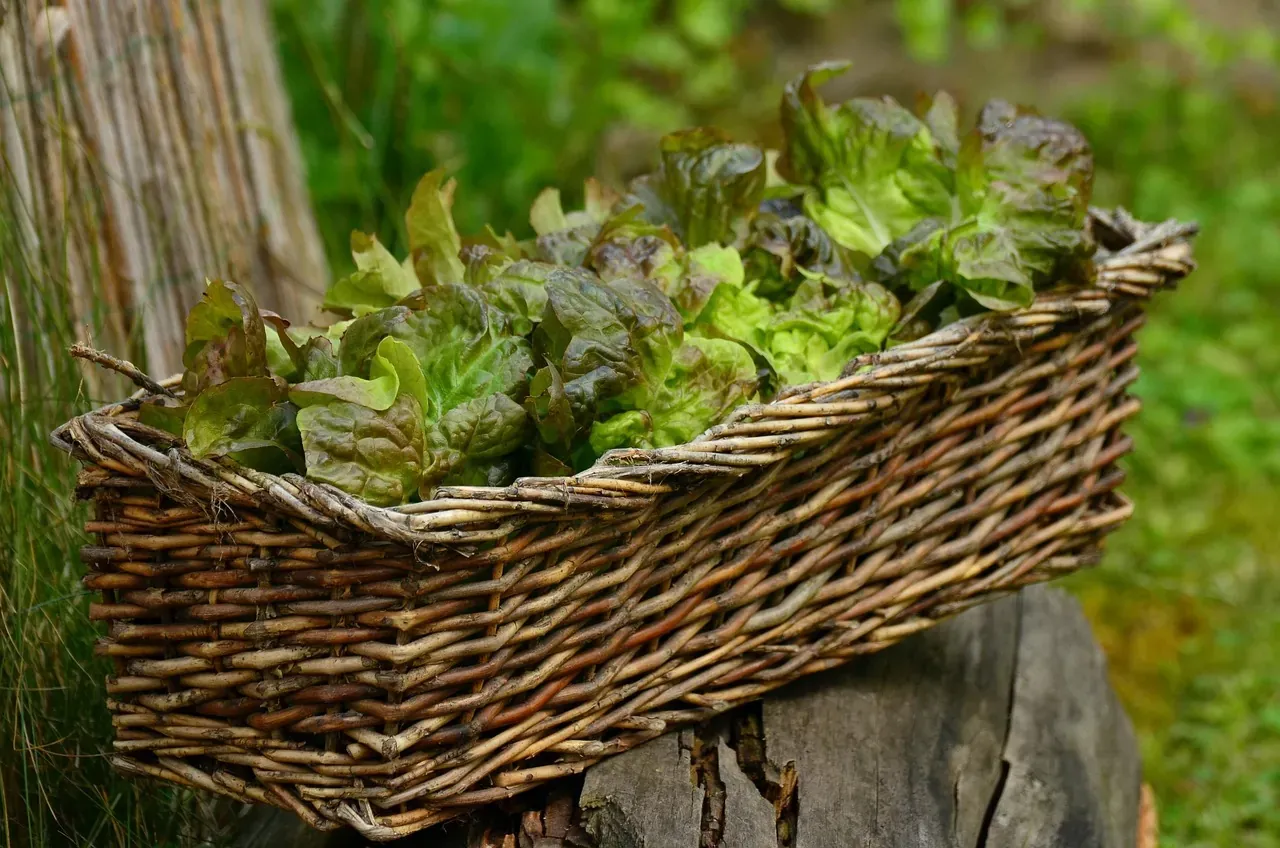 Freshly picked green and red leaf lettuce piled in a woven wicker basket outdoors
Photo: congerdesign / Pixabay
UC IPM describes the same method for leaf lettuce: break off the outside leaves and let the interior leaves continue to develop. Refrigerate the leaves soon after picking, since lettuce has a short shelf life.
For a steady supply, sow in batches. UVM suggests planting another container every 2 to 3 weeks, and Alabama suggests succession plantings every 3 to 4 weeks. Either way, one pot is growing while another is ready to cut.
Moving lettuce outside: it is frost hardy#
Indoor seedlings can go outdoors early in spring. CSU classes lettuce as a hardy vegetable that can be planted as early as 2 to 4 weeks before the average last spring frost. Utah State, Purdue and Nebraska call it semi-hardy, and Nebraska says semi-hardy crops can stand a light frost of 30 to 32°F. So the sources agree it tolerates light frost, but not all of them call it fully hardy.
Harden plants off before moving them. Alabama Extension says to harden seedlings off slowly over 1 week before moving them to the garden. Oregon State's central Oregon table grows lettuce indoors for 5 weeks and sets it out 2 weeks before the frost-free date.
Your hardiness zone will not tell you that date, because frost dates vary a lot inside one zone. Enter your ZIP in the planting calendar to get your own last frost date and lettuce windows. For more crops that handle cold, see our list of cold-hardy vegetables.
FAQ#
Can you grow lettuce indoors all year?#
Yes, growing lettuce indoors works year-round. Illinois Extension's lettuce handout says you can grow lettuce and herbs indoors all year round. The catch in summer is heat: Illinois recommends 65 to 70°F for lettuce, and warm temperatures make it bitter, so keep pots in the coolest bright spot you have.
What is the best container for lettuce?#
Any pot or window box with drainage holes, filled with potting mix rather than topsoil. UVM Extension says 3 to 4 inches deep is enough for greens, and Clemson suggests at least 6 to 8 inches for most container plants.
How many lettuce plants in a 5 gallon bucket?#
We did not find an extension source that gives a count for a 5-gallon bucket. Alabama Extension suggests 5 to 6 lettuce plants in a 2- to 3-gallon container, and garden spacing for leaf lettuce runs from 6 inches (UC IPM) to 7 to 9 inches (CSU). Measure your bucket's opening, space plants by those numbers, and drill drainage holes first.
Does lettuce need a grow light indoors?#
Not always. For growing lettuce indoors, Illinois Extension says lettuce needs 6 to 8 hours of bright light a day, which a south-facing window can give. If your window gets less than that in winter, add supplemental light, run for 14 to 16 hours a day if you use fluorescent tubes.
Sources#
- Grow Herbs and Lettuce Indoors this Winter (University of Illinois Extension)
- Growing Lettuce and Herbs Indoors (University of Illinois Extension)
- Growing Greens Indoors in Winter (University of Vermont Extension)
- Container Vegetable Gardening (Clemson Cooperative Extension, HGIC)
- Grow More Lettuce (Alabama Cooperative Extension System)
- Lettuce: Harvesting and Storing (UC Statewide IPM Program)
- Vegetable Planting Guide (CMG GardenNotes #720) (Colorado State University Extension)
- Florida Vegetable Gardening Guide (University of Florida IFAS Extension)
- The Fall Vegetable Garden (HO-66-W) (Purdue Extension)
- Fall Vegetable Gardening (G1343) (University of Nebraska-Lincoln Extension)
- Suggested Vegetable Planting Dates for Utah (Utah State University Extension)
- When to start seeds indoors in central Oregon (Oregon State University Extension Service)
Featured photo: mayapujiati / Pixabay.




Check your inbox
We sent a confirmation link to . Click it and your planting calendar PDF is on its way. Nothing there in a few minutes? Check your spam or promotions folder.
Crops in this article



No comments yet. Tried this in your garden, or found a date that worked better? Start the thread.
Leave a comment