 PlantAlong

In short
- Most extension guides call for 3 to 6 inches of straw or shredded leaves over fall-planted garlic.
- Wisconsin, UVM, UConn and UNH mulch right after planting; Iowa State says November and Clemson says late fall.
- None of the extension pages checked tied garlic mulch timing to frozen ground or a soil temperature.
- UMaine Extension advises against wood chips in vegetable beds because they can tie up nitrogen.
- In spring, Wisconsin removes mulch after hard freezes pass, while UMaine leaves it on until harvest.
On this page
- Why mulching garlic for winter matters
- When to mulch garlic for winter
- Mulching garlic for winter: depth by state
- Best materials for mulching garlic for winter
- Does garlic need winter mulch in warm zones?
- Pulling mulch back in spring
- FAQ
- Can I mulch garlic with wood chips?
- Can I use grass clippings as garlic mulch?
- Will garlic grow through winter mulch?
- Should I mulch garlic in summer?
- Sources
Mulching garlic for winter comes down to three choices: when to spread it, how deep, and what material. Most extension guides call for 3 to 6 inches of clean straw or shredded leaves, applied after planting or in late fall. In spring, some sources pull it back once hard freezes pass and others leave it on. The details vary by state, and the table below shows exactly where.
Why mulching garlic for winter matters#
Garlic sits in the ground from fall to summer, so winter is the longest stretch it has to get through. Extension sources give these reasons for mulching garlic for winter:
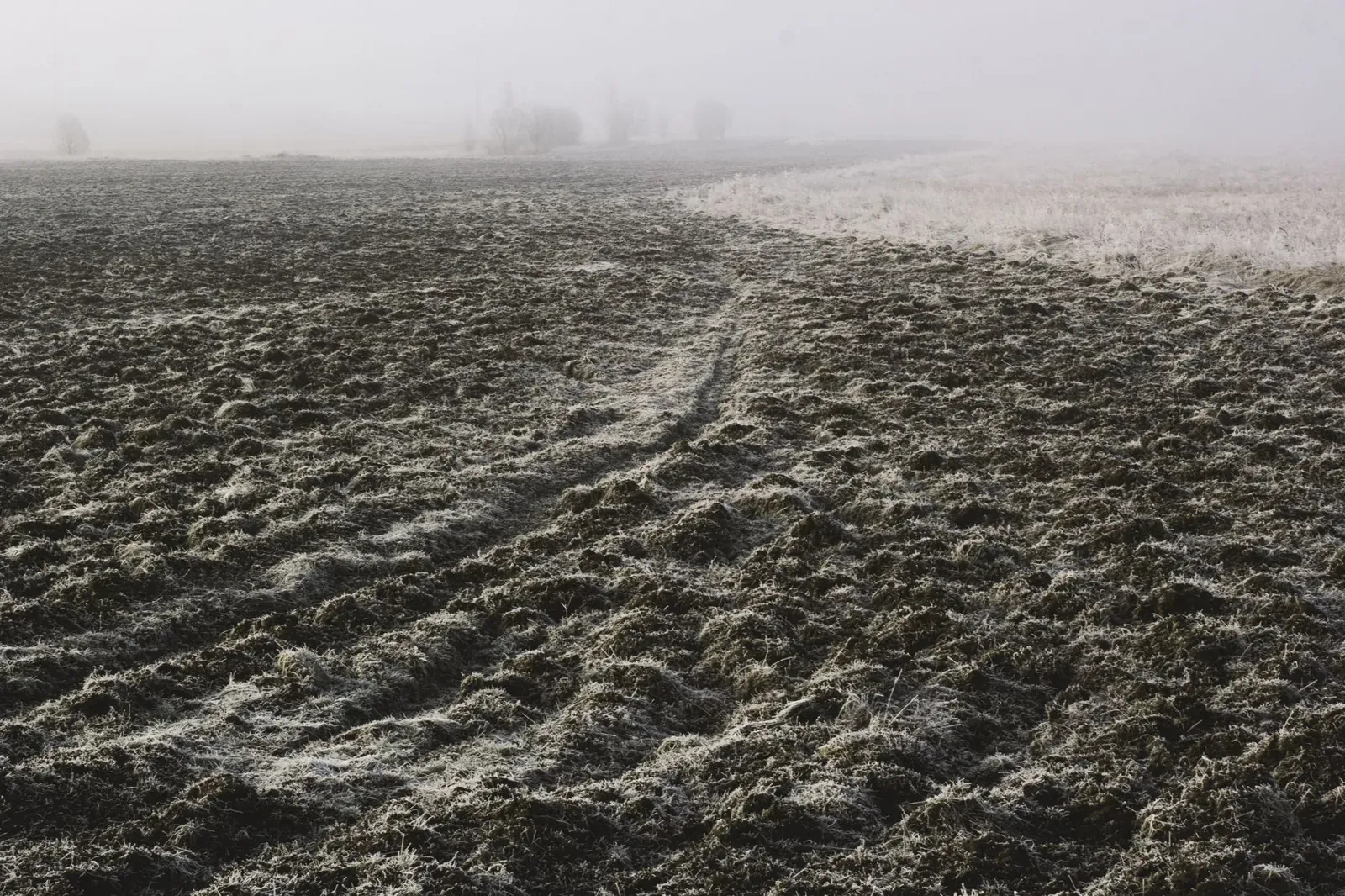 Bare tilled field covered in white frost on a foggy winter morning
Photo: Plato Terentev / Pexels
- Steadier soil temperature. Wisconsin Extension says mulch helps minimize soil temperature swings that can damage developing roots and shoots.
- Less frost heaving. UMaine says mulch moderates freeze and thaw cycles and potential heaving of cloves. Illinois Extension recommends straw mulch to prevent frost heaving.
- Less winter injury. Iowa State mulches fall-planted garlic to help prevent winter injury.
- Fewer weeds, more moisture. UMaine and UConn both note that mulch reduces weeds and helps hold soil moisture.
When to mulch garlic for winter#
Timing is where advice on mulching garlic for winter splits the most, so here is what the extension pages actually say.
Right after planting. This is the most common instruction. Wisconsin, UVM, UConn's Home & Garden Education Center, UNH, a Cornell Cooperative Extension fact sheet and a Colorado Master Gardener column from CSU Extension all describe mulching as part of planting.
Later in fall. Iowa State says fall-planted garlic "should be mulched in November." Clemson, writing for South Carolina, says to mulch "in late fall."
After the ground freezes. Many garden sites say to wait until the ground freezes. None of the extension pages we checked tied mulching garlic for winter to frozen ground or to a soil temperature. If you read that rule, know it is not what these extension guides say.
If shoots are already up. University of Minnesota Extension says a thick layer of straw is "particularly important" if shoots poke through the soil before a hard frost.
Shop the essentials
What you'll need
Supplies for the steps in this guide.
 After plantingStraw mulchStraw for covering beds after planting.: check price on Amazon (opens in a new tab)
 To plantSeed garlicGarlic bulbs sold for planting, not for the kitchen.: check price on Amazon (opens in a new tab)
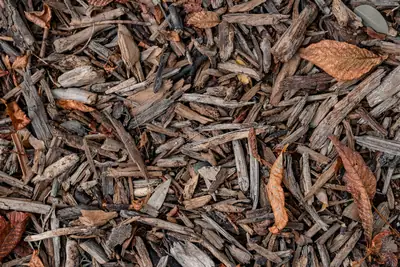 Shred the leavesLeaf mulcherShreds fallen leaves into fine mulch.: check price on Amazon (opens in a new tab)
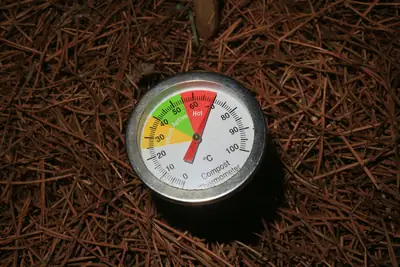 Before sowingSoil thermometerCheck your soil against the minimum temperature on this page before you sow.: check price on Amazon (opens in a new tab)
As an Amazon Associate I earn from qualifying purchases. Photos show the type of product, not a specific listing. How we choose
Mulching garlic for winter: depth by state#
Sources write by state, not by hardiness zone, so the table lists the state each source covers. To see which climate matches yours, look up your zone on the zones page and your frost dates in the planting calendar. Rows run roughly north to south. A dash means the source does not say.
| Source (state) | Depth and material | When | In spring |
|---|---|---|---|
| UMN (Minnesota) | "thick layer" of straw | before winter | - |
| NDSU (North Dakota) | 3 to 4 in clean straw or leaves | at planting | leave mulch for weed control |
| Wisconsin | 3 to 4 in clean straw | after planting | remove after hard freezes pass; replace when shoots are about 6 in |
| UMaine (Maine) | 3 in dried grass, leaves or straw | - | leave until harvest |
| UNH (New Hampshire) | 3 to 4 in straw, pine needles, grass clippings or chopped leaves | at planting | shoots come up through the mulch |
| UVM (Vermont) | thick layer of clean straw | after planting | pull away if soil stays saturated |
| UConn (Connecticut) | at least 3 in, often straw | after planting | keeps working as weed control |
| Cornell CCE Monroe (New York) | 4 to 6 in hay, straw or leaves | at planting | loosen around shoots, leave it on |
| Penn State (Pennsylvania) | about 4 in straw or shredded leaves | - | - |
| Iowa State | 4 to 6 in weed-seed-free straw | November | move straw between rows |
| Clemson (South Carolina) | about 4 to 6 in weed-free straw | late fall | - |
| Oregon State | "lightly mulch" | - | - |
| UF/IFAS (Florida) | no mulch guidance found | - | - |
Two patterns stand out. Most northern sources land between 3 and 6 inches, and the thickest numbers (4 to 6 inches) come from Iowa, New York and South Carolina, not only the coldest states. Guidance gets thin in the West and the South: Oregon State just says to mulch lightly, and the UF/IFAS garlic page we found gives a planting window but no mulch advice.
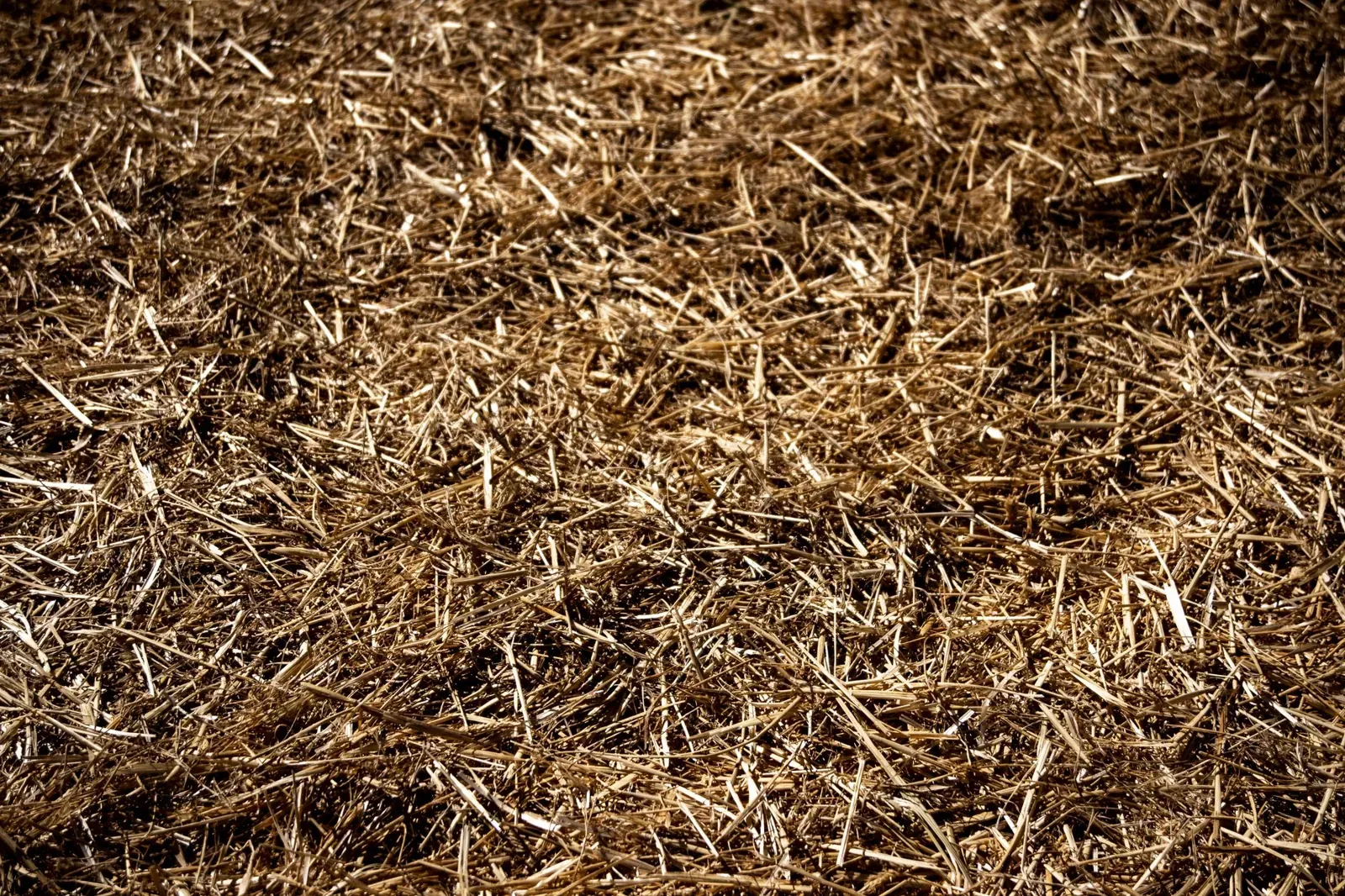 Chopped straw spread over the ground, a common material for mulching garlic for winter
Photo: Magda Ehlers / Pexels
Best materials for mulching garlic for winter#
For mulching garlic for winter, straw is the most recommended material, but it is not the only one.
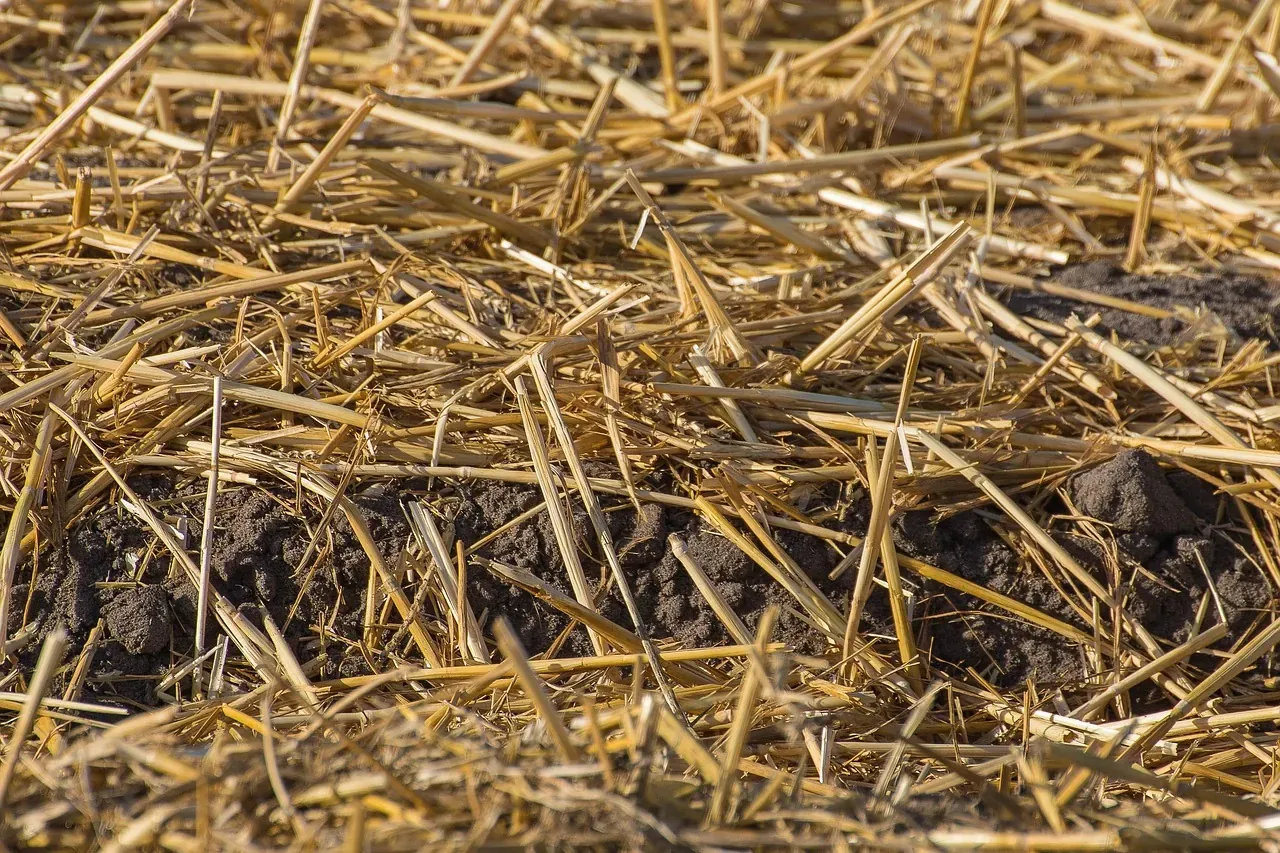 A loose layer of golden straw spread over dark garden soil
Photo: AlkeMade / Pixabay
- Straw. UMaine says straw gives excellent weed control and should be fairly free of weeds, unlike most hay. Iowa State's mulch guide calls straw free of crop and weed seed an excellent vegetable garden mulch. It also warns that straw can shelter mice and other rodents over winter, though it says that in the context of trees and shrubs.
- Shredded leaves. Penn State lists shredded leaves alongside straw. Iowa State says leaves should be shredded or composted first, because whole leaves mat down and blow away more easily. Wisconsin cautions against wet leaves, which can form a barrier over the soil.
- Grass clippings. Wisconsin lists fresh grass, as long as it is free of pesticides and weed seed, and UNH lists grass clippings. Iowa State says to let clippings dry before use, avoid clippings from a weedy lawn, and expect them not to last long.
- Pine needles. Wisconsin and UNH both list pine needles as an option.
- Hay. Cornell CCE Monroe lists hay, but UMaine points out that most hay carries weed seed.
- Wood chips. UMaine Extension advises against mulching vegetable beds with wood chips because their high carbon content can tie up nitrogen. It suggests chips for paths between beds and straw in the beds.
- Avoid. Wisconsin warns against fine sawdust, uncomposted manure and heavy mulches that can keep soil from warming in spring.
Does garlic need winter mulch in warm zones?#
The sources disagree, and warm-climate guidance is limited. Clemson still recommends about 4 to 6 inches of weed-free straw in late fall for South Carolina, followed by a note that garlic does not do well with weed competition. Oregon State says to mulch lightly to improve soil structure and reduce weeds. In Florida, the UF/IFAS page says to plant garlic from late fall through early winter, with no mulch instruction.
In the warm-climate sources, mulching garlic for winter is framed around weeds and soil rather than freeze protection. If your winters are mild, use your zone and local frost dates to decide how much cold you need to plan for. The garlic guide shows planting windows by location.
Pulling mulch back in spring#
The last step in mulching garlic for winter happens in spring, and extension sources split on whether to remove the mulch or leave it.
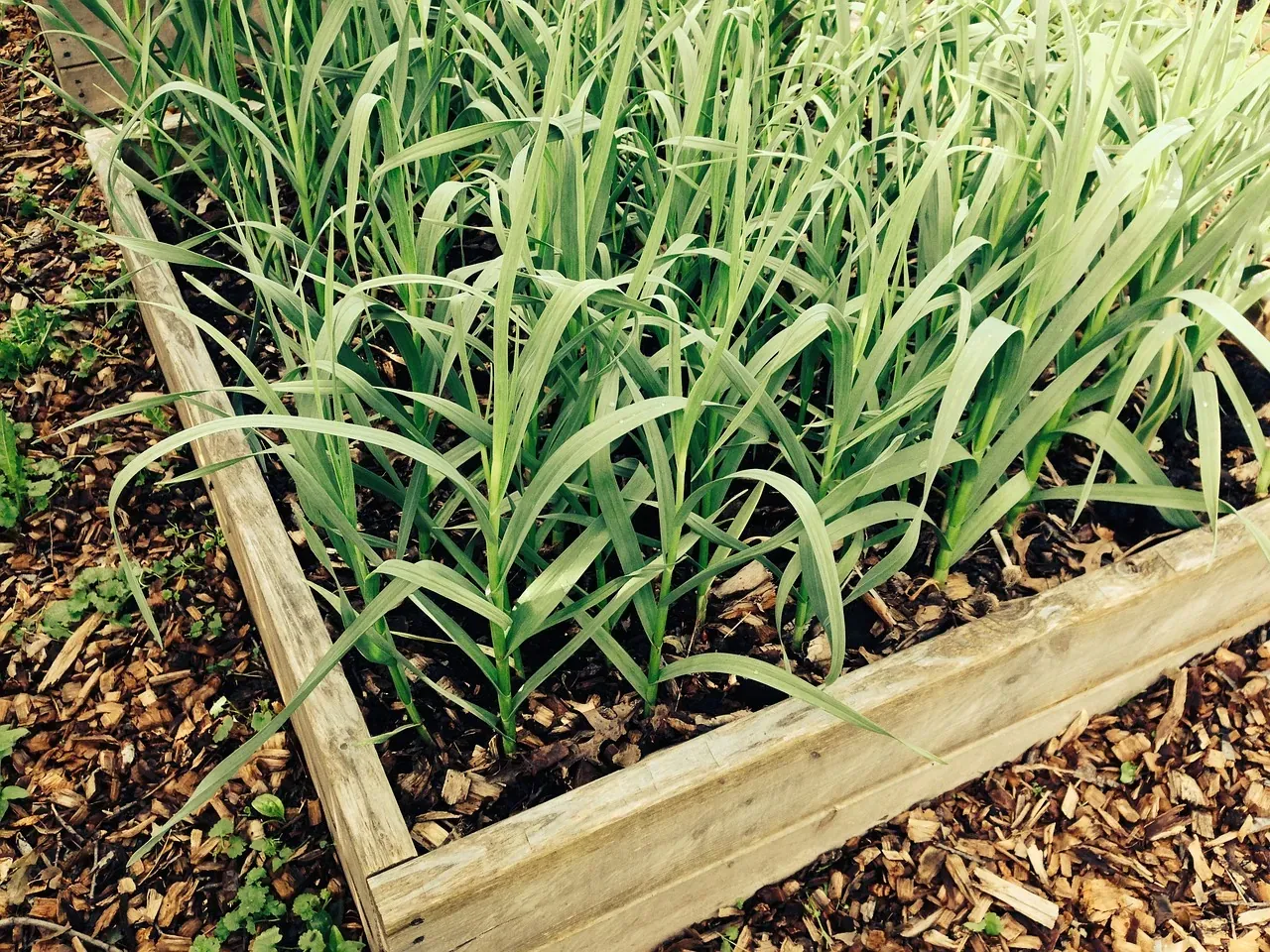 Garlic plants with flat green leaves growing in a wooden raised bed edged with wood chips
Photo: pneumann70 / Pixabay
Remove, then maybe replace. Wisconsin says to remove the mulch in spring after the threat of hard freezes has passed. It can go back once shoots are about 6 inches tall to control weeds. Wisconsin also warns that heavy mulch can keep soil from warming in spring.
Move it between rows. Iowa State says to move the straw between rows in early spring so the foliage can emerge. Its FAQ adds that mulch can come off once temperatures are consistently warmer and spring growth is expected.
Leave it on. UMaine advises leaving the mulch on until harvest and pulling it back only where a plant is missing. Cornell CCE Monroe says to loosen mulch around emerging shoots but keep it on for moisture and weed control.
Watch for soggy soil. UVM says that in a wet spring, mulch can keep soil from drying out and lead to soil-borne disease. Pull it away if the soil stays saturated.
FAQ#
Can I mulch garlic with wood chips?#
UMaine Extension advises against it in vegetable beds, because wood chips can tie up nitrogen the crop needs. It recommends straw in the beds and chips on paths.
Can I use grass clippings as garlic mulch?#
Yes, per Wisconsin and UNH, if the grass is free of pesticides and weed seed. Iowa State says to dry clippings first and avoid clippings from a weedy lawn, and notes they break down quickly.
Will garlic grow through winter mulch?#
Yes. UNH says the shoots pop up above the mulch in early spring. If straw is thick, Iowa State suggests moving it between rows.
Should I mulch garlic in summer?#
Sources differ. Wisconsin says mulch can go back on for weed control after shoots reach about 6 inches. A Cornell CCE Monroe fact sheet says to remove any remaining mulch in June as bulbs form.
Sources#
- Garlic, Allium sativum (University of Wisconsin-Madison Division of Extension)
- Tips for garlic planting season (University of Minnesota Extension)
- Growing Garlic (presentation) (North Dakota State University Extension)
- Bulletin #2063, Growing Garlic in Maine (University of Maine Cooperative Extension)
- Is it too early to pull the mulch off my garlic plants? (University of Maine Cooperative Extension)
- What are recommendations for using arborist chips in a vegetable garden? (University of Maine Cooperative Extension)
- Garlic (Info Line Question of the Week) (UNH Cooperative Extension)
- Growing Great Garlic (University of Vermont Extension)
- Garlic Cultivation in Connecticut (UConn Extension)
- Got Garlic? (UConn Home & Garden Education Center)
- Growing Garlic and 4 Easy Steps to Growing Garlic (Cornell Cooperative Extension Monroe County)
- Growing Garlic: Fall Planting (Penn State Extension)
- Growing Garlic in the Home Garden (Iowa State University Extension and Outreach)
- Organic Mulches (RG 209) (Iowa State University Extension, hosted by University of Illinois Extension)
- Planting and Growing Garlic (University of Illinois Extension)
- It's Time to Plant Garlic (Colorado State University Extension, Colorado Master Gardener column)
- Onion, Leek, Shallot & Garlic (HGIC 1314) (Clemson Cooperative Extension)
- Fall is the best time to plant garlic in Oregon (Oregon State University Extension Service)
- Garlic (UF/IFAS Gardening Solutions)
Featured photo: Juan Moccagatta / Pexels.
A 5-part series
Everything garlic, chapter by chapter
- Chapter 1
How to Plant Garlic: Timing, Depth and Spacing by Zone
When to plant garlic by your own first frost date, how deep and how far apart, and which garlic to buy, with every number traced to a US extension guide and a zone-by-zone frost table.
✓ Read - Chapter 2
Garlic Sprouting in Fall: Is It Normal and What to Do
Green garlic shoots in November? Extension sources say fall sprouting is common, the leaves handle cold into the 20s °F, and mulch is the main fix. Plus next year's planting timing by state.
✓ Read - Chapter 3
Is It Too Late to Plant Garlic? Deadlines by Region
Probably not, if you can still dig. Here is how extension services set garlic deadlines, first-frost dates by zone, and what happens if you plant in December, January or spring.
✓ Read - Chapter 4
Mulching Garlic for Winter: When, How Deep, What to Use
When to mulch garlic, how deep and with what: a state-by-state table built only from extension guidance, plus warm-zone notes and what to do with the mulch in spring.
You're reading this✓ Read - Chapter 5
How to Grow Garlic in a Container: Pot Size, Soil, Timing
Garlic grows in a pot at least 8 inches deep, planted in fall and left outdoors for the winter chill. Here is pot size, cloves per pot, potting mix, timing and winter protection, all from extension sources.
✓ Read
5 of 5 chapters are out; new ones appear here as they publish.


Check your inbox
We sent a confirmation link to . Click it and your planting calendar PDF is on its way. Nothing there in a few minutes? Check your spam or promotions folder.
Crops in this article



No comments yet. Tried this in your garden, or found a date that worked better? Start the thread.
Leave a comment