 PlantAlong

In short
- Mississippi State University Extension says potting soil usually contains no mineral soil and is often peat-based.
- Penn State Extension says to fill containers with a soilless mix, not straight garden soil, because soil-based mixes are heavy and dense and can drain poorly.
- University of Maryland Extension suggests compost and topsoil at 1:2 or 1:1 for a raised bed on lawn, and compost with soilless mix at 1:1 on hardscape.
- Maryland notes that a bed filled only with compost and/or soilless mix dries out faster than one containing mineral soil.
- Iowa State University Extension advises adding raised bed mix a few inches at a time and mixing it into the soil below so distinct layers do not form.
On this page
- What the bag labels usually mean
- Raised bed soil vs potting soil: side-by-side comparison
- Can you fill a raised bed with potting soil?
- Can you use raised bed soil in pots?
- What about garden soil or topsoil in a raised bed?
- Raised bed soil vs potting soil: quick decision guide
- FAQ
- Is raised bed soil the same as potting soil?
- Can I mix potting soil with garden soil in a raised bed?
- Which is better for vegetables in a raised bed?
- Is potting mix the same as potting soil?
- Sources
Raised bed soil vs potting soil comes down to where the mix will live. Potting soil is usually a soilless blend built to drain well inside a pot, while extension raised bed recipes are mostly topsoil and compost that sit on, and mix with, the ground below. You can fill a bed with soilless mix, but it dries out faster, and topsoil-based bed fill is too heavy and dense to drain well in a container.
What the bag labels usually mean#
Labels are not standardized, and product formulas vary, so read the ingredient list rather than the name on the front. These are the broad categories extension services describe.
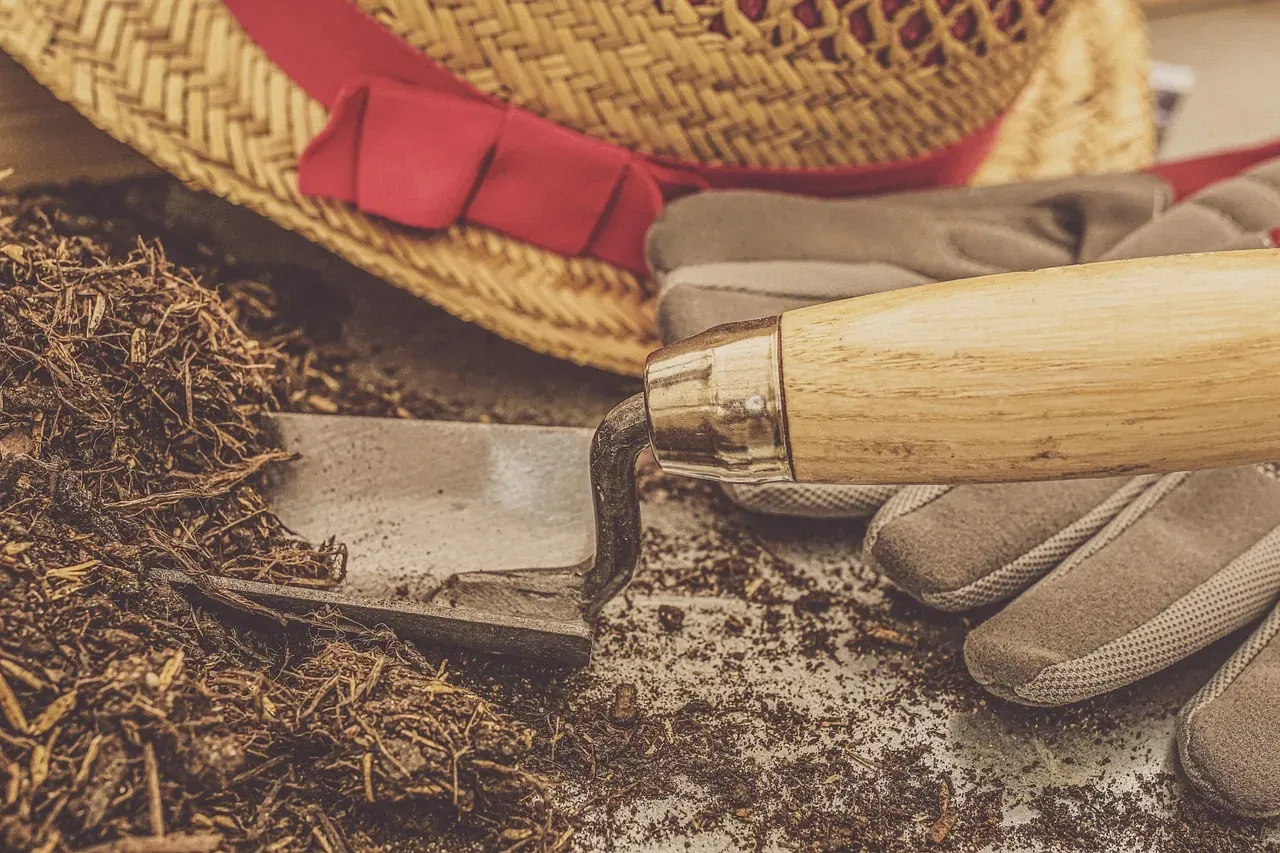 Garden trowel resting in loose, fibrous potting mix beside work gloves and a straw hat
Photo: suju-foto / Pixabay
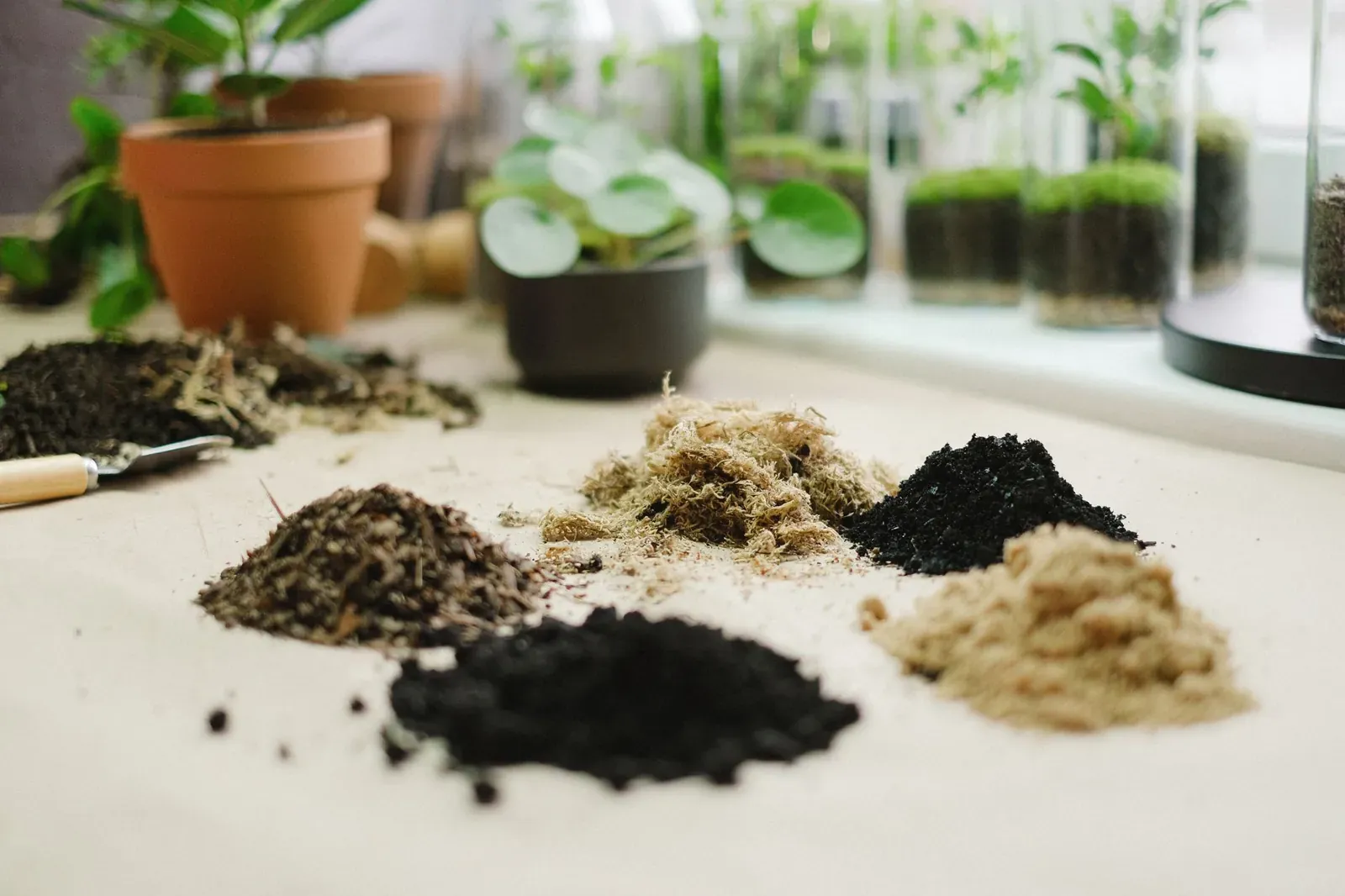
- Potting soil or potting mix. Mississippi State University Extension says potting soil usually contains no actual mineral soil: it is a soilless mix, often peat-based, with coconut coir becoming more common, and many brands include fertilizer. Penn State Extension lists sphagnum moss, composted bark, perlite, vermiculite and coir as typical ingredients.
- Bagged raised bed mix. Mississippi State says most bagged raised bed mixes are also soilless, made from aged bark rather than peat, and that a "raised bed" label usually means you do not need to blend it with native soil.
- Bagged garden soil. According to Mississippi State, this is often a soil amendment meant to be mixed into existing topsoil, not planted in directly.
- Topsoil. This is mineral soil, usually bought in bulk. University of Maryland Extension says good topsoil is dark and crumbly with an earthy smell, and notes that topsoil sales are not regulated in Maryland. Iowa State University Extension says to make sure imported topsoil is free of soil-borne pathogens and contaminants such as lead and pesticides.
- Extension raised bed fill. Maryland suggests compost and purchased topsoil at 1:2 or 1:1 for a bed on lawn. Iowa State suggests equal parts topsoil, organic matter and coarse sand, or about 70% topsoil and 30% compost.
Raised bed soil vs potting soil: side-by-side comparison#
In this raised bed soil vs potting soil comparison, "raised bed soil" means the extension-style fill above (topsoil plus compost). Bagged raised bed mixes that are soilless behave more like the potting soil column.
| Potting soil (soilless) | Raised bed fill (topsoil + compost) | Bagged garden soil | |
|---|---|---|---|
| Mineral soil | Usually none (Mississippi State) | Yes, topsoil is the base | Varies; meant to be mixed into soil |
| Typical ingredients | Peat or coir, bark, perlite, vermiculite (Penn State, Maryland) | Topsoil and compost; Iowa State adds coarse sand in one recipe | Read the label |
| Drainage and aeration | Built to drain in a pot (Penn State, Iowa State) | Good soil holds water and lets excess percolate down (Maryland) | Improves native soil drainage when mixed in (Mississippi State) |
| Weight | Good mixes are lightweight (Iowa State) | Soil-based mixes are heavy and dense (Penn State) | Not stated by our sources |
| Watering | Dries out faster than beds with mineral soil (Maryland) | Holds water longer than all-soilless fill (Maryland) | Not stated by our sources |
| Best use | Containers | Filling raised beds | Amending in-ground beds |
| How it is sold | Bags or compressed bales | Bulk by the yard, or bags | Bags |
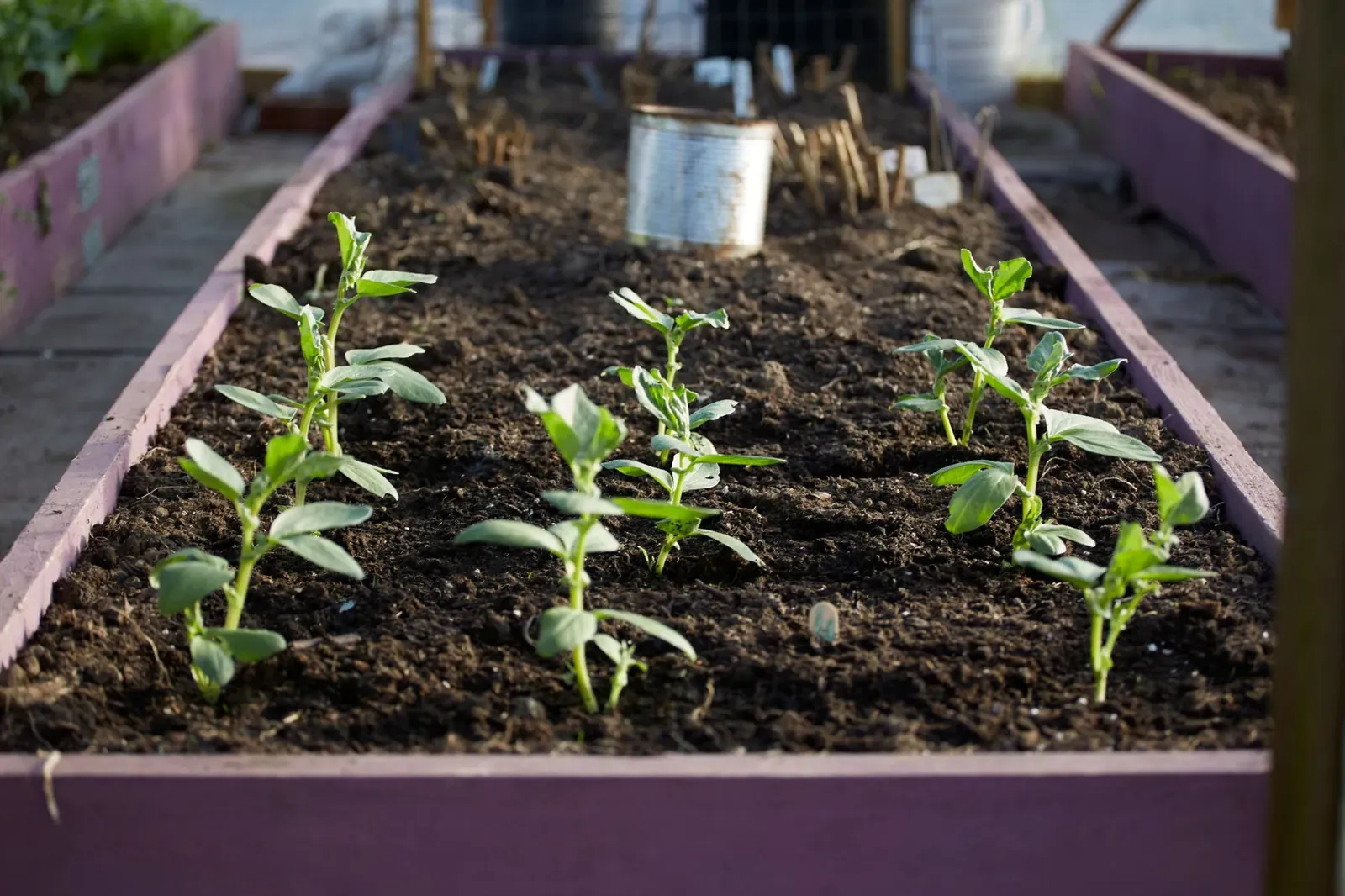 Young seedlings growing in dark soil in a long raised bed with painted wooden sides
Photo: Ian Probets / Pexels
Shop the essentials
What you'll need
Supplies for the steps in this guide.
 Build the bedRaised bed kit, 4 × 8 ftA ready-to-assemble bed frame.: check price on Amazon (opens in a new tab)
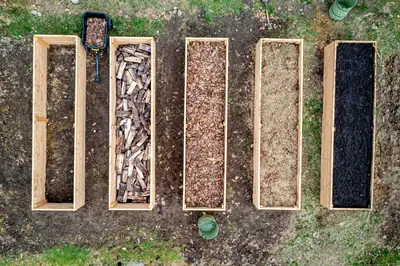 Fill the bedRaised bed soilBagged soil for filling beds. Compare each bag’s volume with your result.: check price on Amazon (opens in a new tab)
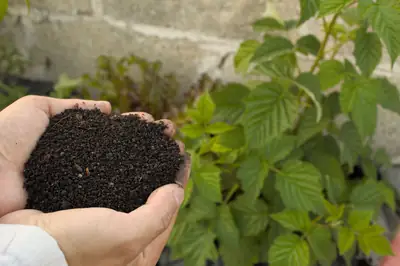 Fill the bedBagged compostCompost to mix into a new bed.: check price on Amazon (opens in a new tab)
 Before plantingSoil test kitChecks your soil’s pH and nutrients at home.: check price on Amazon (opens in a new tab)
As an Amazon Associate I earn from qualifying purchases. Photos show the type of product, not a specific listing. How we choose
Can you fill a raised bed with potting soil?#
Yes, if it is mixed with compost. University of Maryland Extension lists compost and a soilless growing mix at 1:1 as one way to fill a bed on lawn, and as its recommended fill for a bed on pavement or heavily compacted soil. UC Cooperative Extension's raised bed workshop also frames it as a choice between amended garden soil plus organic matter, or a growing medium like potting soil with amendments.
The trade-offs are water and cost. Maryland notes that a bed filled entirely with compost and/or soilless mix dries out faster than one containing mineral soil. UC Cooperative Extension adds that vermiculite and perlite can be costly for large beds, and that they are very light and tend to rise to the surface and wash away.
On cost, the volume adds up quickly: a 4x8 bed filled 12 inches deep holds 32 cubic feet. Maryland says a compressed bale of soilless media is more economical, and that peat or coir products repel water and should be moistened before they go into the bed. Our raised bed soil calculator turns your bed size into cubic feet, bags and a mix split.
On hardscape, Maryland allows topsoil up to 20% by volume, but only in beds at least 16 inches deep.
Can you use raised bed soil in pots?#
This is the other half of the raised bed soil vs potting soil question, and the answer is no if the fill is topsoil-based. Penn State Extension says to fill containers with a soilless mix and not straight garden soil, because soil and soil-based mixes are typically heavy and dense and can keep the container from draining. Iowa State says garden soil compacts in a container, which reduces drainage and aeration, and pulls away from the sides as it dries, making watering difficult.
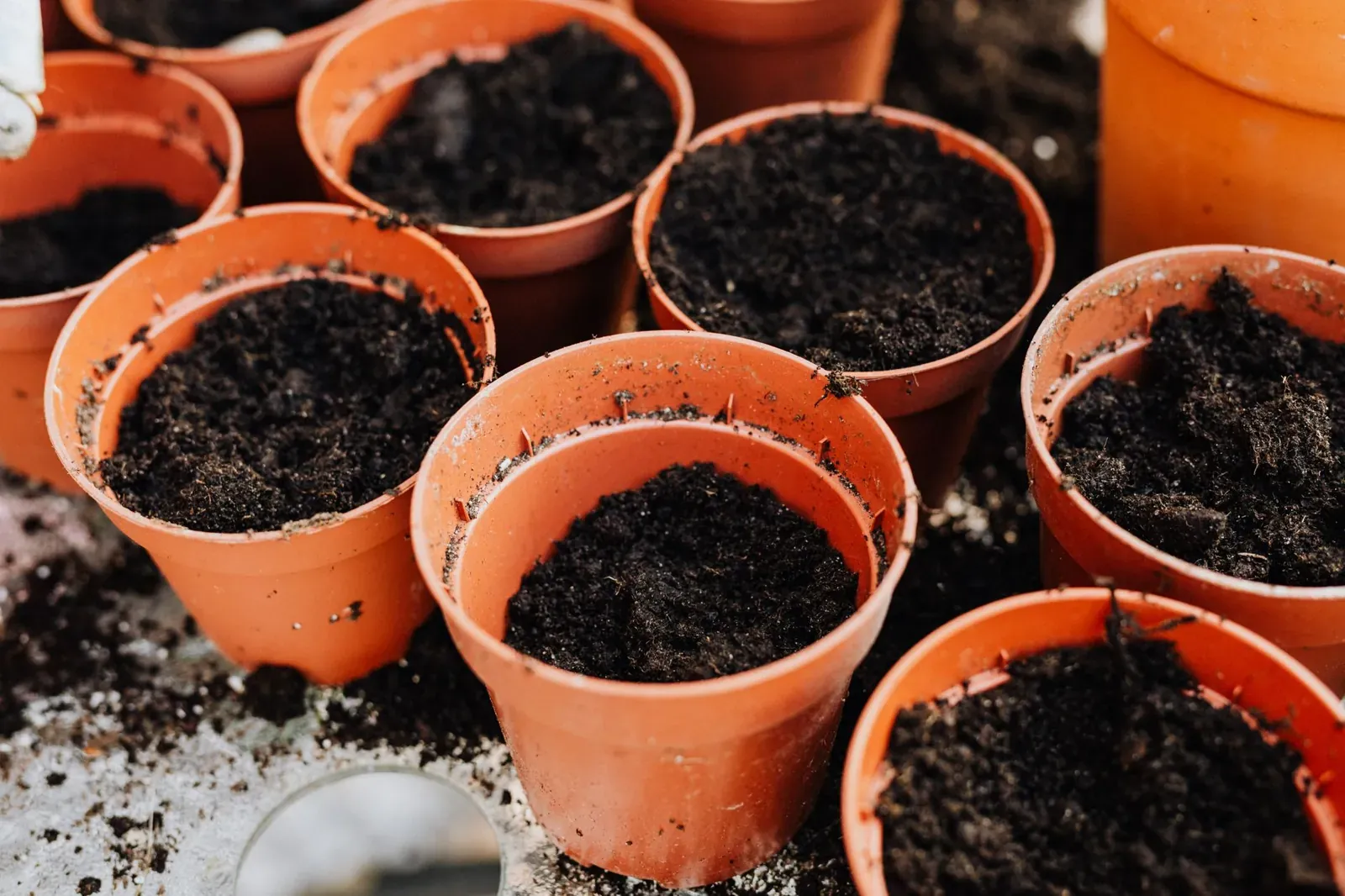 Orange plastic pots filled with dark potting mix on a potting bench, ready for planting
Photo: https://kaboompics.com/ / Pexels
UF/IFAS Extension gives the same warning in different words: avoid fine-textured or heavy potting soils, because they tend to hold too much water and reduce root aeration.
A soilless bagged raised bed mix is closer to a potting mix in its ingredients. None of the sources we read tested raised bed mixes in containers, so check the ingredient list and watch drainage if you try it.
If you want to make your own container mix, Iowa State gives a recipe of equal volumes of garden soil, sphagnum peat moss and perlite. Penn State says you can add finished compost to a soilless mix, up to 50%.
What about garden soil or topsoil in a raised bed?#
Garden soil and topsoil sit outside the raised bed soil vs potting soil choice, but they often end up in beds. If the bed sits on good garden soil, Maryland suggests adding 4 to 6 inches of compost and mixing it into the top 4 inches of the existing soil. If you buy topsoil, check it as described above, since quality varies.
Whatever you choose, do not dump it in as one layer on top of a different soil. Iowa State recommends adding the mix a few inches at a time and working it into the soil below, because distinct layers slow water movement and discourage root growth. UC Cooperative Extension makes the same point about abrupt soil boundaries impeding drainage.
Raised bed soil vs potting soil: quick decision guide#
- Pots and containers: a soilless potting mix (Penn State, Iowa State, UF/IFAS).
- Bed on lawn or decent native soil: compost and topsoil at 1:2 or 1:1 (Maryland), or one of Iowa State's mixes.
- Bed on pavement or compacted ground: compost and soilless mix at 1:1 (Maryland).
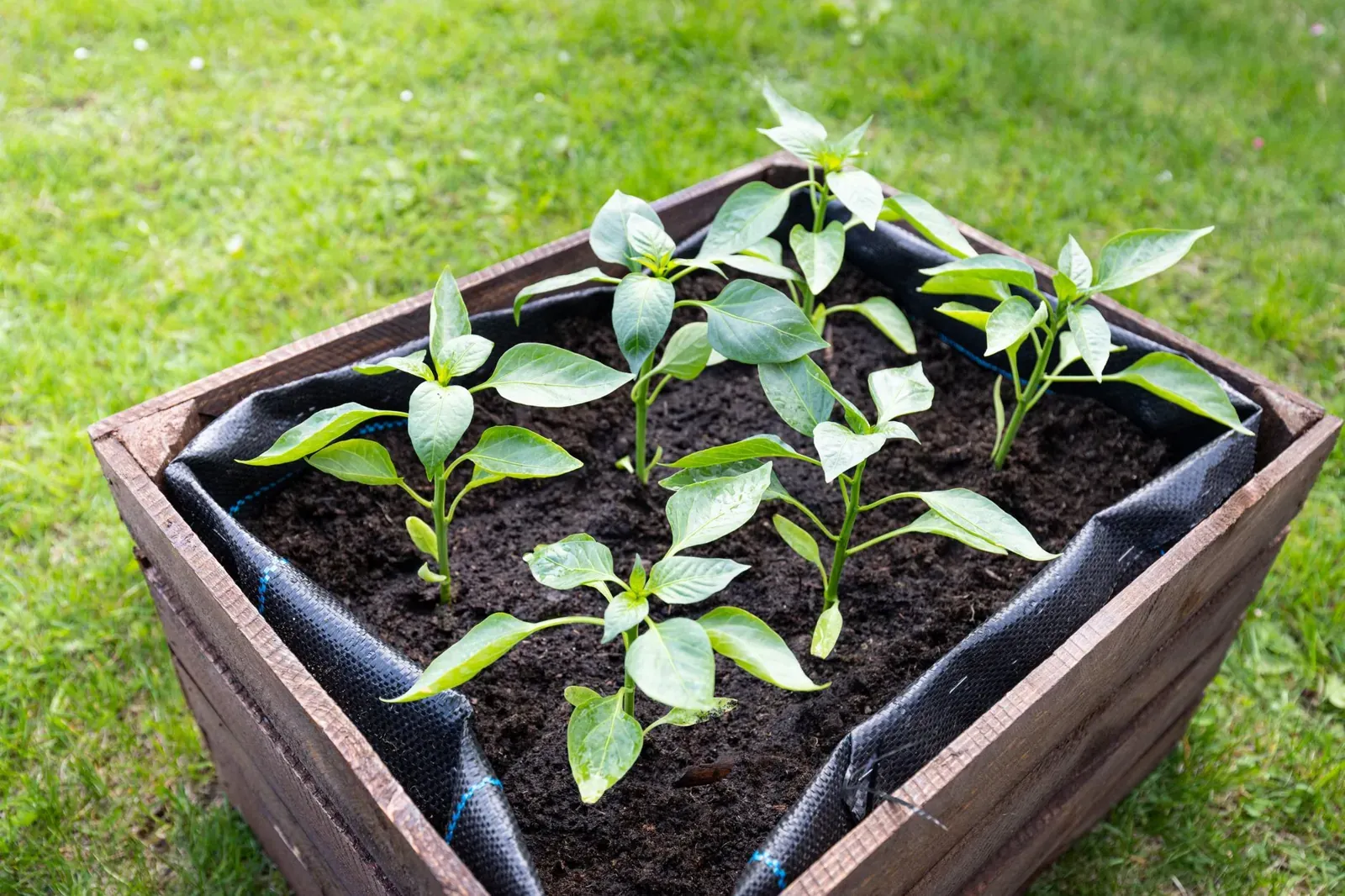 Small wooden raised bed lined with fabric, filled with dark soil and young pepper plants
Photo: Mateusz Feliksik / Pexels
Then pick what to grow from our crop guides and look up your local frost dates with the planting calendar.
FAQ#
Is raised bed soil the same as potting soil?#
Not in the extension sense. Raised bed soil vs potting soil differs mainly in mineral content: extension bed recipes are built on topsoil, while potting soil usually has none. Some bagged raised bed mixes are soilless, so read the ingredients.
Can I mix potting soil with garden soil in a raised bed?#
Maryland's own options blend compost with either topsoil or a soilless mix, and allow topsoil up to 20% in soilless fill for beds at least 16 inches deep on hardscape. Whichever blend you use, Iowa State advises mixing it in a few inches at a time so layers do not form.
Which is better for vegetables in a raised bed?#
The raised bed soil vs potting soil choice depends on the site. Maryland recommends topsoil and compost for a bed on lawn, and compost with soilless mix on pavement or compacted soil.
Is potting mix the same as potting soil?#
Mississippi State treats potting soil as a soilless mix, and Penn State and Iowa State use "potting mix" for the same kind of container medium. The label wording is not a reliable guide, so check the ingredient list.
Sources#
- Filling your raised bed (University of Maryland Extension, Home and Garden Information Center)
- What would be a good soil mix for a raised bed? (Iowa State University Extension and Outreach)
- Can I use garden soil or should I purchase a commercial potting mix? (Iowa State University Extension and Outreach)
- Building Raised Beds Workshop (UC Cooperative Extension, Inyo & Mono Counties Master Gardeners)
- Container Vegetable Gardening: Four Keys to Success (Penn State Extension)
- How to Choose Potting Soil (Mississippi State University Extension Service)
- Vegetable Gardening: Container Media (UF/IFAS Extension, Gardening Solutions)
Featured photo: Anna Shvets / Pexels.




Check your inbox
We sent a confirmation link to . Click it and your planting calendar PDF is on its way. Nothing there in a few minutes? Check your spam or promotions folder.



No comments yet. Tried this in your garden, or found a date that worked better? Start the thread.
Leave a comment