 PlantAlong

In short
- Clemson and UGA keep beds 3 to 4 feet wide so you can reach the middle from either side without stepping in.
- On pavement or compacted soil, University of Maryland Extension wants at least 8 inches for greens, beans and cucumber and 12 to 24 inches for tomatoes, peppers and squash.
- Maryland fills beds with compost and topsoil at 1:2 or 1:1, or compost and soilless mix at 1:1, while Clemson keeps compost to 10 to 20% of the volume.
- Iowa State says most vegetable gardens need about 1 inch of water a week from rain and irrigation, and raised beds dry out faster than in-ground beds.
- Illinois Extension recommends topping beds up with a few inches of compost or good topsoil every year because the soil settles.
On this page
- Why raised bed gardening works, and where it falls short
- Raised bed size: width, length and paths
- How deep a raised bed needs to be
- Materials for raised bed gardening
- Siting: sun, level ground and water
- Soil for raised bed gardening: mixes and how much
- Layout and spacing in raised bed gardening
- Watering and mulching raised beds
- What to plant first in raised bed gardening
- Season extension: covers on raised beds
- Year-two upkeep: topping up and compost
- FAQ
- What should I put in the bottom of a raised garden bed?
- How deep should a raised garden bed be?
- What is the best soil for raised bed gardening?
- Do raised beds need full sun?
- Sources
Raised bed gardening means growing vegetables in soil that sits above ground level, usually inside a frame 3 to 4 feet wide that you can reach across without stepping in. Extension guides agree on the basics: at least 6 hours of direct sun, a bed 8 to 24 inches deep depending on the crop and what lies underneath, and a fill of compost blended with topsoil or a soilless mix. Everything else is layout, water and a yearly top-up.
In this guide:
- Pros and cons of raised bed gardening
- Size, paths and depth by crop
- Materials and siting
- Soil mixes and how much to buy
- Layout, spacing, watering and mulch
- What to plant first, season extension and year-two upkeep
Why raised bed gardening works, and where it falls short#
Clemson Extension lists the main advantages. Raised beds warm up faster in spring, so the growing season starts earlier, and only the bed itself needs weeding, watering and mulch. Clemson also calls raised beds a good fit for steep slopes, poor drainage, and rocky, shallow or low-quality soil.
University of Maryland Extension adds three more: the looser, raised soil drains well, the extra depth gives roots more room, and the soil compacts less because nobody walks on it.
The downsides are real. Maryland lists the cost of materials and labor, faster drying that needs more watering in hot, dry weather, a fairly permanent structure, and frame materials that wear out. University of Georgia Extension notes that sweet corn needs larger blocks of plants for good pollination, and that watermelons tend to overrun a small bed unless you grow compact varieties and trellis them.
Cornell's SoilNOW team adds a climate caution: raised beds are not always ideal in windy, dry or warm areas, because the soil runs warmer and drains faster. So raised bed gardening pays off most on wet, compacted, rocky or poor ground and in cool springs. In a hot, dry, windy yard, plan for extra water from day one.
Raised bed size: width, length and paths#
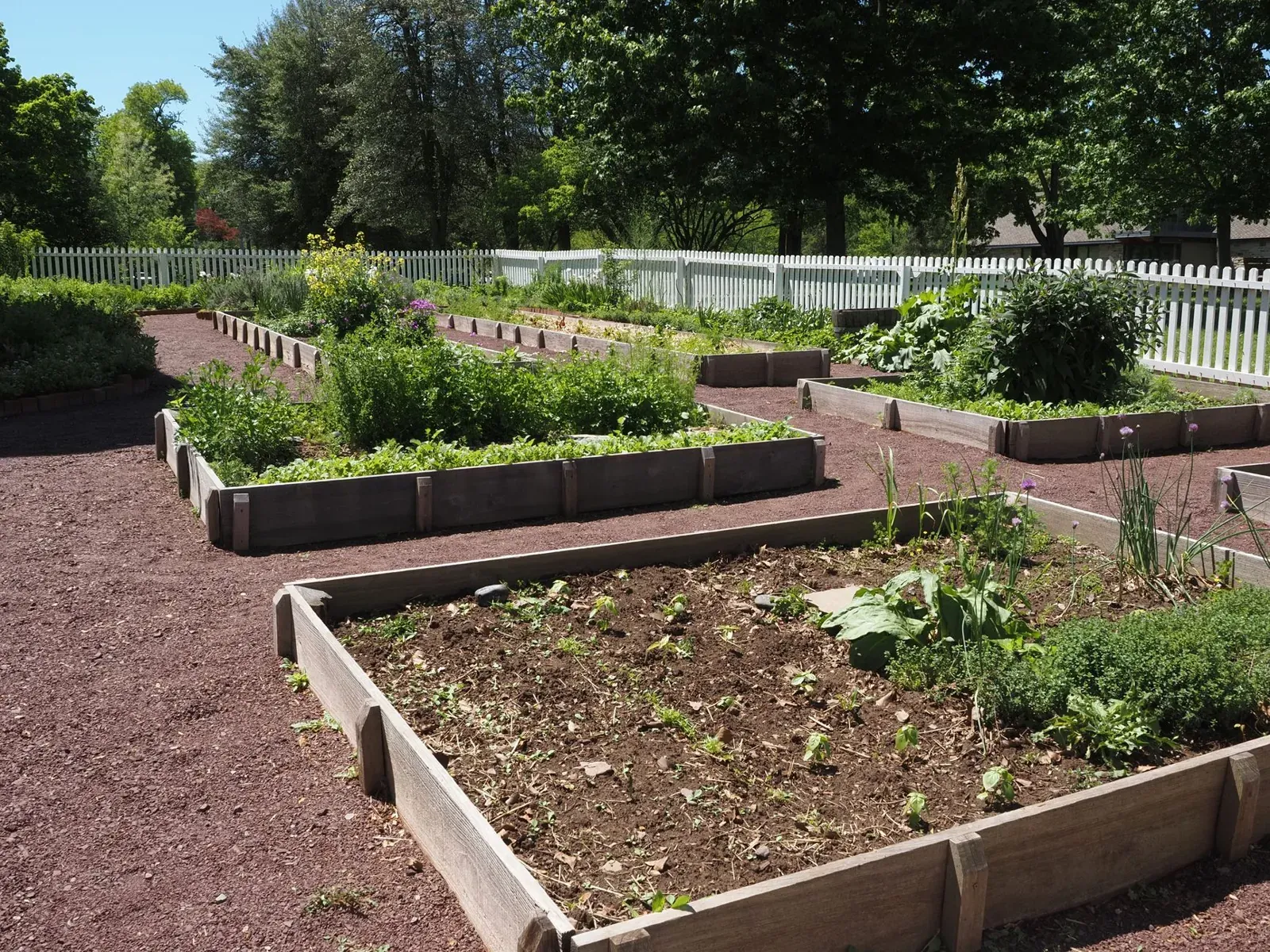
In raised bed gardening, width matters most. Clemson says a bed should be only as wide as you can easily work from either side to the middle, which it puts at 3 to 4 feet. UGA suggests 4 feet for adults and 3 feet for children, and for wheelchair access 3 feet for adults and 2 feet for children. If you can reach a bed from one side only, keep it narrow enough that you can touch the back edge.
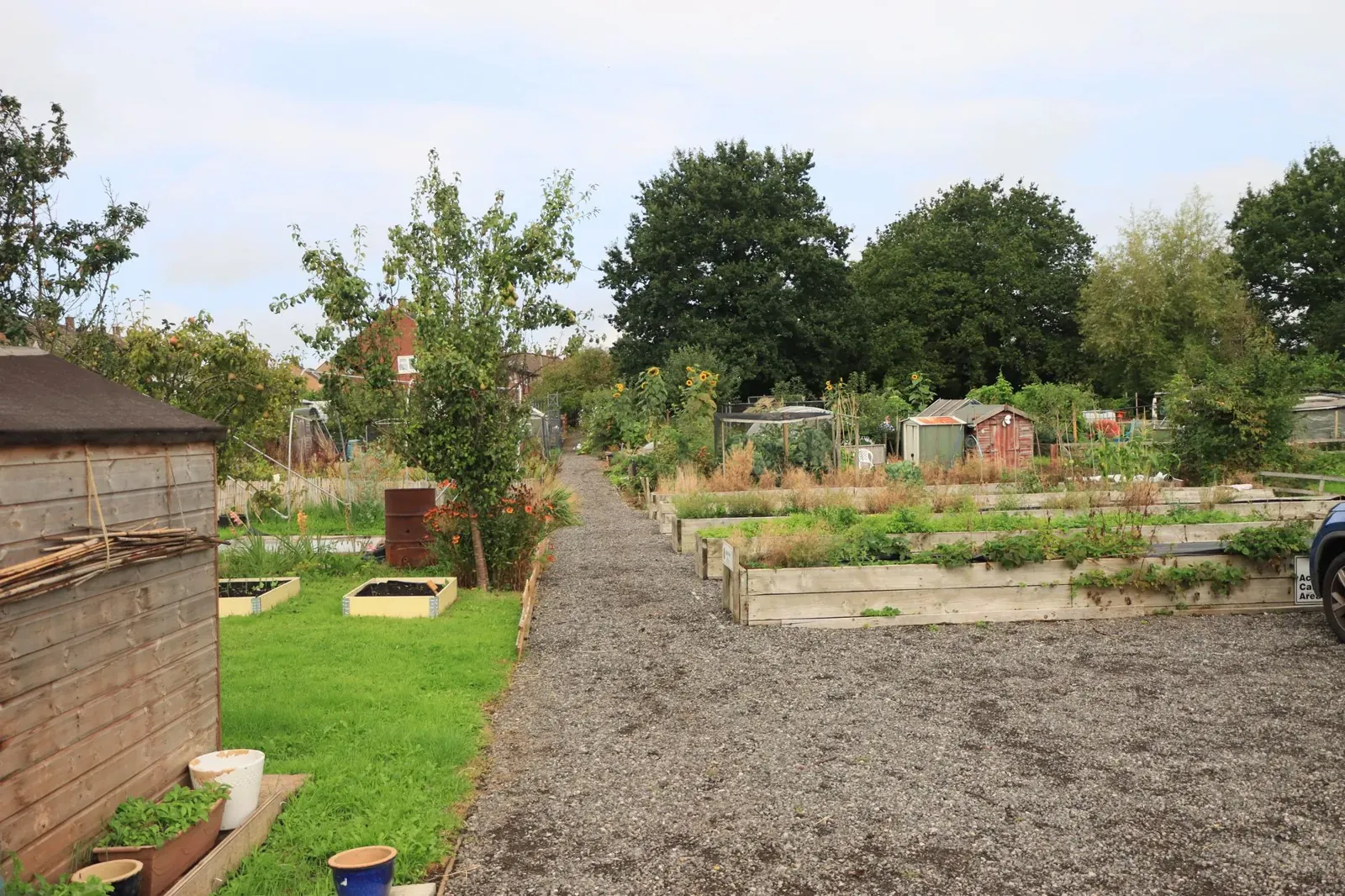 Wooden raised beds on both sides of a wide gravel path in an allotment garden
Photo: Jan Wright / Pexels
Length is flexible. Clemson says beds can be as long as you like, while UGA warns that very long beds are a hassle to walk around and that lumber costs rise noticeably past 12 feet. Lumber comes in 8, 10 and 12 foot lengths, so UGA suggests sizes in multiples of 2 or 3 feet: a 4 by 8 foot bed is easiest to build with 8-foot boards. UGA also says boards only 1 inch thick need a vertical support about every 4 feet.
Path widths vary by source:
- UGA: 12 inches is the absolute minimum, 18 to 24 inches is ideal, and 4 feet leaves room for carts, wheelbarrows and wheelchairs.
- Colorado State: 2-foot walkways between beds 2 to 4 feet wide.
- Clemson: 3 to 4 feet is comfortable between enclosed beds.
How deep a raised bed needs to be#
Depth in raised bed gardening depends on what lies under the bed. On loose soil with no bottom, roots keep growing into the ground below. For a bed on pavement or heavily compacted soil, University of Maryland Extension gives these minimums:
- At least 8 inches for leafy greens, beans and cucumber.
- 12 to 24 inches for pepper, tomato and squash.
UGA says most garden crops need at least 10 inches of soil, and that if a bed is shallower you should till the soil below it. On a hard surface, UGA warns, 10 inches may not be deep enough for some crops, such as potatoes. Utah State recommends a frame at least 6 to 12 inches high and says beds shallower than 12 inches should have no bottom, so roots can reach the soil beneath.
Height also changes how you work. UGA suggests beds 24 inches tall for wheelchair access and 36 inches to avoid bending over. For tomato-specific numbers, see our guide to raised bed depth for tomatoes.
Shop the essentials
What you'll need
Supplies for the steps in this guide.
 Build the bedRaised bed kit, 4 × 8 ftA ready-to-assemble bed frame.: check price on Amazon (opens in a new tab)
 Extend the seasonCold frameA clear-lidded box that shelters young plants from cold.: check price on Amazon (opens in a new tab)
 Fill the bedBagged compostCompost to mix into a new bed.: check price on Amazon (opens in a new tab)
 After plantingStraw mulchStraw for covering beds after planting.: check price on Amazon (opens in a new tab)
As an Amazon Associate I earn from qualifying purchases. Photos show the type of product, not a specific listing. How we choose
Materials for raised bed gardening#
This is the short version. The main frame options:
- Rot-resistant wood. Clemson recommends cypress, redwood or cedar. UGA notes that West Coast cedar often costs four to five times as much as Southern yellow pine, while pine has almost no rot resistance in contact with soil.
- Pressure-treated wood. Maryland Extension says micronized copper azole (MCA), now the most common residential treatment, is considered low in toxicity. It cites Oregon State research that found a minor rise in soil copper only within 1 inch of the bed edge and no increase in the plants. CCA, which contains arsenic, was discontinued for residential use in 2004. Cornell's SoilNOW lists pressure-treated wood among materials to avoid, so sources disagree; Maryland describes lining the sides with heavy plastic as a compromise.
- Galvanized steel. Maryland lists it as a rust-resistant option, and Cornell lists galvanized sheet metal as acceptable.
- Concrete block. Maryland considers intact blocks generally safe for food gardening but notes that fly ash may be in the mix and that little research exists. Cornell lists cinder blocks as a material to avoid.
- No frame at all. Clemson describes mounded beds shaped with a shovel and rake, 4 to 8 inches high with sides sloped at 45 degrees.
One clear no: UGA says used railroad ties and utility poles, treated with creosote, should not be used for beds that grow food of any kind.
Siting: sun, level ground and water#
Site choice comes first in raised bed gardening, because no soil mix makes up for shade. Clemson recommends a well-drained site with a minimum of six hours of direct sun a day, preferably near a water source. It also suggests a spot you walk past daily, so you notice insects and disease early. Utah State asks for 6 to 8 hours of direct sun for the best fruit and foliage production.
Set the frame level. On a slope, UGA suggests placing beds with the shortest side running across the slope, like stair steps. It also suggests a north-south layout where possible, because tall crops in east-west beds that sit close together shade the beds behind them.
If the spot is lawn, Maryland Extension smothers the grass with plain cardboard or several layers of newspaper topped with compost; it says the vegetation dies in 8 to 12 weeks. If a bed is at least 6 inches deep and it is already planting time, Maryland says it is fine to cut the grass at ground level and cover it with the growing mix. Beds on pavement face extra stress from heat reflected off the surrounding surfaces, Maryland adds.
Soil for raised bed gardening: mixes and how much#
These sourced mixes cover most situations:
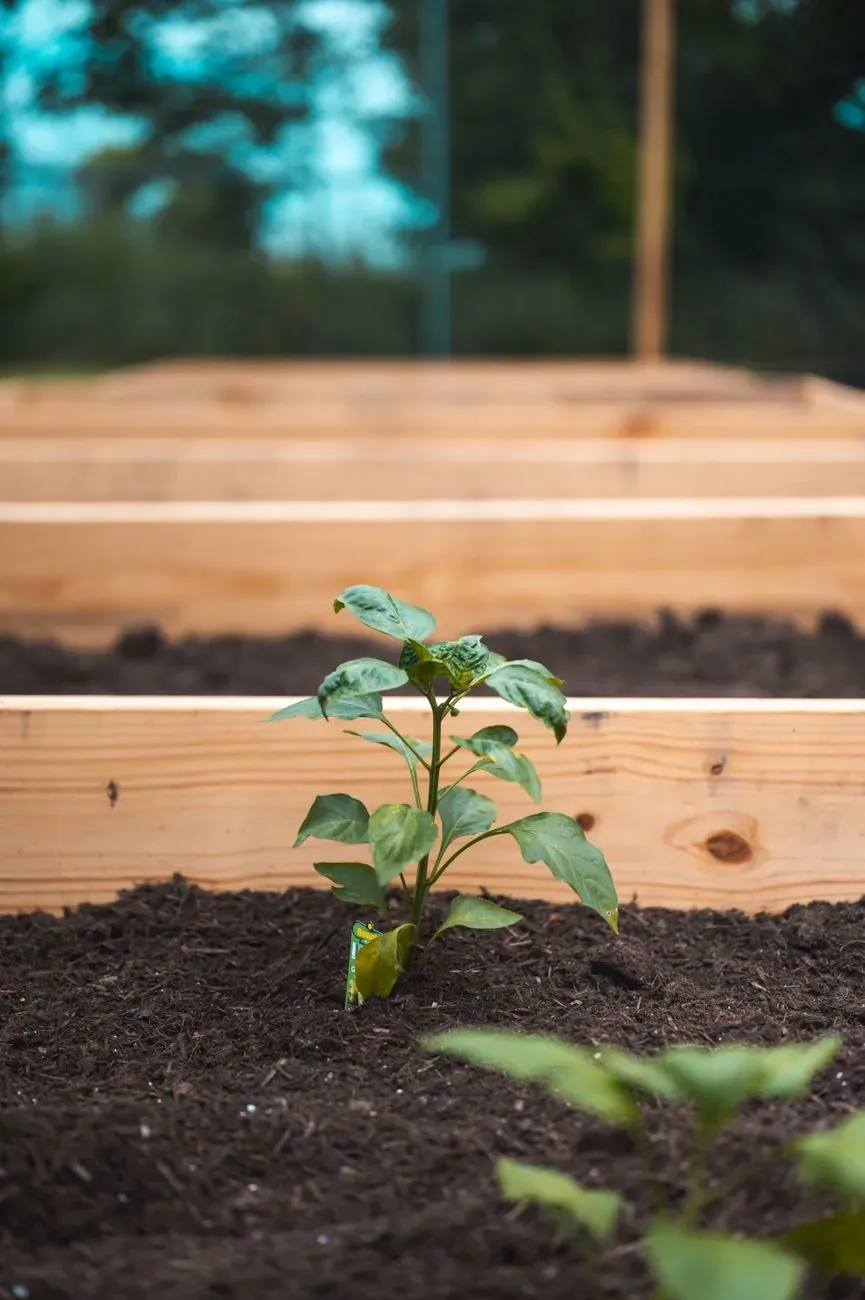 Young pepper plant in dark compost inside a new wooden raised bed frame
Photo: Alfo Medeiros / Pexels
- Bed on lawn or garden soil: compost and topsoil at 1:2 or 1:1, or compost and a soilless mix at 1:1 (University of Maryland Extension).
- Bed on pavement or compacted ground: compost and soilless mix at 1:1. Maryland allows topsoil up to 20% by volume, but only in beds at least 16 inches deep.
- Iowa State options: equal parts topsoil, organic matter and coarse sand, or about 70% topsoil and 30% compost.
- Clemson: good topsoil with compost at 10 to 20% of the bed's total volume.
Sources disagree on how much compost to use, from Clemson's 10 to 20% to Maryland's half. A Maryland Extension reply also notes that fill made entirely of compost or soilless mix dries out faster than fill that includes mineral soil. For bagged choices, see raised bed soil vs potting soil.
Mix rather than stack. Iowa State says to add a few inches of mix at a time and work it into the soil below, because distinct layers impede water movement and discourage root growth.
Test before you fill. Maryland recommends a basic lab soil test plus a lead test if you will grow food, and says not to plant vegetables in soil with total lead above 400 ppm. It puts the ideal pH for most vegetables at 6.2 to 6.8.
To work out how much to buy, multiply length × width × depth in feet. A 4 by 8 foot bed filled 12 inches deep holds 32 cubic feet, about 1.19 cubic yards at 27 cubic feet per yard. Our raised bed soil calculator does this for any bed, and soil for a 4x8 raised bed has bag counts by depth. UC Cooperative Extension Master Gardeners suggest leaving at least 2 inches at the top for mulch.
Layout and spacing in raised bed gardening#
Raised beds suit block planting. Clemson recommends planting in blocks instead of rows, alternating crops that mature at different times, and sowing the same crop at intervals for a longer harvest.
Colorado State gives equal-distance spacing for block or close-row beds: a crop listed at 6 inches is thinned to 6 inches between plants in every direction. It adds that the closer figures are only for improved soils with 4 to 5% organic matter. Grid layouts, often called square-foot gardening, apply the same idea. The spacing for 10 common crops is in the table in the next section.
Plan for height. UGA notes that tall crops shade lower crops behind them in the same bed. Go vertical where you can: UC Cooperative Extension says an A-frame trellis for cucumbers fits nicely over a 4-foot bed, and Utah State notes that pole beans and peas can climb vertical structures while squash and cucumbers spill over the sides. Colorado State spaces cucumbers 6 inches apart on a trellis but 24 to 36 inches apart untrellised.
For which crops to put side by side, print our companion planting chart.
Watering and mulching raised beds#
Water is the biggest routine job in raised bed gardening. Raised beds dry out more quickly than in-ground beds and need more irrigation during dry spells, Clemson says. Iowa State's rule of thumb is about 1 inch of water a week from rain and irrigation combined, enough to moisten the soil 6 to 12 inches deep. With soaker hoses or drip, it says to water until the soil is wet 10 to 12 inches down.
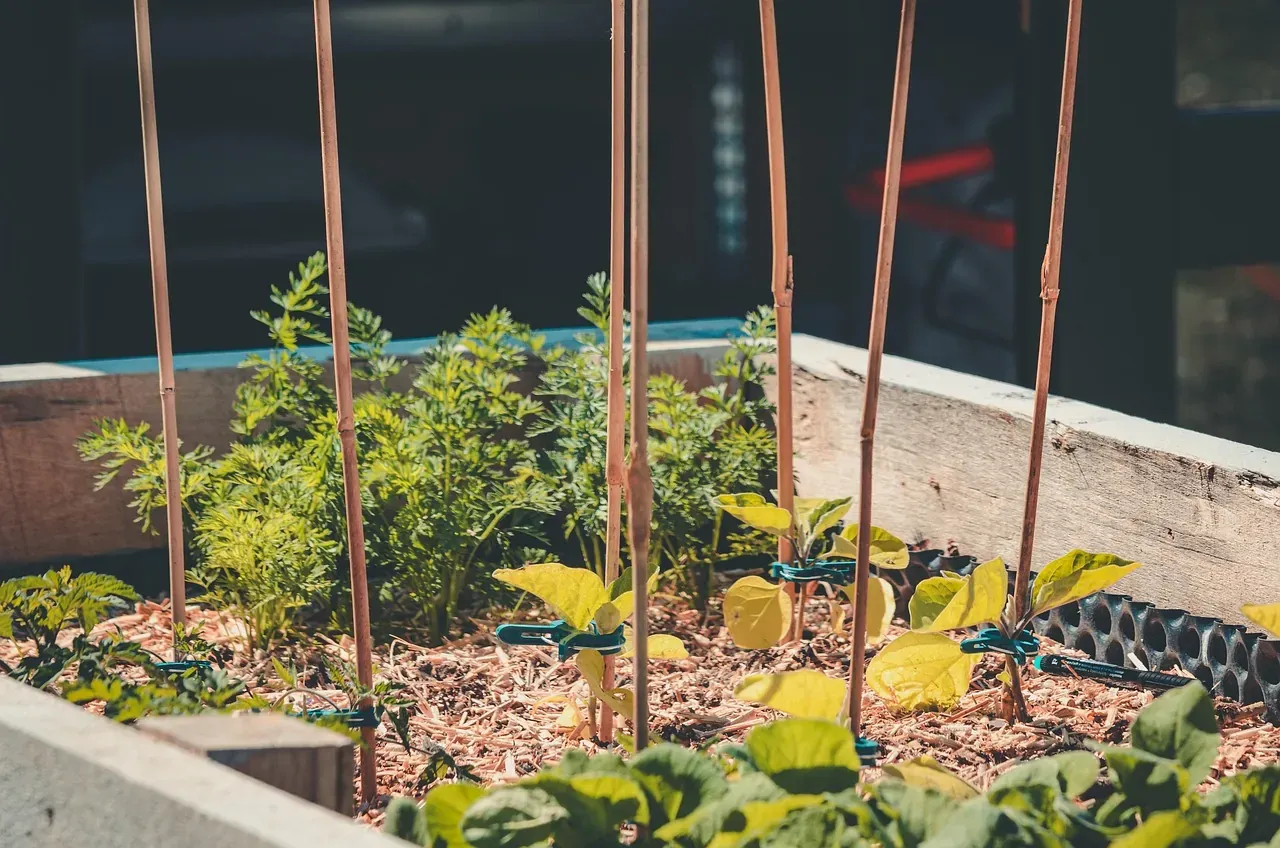 Wooden raised bed with wood chip mulch, bamboo stakes and young vegetable plants
Photo: Farbsynthese / Pixabay
Colorado State says vegetables use around a quarter inch of water per day in typical summer weather, and suggests watering when the top 2 to 4 inches of soil are dry. On a raised bed it spaces drip line or soaker hose 12 inches apart: four runs on a 4-foot-wide bed, or three runs for large crops such as squash. It places the line on the soil surface under the mulch.
Mulch saves water. Iowa State applies several inches after the soil has warmed, using materials such as grass clippings, shredded leaves or weed-free straw. Illinois Extension notes that vegetable gardeners typically use mulch that breaks down, such as straw or arborist wood chips.
What to plant first in raised bed gardening#
Timing comes from your frost dates, not from the bed. Colorado State groups vegetables by cold tolerance and ties each group to the average last spring frost. Its guide is written for Colorado, but the windows are counted from your own frost date.
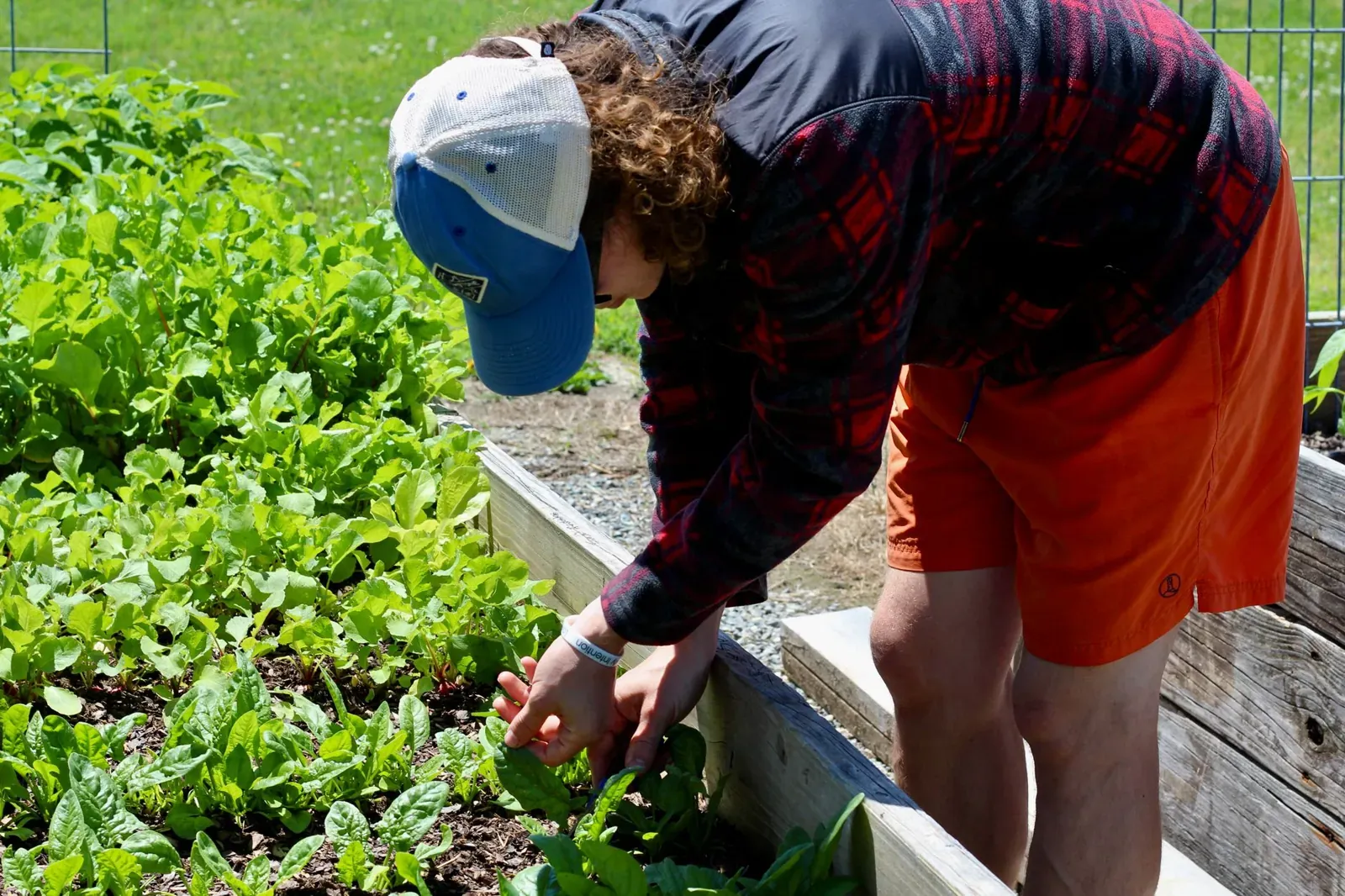 Gardener in a cap picking spinach leaves from a wooden raised bed in spring
Photo: Jenna Hamra / Pexels
| Crop | Colorado State group | When to plant (vs. average last spring frost) | Equal-distance spacing |
|---|---|---|---|
| Lettuce (leaf) | Hardy | As early as 2 to 4 weeks before | 7 to 9 in |
| Peas | Hardy | As early as 2 to 4 weeks before | 4 to 6 in |
| Onions (seed) | Hardy | As early as 2 to 4 weeks before | 4 to 6 in |
| Carrots | Semi-hardy | As early as 0 to 2 weeks before | 2 to 3 in |
| Potatoes | Semi-hardy | As early as 0 to 2 weeks before | 12 to 15 in |
| Snap beans | Tender | From seed, around the last frost date | 6 in |
| Cucumbers | Tender | Seed around the last frost; transplants after frost danger | 6 in trellised, 24 to 36 in untrellised |
| Summer squash | Tender | Seed around the last frost; transplants after frost danger | 36 to 48 in |
| Tomatoes | Very tender | Typically 2 or more weeks after | 24 in trellised |
| Peppers | Very tender | Typically 2 or more weeks after | 15 to 18 in |
Hardiness zones will not give you that date. PlantAlong's analysis of NOAA 1991-2020 climate normals finds that in zone 6a, the median last frost date runs from April 16 to May 10 across the middle 80% of ZIP codes. Look up your own dates and a crop-by-crop calendar on the planting calendar.
Raised bed soil warms more quickly in spring, which allows earlier planting, Utah State notes. It also warns that the warmer soil loses more moisture in summer.
Season extension: covers on raised beds#
A 4-foot bed is easy to cover, one of the quieter perks of raised bed gardening. UC Cooperative Extension notes that row covers on wire hoops fit easily over 4-foot beds. University of Wisconsin Extension says row covers give 2 to 8 degrees of frost protection depending on fabric weight, with heavyweight covers giving 4 to 8°F. It also warns that tomatoes and peppers may drop blossoms if it gets above 86°F under the cover.
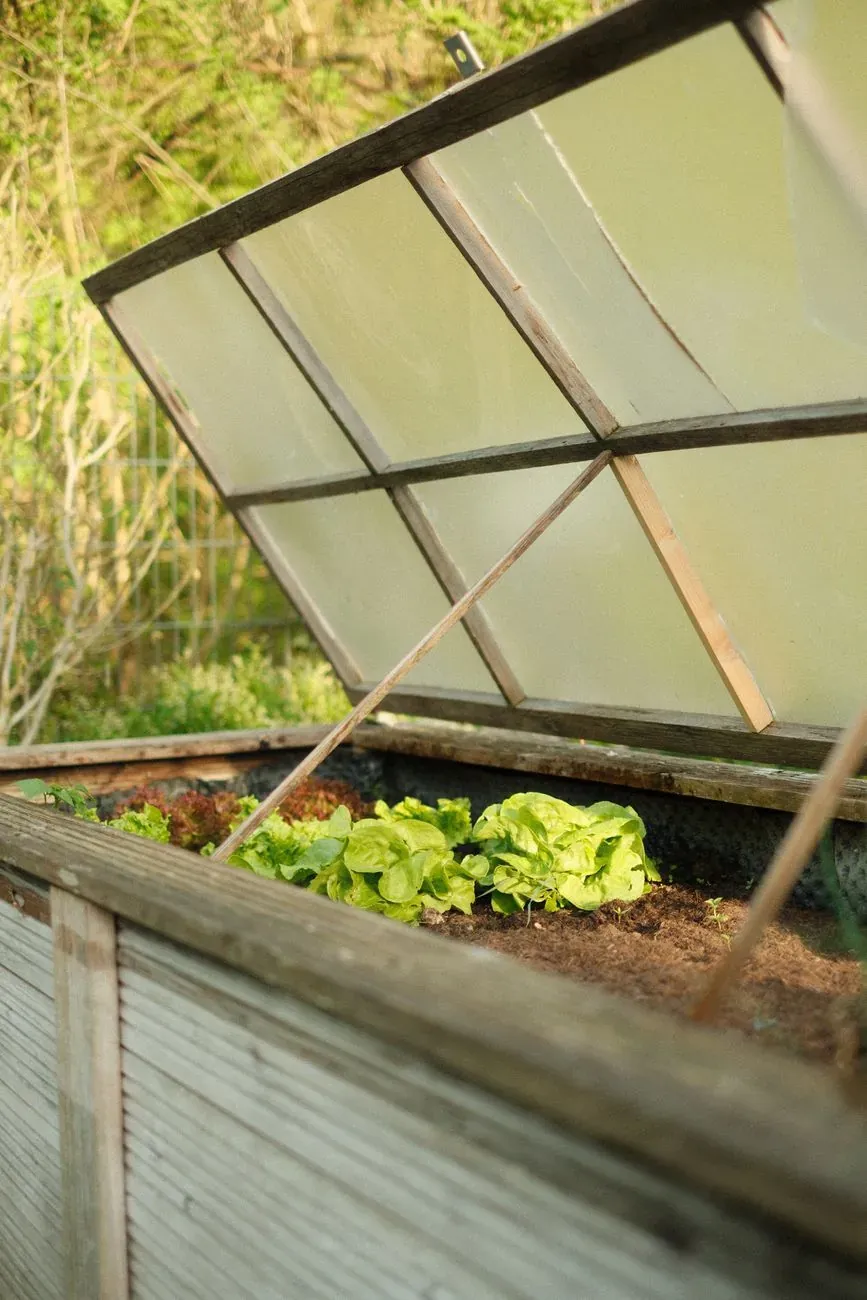 Cold frame lid propped open over lettuce growing in a wooden raised bed
Photo: Nico Siegl / Pexels
For a sturdier setup, Utah State suggests arches of PVC tubing or rebar holding horticultural plastic like a mini greenhouse, with a way to vent it when it gets too hot. In summer the plastic can be swapped for shade cloth.
Expect the fall to end a little earlier. University of Kentucky Extension notes that raised beds may freeze sooner in fall than in-ground beds because the ground does not insulate them.
Year-two upkeep: topping up and compost#
Beds sink. Illinois Extension calls settling soil "simply a fact of raised bed gardening" and says an annual top dressing of a few inches of compost or good topsoil should keep up with it. It also recommends off-season cover crops, whose roots build soil structure and slow settling, and advises against tilling an established bed because that breaks down structure and speeds up settling.
Clemson suggests replenishing compost regularly, since organic matter keeps decomposing, and covering empty beds with 2 inches of pine straw, leaves, compost or a cover crop. That keeps raised bed gardening productive year after year with less weeding.
FAQ#
What should I put in the bottom of a raised garden bed?#
On lawn, Maryland Extension lays plain cardboard or newspaper to smother the grass. Where gophers are a problem, UC Cooperative Extension Master Gardeners suggest hardware cloth under the bed. Otherwise, loosen the ground and mix the first few inches of fill into it rather than adding separate layers, which Iowa State says impede water movement.
How deep should a raised garden bed be?#
On pavement or compacted soil, Maryland Extension says at least 8 inches for greens, beans and cucumber and 12 to 24 inches for tomatoes, peppers and squash. UGA says most crops need at least 10 inches. Over loose soil with no bottom, roots continue into the ground.
What is the best soil for raised bed gardening?#
For raised bed gardening on soil or lawn, extension sources use compost blended with topsoil or a soilless mix, at ratios from Clemson's 10 to 20% compost to Maryland's 1:1. Mix the layers together and test for pH and lead first.
Do raised beds need full sun?#
Vegetables do. Clemson asks for a minimum of six hours of direct sun, and Utah State says 6 to 8 hours for the best fruit and foliage production.
Sources#
- Raised Beds (HGIC 1257) (Clemson Cooperative Extension)
- Growing Vegetables in Raised Beds (University of Maryland Extension)
- Filling Your Raised Bed (University of Maryland Extension, Maryland Grows)
- Raised Garden Bed Dimensions (C1027-4) (University of Georgia Extension)
- Raised Beds vs. In-Ground Gardens (C1027-3) (University of Georgia Extension)
- Raised Bed Materials (C1027-5) (University of Georgia Extension)
- Raised Bed Gardening (Utah State University Extension)
- Raised Beds (Cornell University SoilNOW)
- What would be a good soil mix for a raised bed? (Iowa State University Extension)
- Watering the Home Vegetable Garden (Iowa State University Extension)
- Vegetable Planting Guide (CMG GardenNotes #720) (Colorado State University Extension)
- Irrigating the Vegetable Garden (Colorado State University Extension)
- Building Raised Beds Workshop (UC Cooperative Extension, Inyo and Mono Counties Master Gardeners)
- Floating Row Cover (University of Wisconsin-Madison Extension)
- Raised Wicking Beds (AEN-158) (University of Kentucky Cooperative Extension)
- Refreshing raised bed soil generates exceptional results (University of Illinois Extension)
- PlantAlong methodology (PlantAlong analysis of NOAA 1991-2020 climate normals)
Featured photo: Caniceus / Pixabay.




Check your inbox
We sent a confirmation link to . Click it and your planting calendar PDF is on its way. Nothing there in a few minutes? Check your spam or promotions folder.



No comments yet. Tried this in your garden, or found a date that worked better? Start the thread.
Leave a comment