 PlantAlong

In short
- A 4x8 raised bed holds 32 cubic feet per foot of depth, and a 4x4 holds half that; one cubic yard is exactly 27 cubic feet (NIST Handbook 44).
- A dry nominal 2x6 board is dressed to 5-1/2 inches wide (American Softwood Lumber Standard PS 20-25), so two stacked boards make a wall about 11 inches tall.
- UC Cooperative Extension advises leaving at least 2 inches at the top of a bed for mulch.
- University of Maryland Extension suggests compost and topsoil at 1:2 or 1:1 for a bed on lawn; Iowa State suggests about 70% topsoil and 30% compost.
- University of Illinois Extension says raised bed soil settles and an annual top dressing of a few inches of compost or good topsoil should keep up with it.
On this page
- The formula, and two common mistakes
- Soil for a 4x8 raised bed: volume and bag counts
- How much soil for a 4x4 raised bed
- Why 11 inches, and fill depth vs wall height
- Splitting the soil for a 4x8 raised bed into a mix
- Bulk or bagged: how to find the break-even
- Settling and topping up
- FAQ
- How many bags of soil do I need for a 4x8 raised bed?
- How many yards of soil for a 4x8 raised bed?
- How much soil for a 4x8x2 raised bed?
- Do I need extra soil for settling?
- Sources
A 4x8 raised bed filled 12 inches deep holds 32 cubic feet, which is about 1.19 cubic yards or 16 bags of 2 cubic feet each. To work out the soil for a 4x8 raised bed at any other depth, multiply its 32 square feet of surface by the depth in feet. A 4x4 bed needs exactly half, and our free raised bed soil calculator does the same math for any size or number of beds.
The formula, and two common mistakes#
Volume is length × width × depth, with all three in feet.
- A 4x8 bed has 4 × 8 = 32 square feet of surface.
- A 4x4 bed has 4 × 4 = 16 square feet.
- Depth in inches ÷ 12 = depth in feet. For example, 10 inches is 10 ÷ 12 = 0.833 feet.
So the soil for a 4x8 raised bed filled 10 inches deep is 32 × 0.833 = 26.7 cubic feet.
The first common mistake is mixing units. Multiplying 4 × 8 × 10 gives 320, which is cubic foot-inches, not cubic feet; divide by 12 to fix it. The second is the yard conversion: one cubic yard is exactly 27 cubic feet (3 × 3 × 3), according to NIST Handbook 44. Dividing by 3 or by 9 gives the wrong answer.
Soil for a 4x8 raised bed: volume and bag counts#
Here is the soil for a 4x8 raised bed at seven common depths. Bag counts are rounded up, and bag sizes differ by product, so check the cubic feet printed on the bag.
| Fill depth | Cubic feet | Cubic yards | 1 cu ft bags | 1.5 cu ft bags | 2 cu ft bags |
|---|---|---|---|---|---|
| 6 in | 16.0 | 0.59 | 16 | 11 | 8 |
| 8 in | 21.3 | 0.79 | 22 | 15 | 11 |
| 10 in | 26.7 | 0.99 | 27 | 18 | 14 |
| 11 in | 29.3 | 1.09 | 30 | 20 | 15 |
| 12 in | 32.0 | 1.19 | 32 | 22 | 16 |
| 18 in | 48.0 | 1.78 | 48 | 32 | 24 |
| 24 in | 64.0 | 2.37 | 64 | 43 | 32 |
A 4x8 bed filled 10 inches deep needs almost exactly one cubic yard (0.99). That makes 10 inches a handy depth if you are ordering bulk.
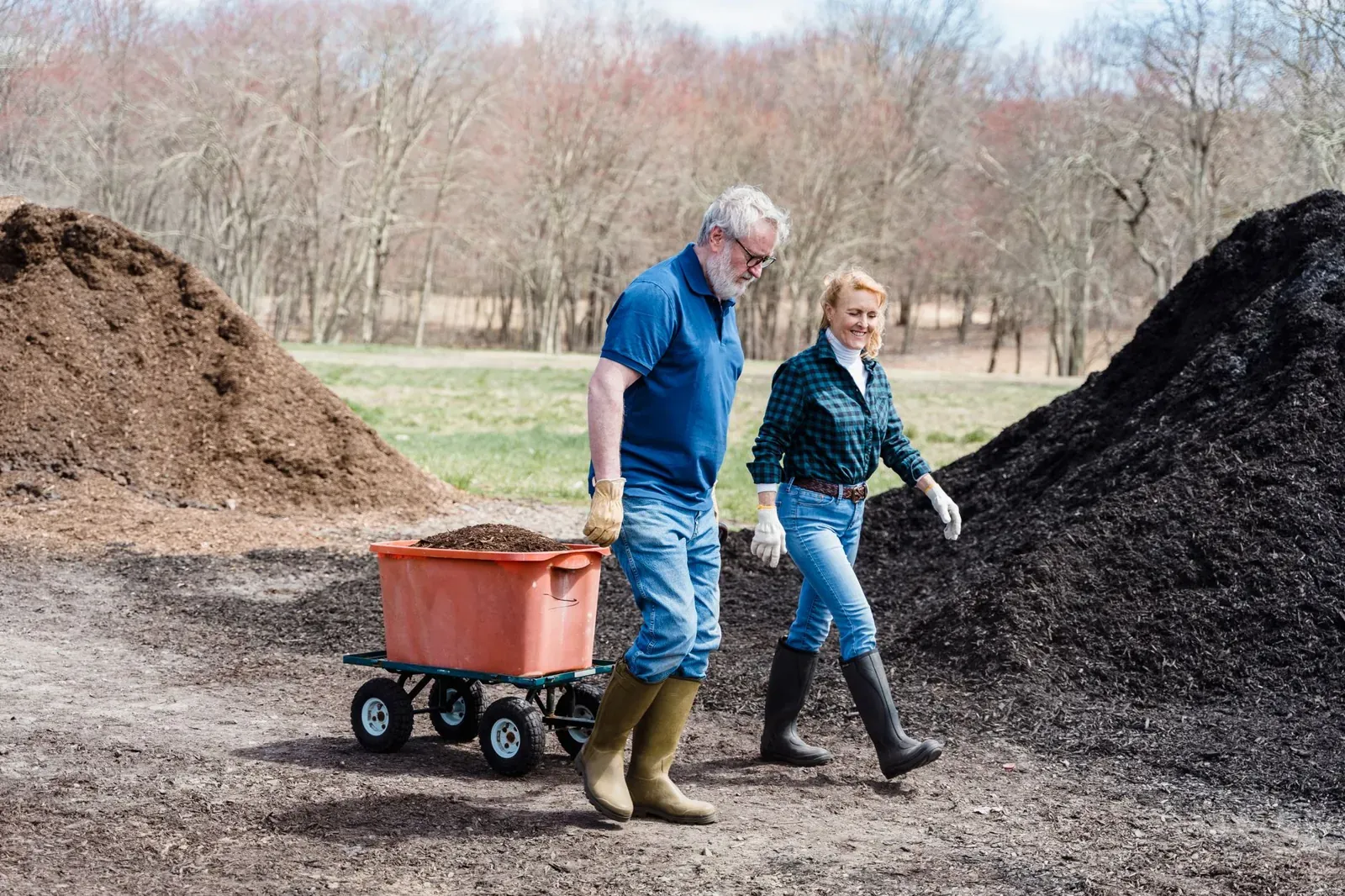 Two gardeners pulling a cart of dark soil between large bulk piles, the kind of order that can fill several raised beds
Photo: Greta Hoffman / Pexels
Shop the essentials
What you'll need
Supplies for the steps in this guide.
 Build the bedRaised bed kit, 4 × 8 ftA ready-to-assemble bed frame.: check price on Amazon (opens in a new tab)
 Fill the bedRaised bed soilBagged soil for filling beds. Compare each bag’s volume with your result.: check price on Amazon (opens in a new tab)
 Fill the bedBagged compostCompost to mix into a new bed.: check price on Amazon (opens in a new tab)
 Move the soilGarden cart or wheelbarrowFor moving bags and soil to the bed.: check price on Amazon (opens in a new tab)
As an Amazon Associate I earn from qualifying purchases. Photos show the type of product, not a specific listing. How we choose
How much soil for a 4x4 raised bed#
A 4x4 bed has half the surface of a 4x8, so every volume is half. Bag counts still round up.
| Fill depth | Cubic feet | Cubic yards | 1 cu ft bags | 1.5 cu ft bags | 2 cu ft bags |
|---|---|---|---|---|---|
| 6 in | 8.0 | 0.30 | 8 | 6 | 4 |
| 8 in | 10.7 | 0.40 | 11 | 8 | 6 |
| 10 in | 13.3 | 0.49 | 14 | 9 | 7 |
| 11 in | 14.7 | 0.54 | 15 | 10 | 8 |
| 12 in | 16.0 | 0.59 | 16 | 11 | 8 |
| 18 in | 24.0 | 0.89 | 24 | 16 | 12 |
| 24 in | 32.0 | 1.19 | 32 | 22 | 16 |
Why 11 inches, and fill depth vs wall height#
Many beds are built from two stacked 2x6 boards, and a "2x6" is a nominal size. Under the American Softwood Lumber Standard (PS 20-25, Table 3), a dry board with a nominal 6-inch width is dressed to a minimum of 5-1/2 inches. Two of them stacked make a wall about 11 inches tall, not 12.
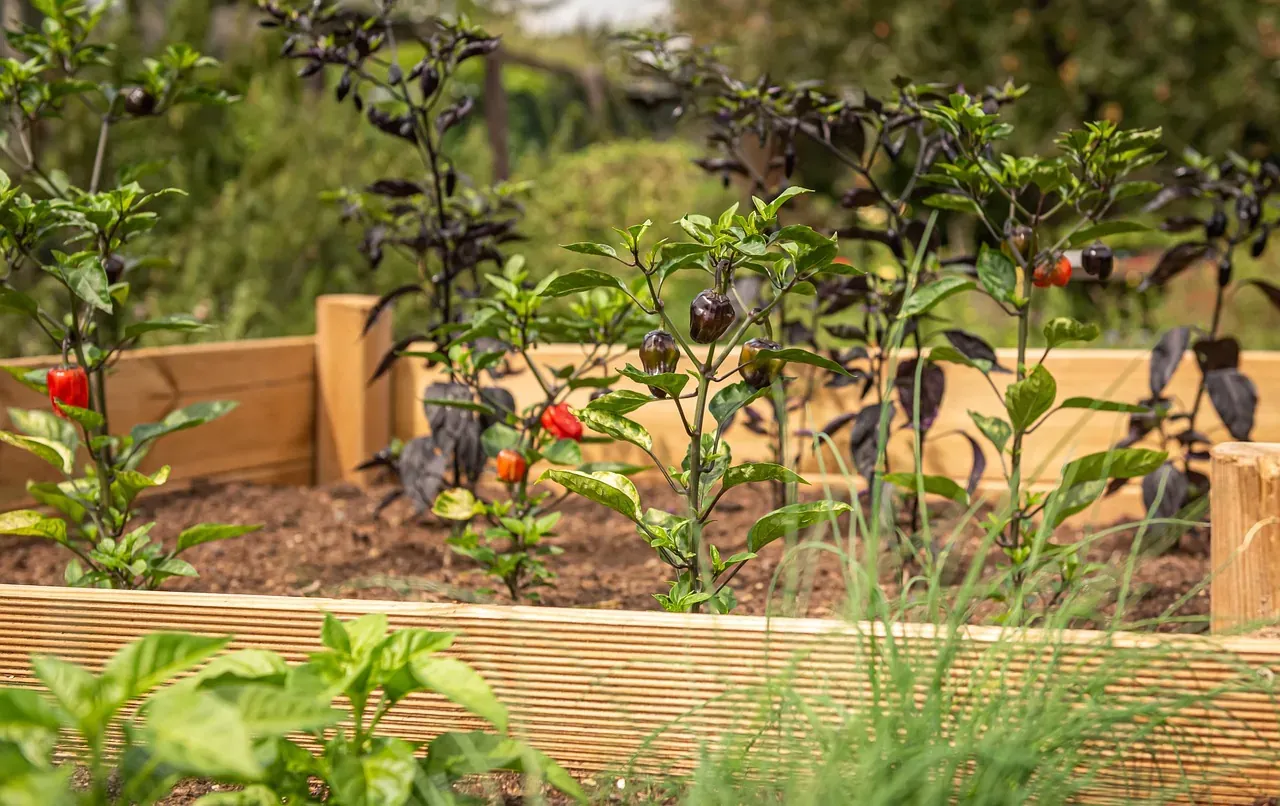 Wooden raised bed with board walls, soil filled a few inches below the top, and pepper plants
Photo: AndreasGoellner / Pixabay
You also may not want to fill to the rim. UC Cooperative Extension's raised bed workshop handout says to leave at least 2 inches at the top for mulch. In an 11-inch frame, that means filling to about 9 inches: 32 × 9 ÷ 12 = 24 cubic feet for a 4x8, or 12 cubic feet for a 4x4.
How deep should the soil be? For beds on hardscape or heavily compacted soil, University of Maryland Extension says at least 8 inches for leafy greens, beans and cucumber, and 12 to 24 inches for pepper, tomato and squash. Check what you plan to grow on our crop guides.
Splitting the soil for a 4x8 raised bed into a mix#
Here is the math for a 4x8 bed filled 12 inches deep (32 cubic feet):
- Compost and topsoil, 1:2 (University of Maryland Extension, for a bed placed on lawn): 10.7 cu ft compost + 21.3 cu ft topsoil.
- Compost and topsoil, 1:1 (same source): 16 + 16 cu ft. Maryland also lists compost and a soilless growing mix at 1:1.
- About 70% topsoil and 30% compost (Iowa State University Extension): 22.4 cu ft topsoil + 9.6 cu ft compost.
- Equal parts topsoil, organic matter and coarse sand (Iowa State): 10.7 cu ft of each.
Iowa State gives its recipes as parts and percentages without naming a unit; the split above treats them as volume. For a bed on pavement or hard-packed ground, Maryland recommends compost and soilless mix at 1:1, with topsoil allowed up to 20% by volume only in beds at least 16 inches deep.
Iowa State also advises adding the mix a few inches at a time and working it into the soil below, because distinct layers slow water movement and discourage root growth. Choosing between bag types? See raised bed soil vs potting soil. Growing tomatoes? See raised bed depth for tomatoes.
Bulk or bagged: how to find the break-even#
Prices vary by region and season, so compare them yourself.
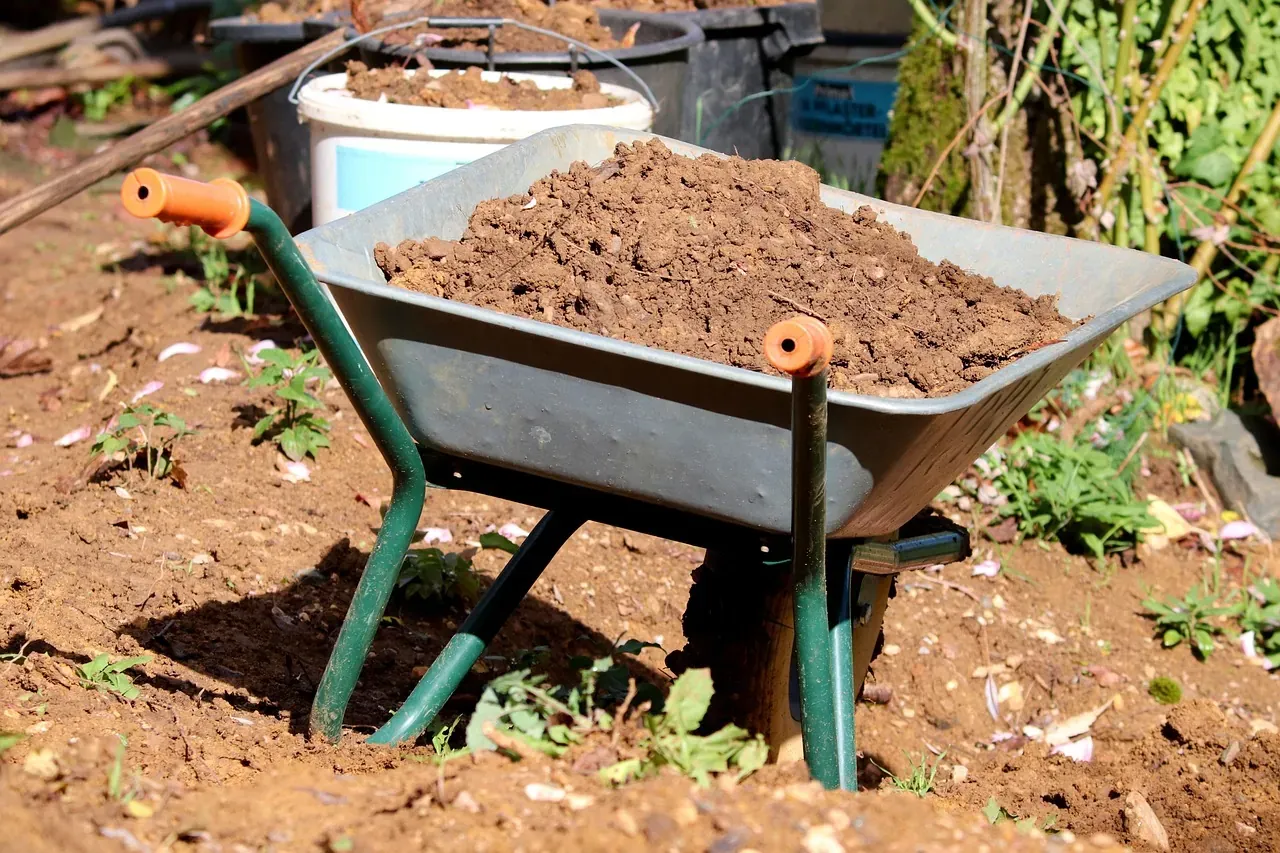 Metal wheelbarrow heaped with loose brown soil parked on a sunny garden plot
Photo: manfredrichter / Pixabay
- Bagged cost per cubic yard = bag price × 27 ÷ cubic feet per bag. A yard takes 27 one-cubic-foot bags, 18 bags of 1.5 cubic feet, or 13.5 bags of 2 cubic feet.
- Bulk cost = price per yard × yards you must order + any delivery fee.
- Compare the two for the volume you actually need. A fixed delivery fee adds less per yard the more yards you order.
For example, the soil for a 4x8 raised bed at 12 inches is 32 cubic feet, so three beds need 96 cubic feet, or 96 ÷ 27 = 3.56 cubic yards. Ask the supplier how they measure. NIST's model method-of-sale regulation (Handbook 130, which states adopt with their own changes) says bulk topsoil is sold by the cubic yard, the cubic meter or by weight.
Mississippi State University Extension notes that buying in bulk is often much cheaper than bagged products if you have access to a truck, and that nurseries sell these materials in bulk, except for potting soil.
Compressed bales are a special case. Maryland Extension says a compressed bale of soilless media is more economical, and that peat or coir products repel water and should be moistened before they go into the bed. Under Handbook 130, peat sold in compressed cubic measure is labeled with its compressed volume, so a bale fills more than its label says. None of the sources we read gives an expansion factor, so look for a loose-fill volume on the label.
Settling and topping up#
New beds settle. University of Illinois Extension calls settling "simply a fact of raised bed gardening" and says an annual top dressing of a few inches of compost or high-quality topsoil should keep up with it. Illinois also says cover crops slow settling and tilling an established bed speeds it up.
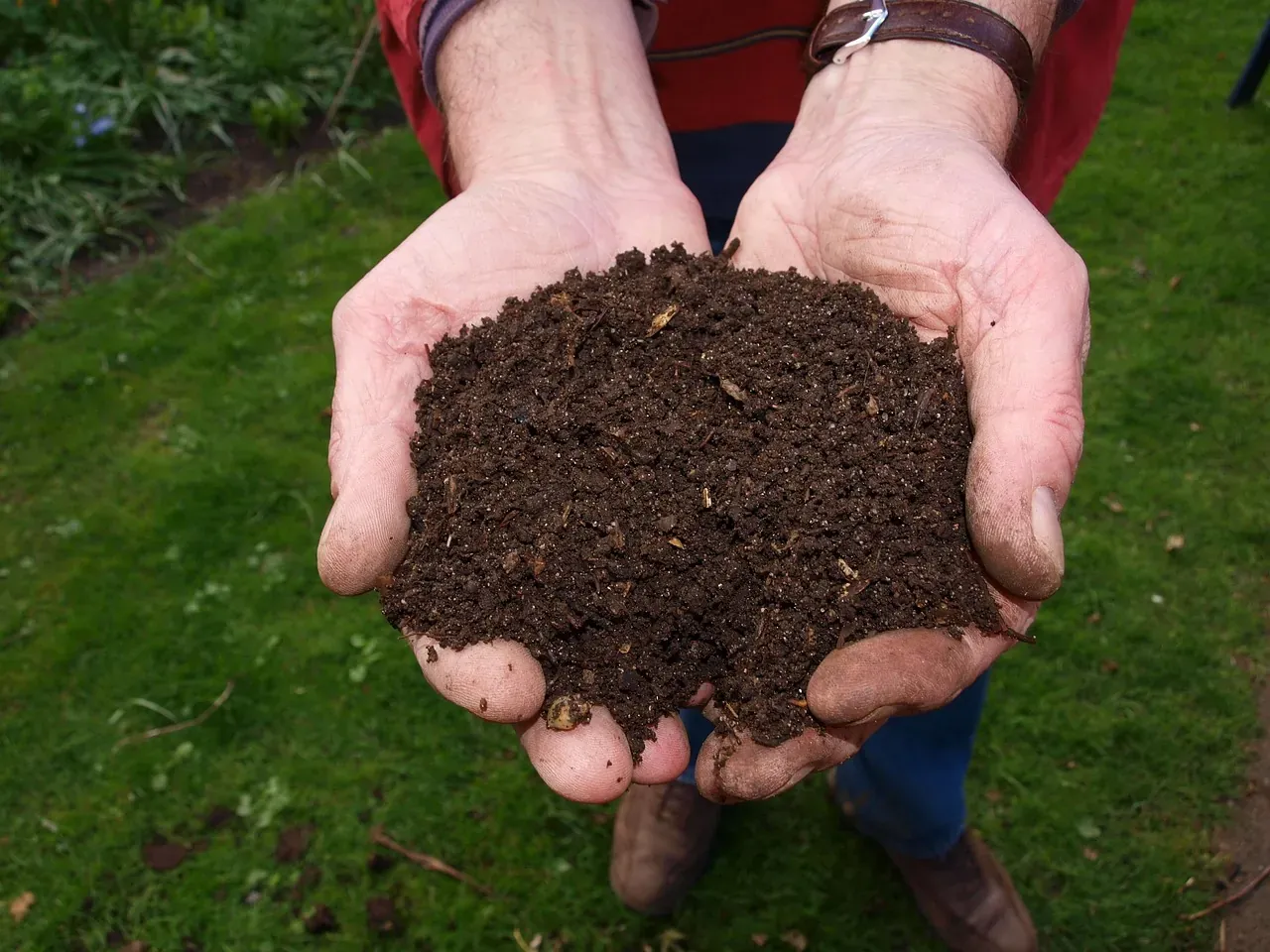 Two cupped hands holding a heap of dark crumbly compost above a green lawn
Photo: Galanthus / Pixabay
We found no extension source that gives a settling percentage, so the tables above do not add one. Plan on topping up instead. Each inch of top-up takes 32 ÷ 12 = 2.67 cubic feet on a 4x8 bed and 1.33 cubic feet on a 4x4. That matches Maryland's compost figure of 8.33 cubic feet per 100 square feet per inch.
When the bed is full, look up your frost dates with our planting calendar to see when each crop can go in.
FAQ#
How many bags of soil do I need for a 4x8 raised bed?#
At 12 inches deep, the soil for a 4x8 raised bed is 32 cubic feet: 32 bags of 1 cubic foot, 22 bags of 1.5 cubic feet, or 16 bags of 2 cubic feet. At 10 inches it is 27, 18 or 14 bags.
How many yards of soil for a 4x8 raised bed?#
Divide cubic feet by 27. The soil for a 4x8 raised bed is 0.59 yards at 6 inches, 0.99 at 10 inches, 1.19 at 12 inches and 2.37 at 24 inches.
How much soil for a 4x8x2 raised bed?#
A bed 4 feet by 8 feet by 2 feet deep holds 4 × 8 × 2 = 64 cubic feet, or 2.37 cubic yards. That is 32 bags of 2 cubic feet.
Do I need extra soil for settling?#
The sources we checked do not give a fixed allowance. Buy for the volume you calculate, then top up each year with a few inches of compost or good topsoil, as Illinois Extension suggests.
Sources#
- Filling your raised bed (University of Maryland Extension, Home and Garden Information Center)
- What would be a good soil mix for a raised bed? (Iowa State University Extension and Outreach)
- Building Raised Beds Workshop (UC Cooperative Extension, Inyo & Mono Counties Master Gardeners)
- Refreshing raised bed soil generates exceptional results (University of Illinois Extension)
- How to Choose Potting Soil (Mississippi State University Extension Service)
- Handbook 44 (2026), Appendix C: General Tables of Units of Measurement (NIST)
- Handbook 130 (2026), Section IV.B: Uniform Regulation for the Method of Sale of Commodities (NIST)
- Voluntary Product Standard PS 20-25, American Softwood Lumber Standard (NIST)
Featured photo: Gene Samit / Pexels.




Check your inbox
We sent a confirmation link to . Click it and your planting calendar PDF is on its way. Nothing there in a few minutes? Check your spam or promotions folder.



No comments yet. Tried this in your garden, or found a date that worked better? Start the thread.
Leave a comment