 PlantAlong

In short
- Frost is thin ice that forms on surfaces at or below 32°F when there is enough moisture (NWS St. Louis).
- Thermometers sit 2 meters (6.56 feet) up, and ground-level air is coldest at night, so frost can form while the reading is 33 to 36°F (NWS Tallahassee).
- A freeze is 32°F or below and can happen without frost; a hard freeze is 28°F or below and can kill nearly all seasonal plants (NWS).
- Hard-freeze cutoffs vary: NWS Tallahassee uses 25°F and says the definition differs between NWS offices.
- PlantAlong's frost dates are NOAA 1991-2020 dates of a 32°F temperature at 10%, 50% and 90% probability for the station nearest your ZIP.
On this page
- Short answer: 32°F at the surface, often with air at 33 to 36°F
- Why frost forms when the thermometer says 35°F
- Frost vs freeze
- Light frost vs hard (killing) frost: 32°F and 28°F
- What temperature does frost occur for your plants? Tender vs hardy crops
- How PlantAlong's frost dates work: NOAA 1991-2020, 32°F and 28°F, P10/P50/P90
- How to tell if it will frost tonight
- FAQ
- What is the frost point?
- Can it frost at 38 degrees?
- Do I need to cover my plants at 35 degrees?
- How do you tell if it will frost overnight?
- Sources
What temperature does frost occur at? Frost forms when a surface, like a leaf or a blade of grass, cools to 32°F or below and there is enough moisture in the air. Because thermometers sit several feet above the ground, frost often appears while the reported temperature is still in the mid-30s.
This guide answers what temperature does frost occur at in practice: why it forms above 32°F, frost versus freeze, light versus hard frost, and how to read your ZIP code's frost dates.
Short answer: 32°F at the surface, often with air at 33 to 36°F#
The National Weather Service (NWS) answer to what temperature does frost occur at comes in two parts. Its St. Louis office defines frost as thin ice that forms on surfaces when the temperature falls to or below 32°F and sufficient moisture is available. It adds that conventional temperature measurements above the surface often only need to be at or below 36°F for frost to form.
The NWS glossary says the same thing another way: because frost is mainly the result of radiational cooling, it frequently occurs with a thermometer-level temperature in the mid-30s.
Not every source draws the line at 36°F. A frost-protection presentation hosted by New Mexico State University lists clear night skies, calm winds and temperatures of 40°F and below as ideal conditions for frost. So what temperature does frost occur at on your thermometer? Plan on 36°F or lower, and stay alert in the high 30s on clear, still nights.
Why frost forms when the thermometer says 35°F#
The NWS office in Tallahassee explains that air temperatures are observed at a height of 2 meters (6.56 feet) above ground level. At night, heat radiates away from the ground, leaving the air very close to the ground the coldest.
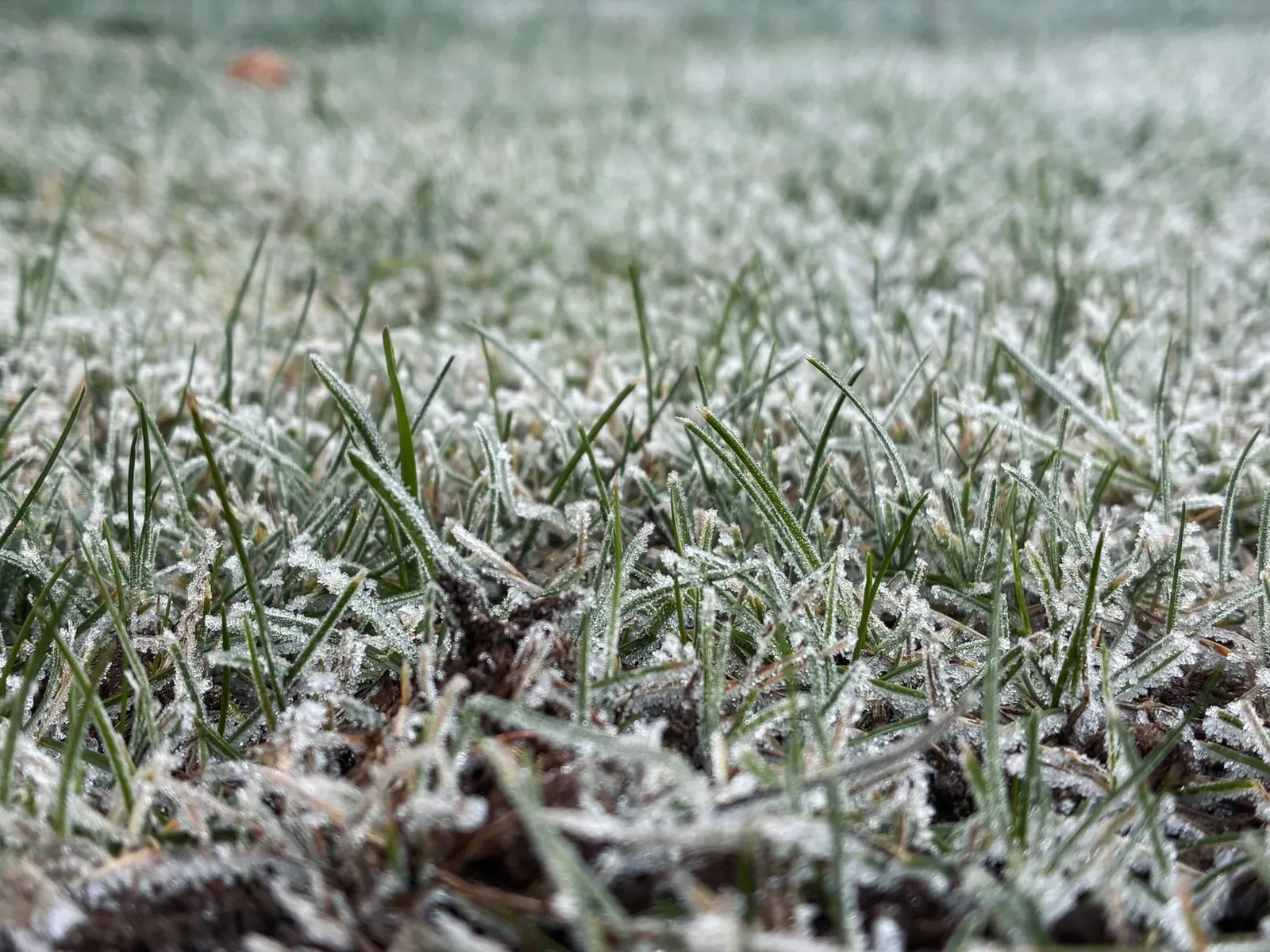 Close-up of lawn grass blades coated with white frost crystals at ground level
Photo: Lara Bellens / Pexels
That gap explains most of the confusion over what temperature does frost occur at. When the sensor reads between 32 and 36°F, ground level may be cold enough for frost, given light winds and high relative humidity, so the office issues frost advisories for lows of 33 to 36°F.
Clear skies matter too. The NWS glossary defines radiational cooling as the Earth's surface losing heat at night and says it is more pronounced under a clear sky.
Shop the essentials
What you'll need
Supplies for the steps in this guide.
 Watch the frostMin/max thermometerRecords the overnight low at your own plants.: check price on Amazon (opens in a new tab)
 Cold nightsFrost clothLightweight fabric to throw over plants on a cold night.: check price on Amazon (opens in a new tab)
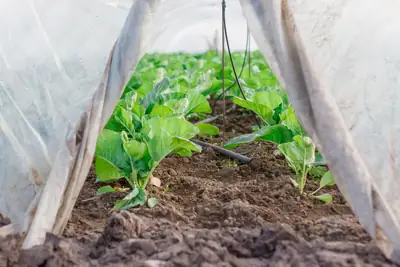 Cold nightsRow cover hoopsHoops that hold frost cloth above a bed like a low tunnel.: check price on Amazon (opens in a new tab)
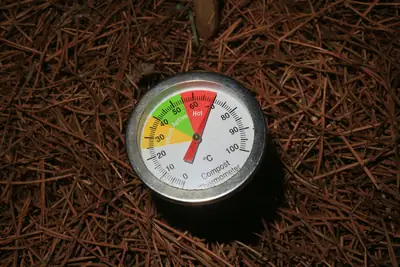 Before sowingSoil thermometerCheck your soil against the minimum temperature on this page before you sow.: check price on Amazon (opens in a new tab)
As an Amazon Associate I earn from qualifying purchases. Photos show the type of product, not a specific listing. How we choose
Frost vs freeze#
Part of the confusion about what temperature does frost occur at comes from mixing up frost and freeze. The NWS St. Louis definitions:
- Frost: thin ice forming on surfaces at or below 32°F when there is enough moisture. It can damage many seasonal plants and kill some sensitive ones with prolonged exposure.
- Freeze: the temperature falls to or below 32°F, which can significantly damage nearly all seasonal plants. A freeze can occur without frost.
- Hard freeze: the temperature falls to or below 28°F, which can kill nearly all seasonal plants. A hard freeze can also occur without frost.
The NWS glossary adds that the word freeze is usually used for advective situations (cold air moving in) or when wind or other conditions prevent frost.
Light frost vs hard (killing) frost: 32°F and 28°F#
For gardeners, the real question is what temperature does frost occur at hard enough to kill plants. There are two usual thresholds: a light frost or freeze around 32°F, which hurts tender plants, and a colder hard (killing) freeze. The NWS glossary defines a hard freeze as 28°F or lower for an extended period of time, killing most types of vegetation, and notes that a frost severe enough to end the growing season is commonly called a "killing frost."
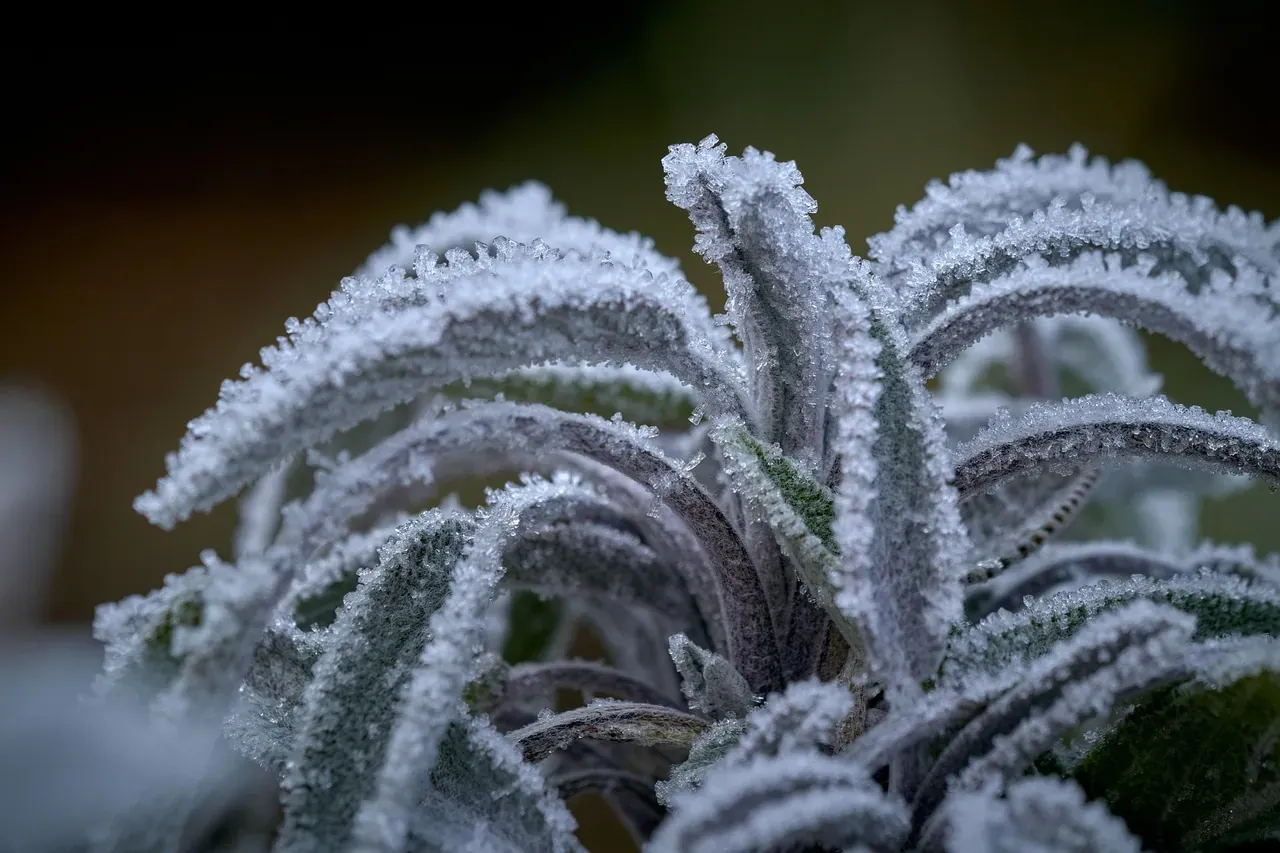 Narrow curved leaves of a garden plant thickly coated in frost crystals
Photo: wygrstudio / Pixabay
The exact cutoffs vary by source, and even by NWS office. The Tallahassee office uses 25°F for a hard freeze and says the definition "can vary from NWS office to office."
| Temperature | What it means | Source |
|---|---|---|
| 33 to 36°F (air) | Frost possible at ground level; frost advisory range | NWS Tallahassee, NWS Atlanta |
| 32°F or below | Frost (with moisture) or freeze | NWS St. Louis |
| 29 to 32°F | Light freeze: tender plants killed, little damage to other vegetation | NMSU-hosted presentation |
| 26 to 32°F | Light freeze | NWS Tallahassee |
| 25 to 28°F | Moderate freeze: most vegetation affected | NMSU-hosted presentation |
| 28°F or below | Hard freeze | NWS St. Louis, NWS glossary |
| 25°F or below | Hard freeze (Tallahassee's local definition) | NWS Tallahassee |
| 24°F and colder | Severe freeze: damage to most plants | NMSU-hosted presentation |
What temperature does frost occur for your plants? Tender vs hardy crops#
Purdue Extension (HO-66) sorts vegetables into three groups: tender vegetables are damaged by light frost, semi-hardy vegetables tolerate light frost, and hardy vegetables tolerate hard frost.
NC State Extension puts numbers on it: semi-hardy vegetables can survive repeated light frosts in the 30 to 32°F range, and hardy vegetables tolerate temperatures down to 28°F and lower.
For the crops PlantAlong tracks, Purdue and Colorado State University Extension (GardenNotes #720) classify them like this:
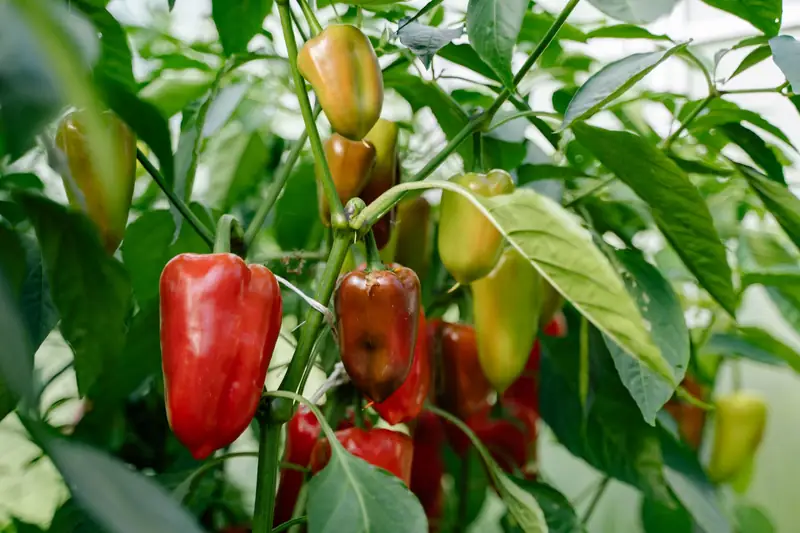
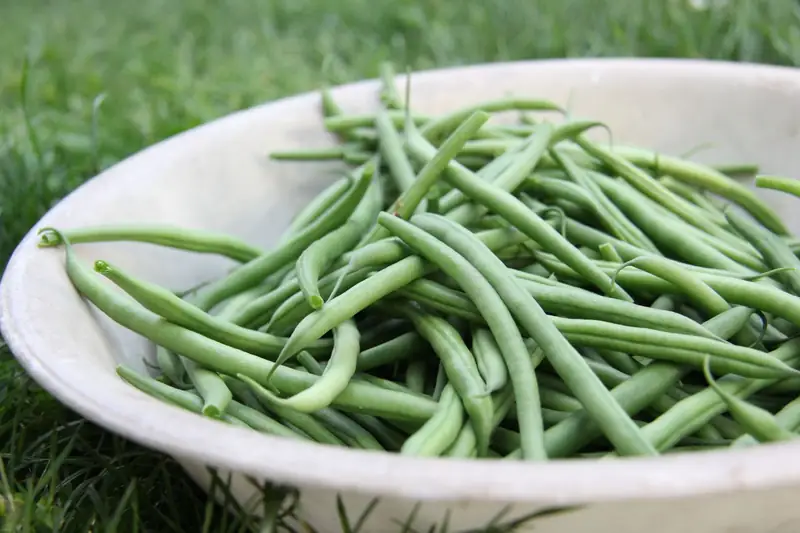
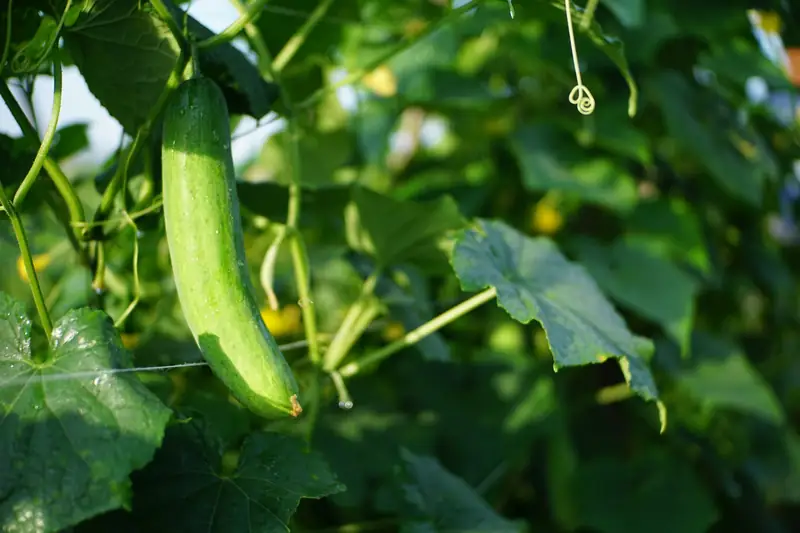
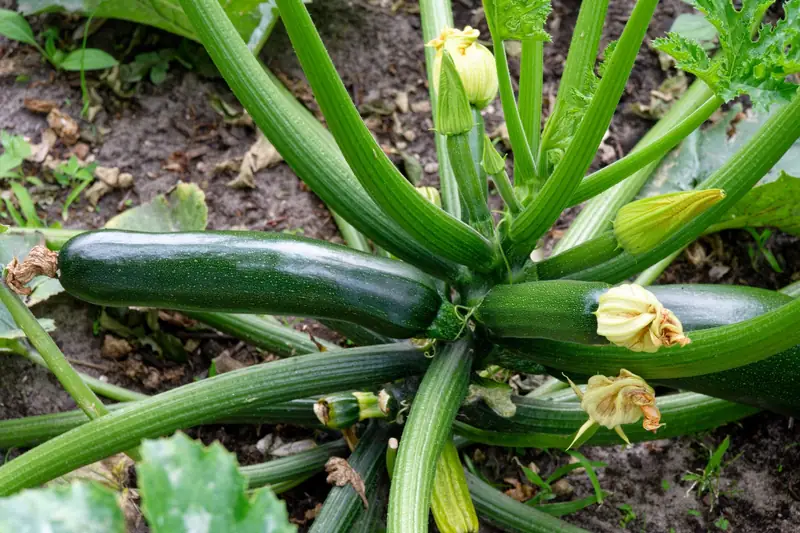
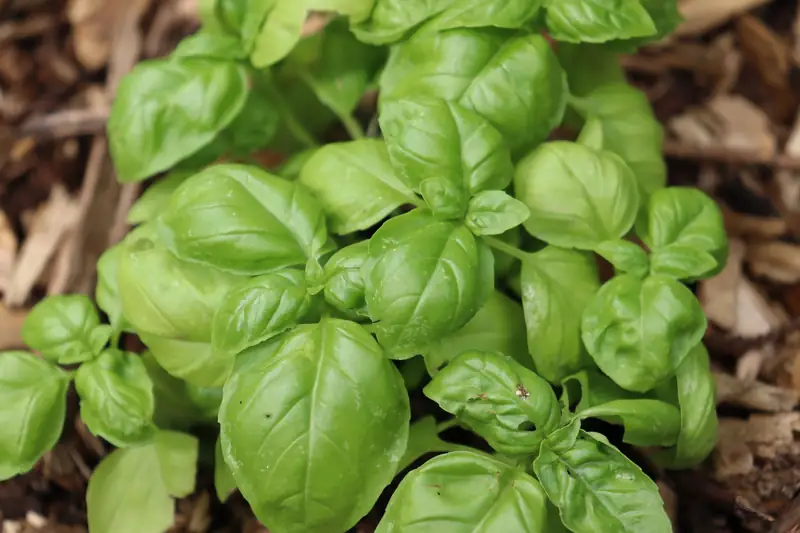
- Tender: tomatoes, peppers, beans, cucumbers and zucchini. Colorado State lists tomatoes and peppers as "very tender." University of Illinois Extension calls basil a tender annual.
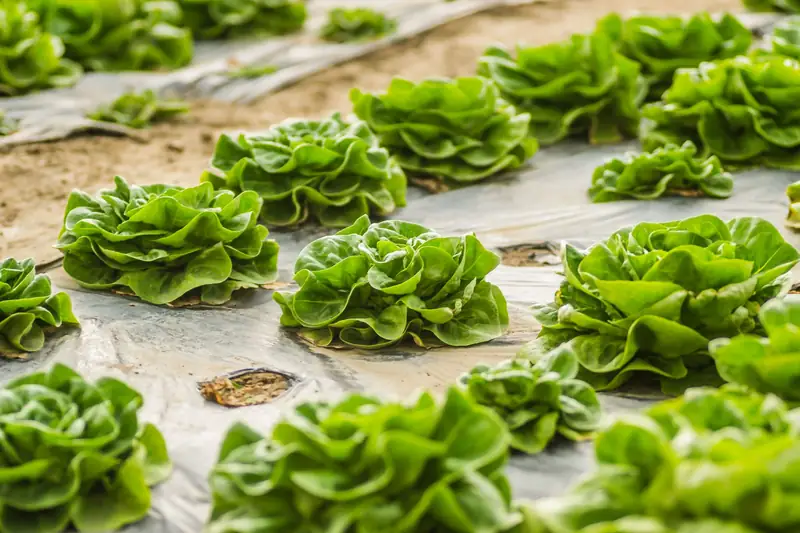
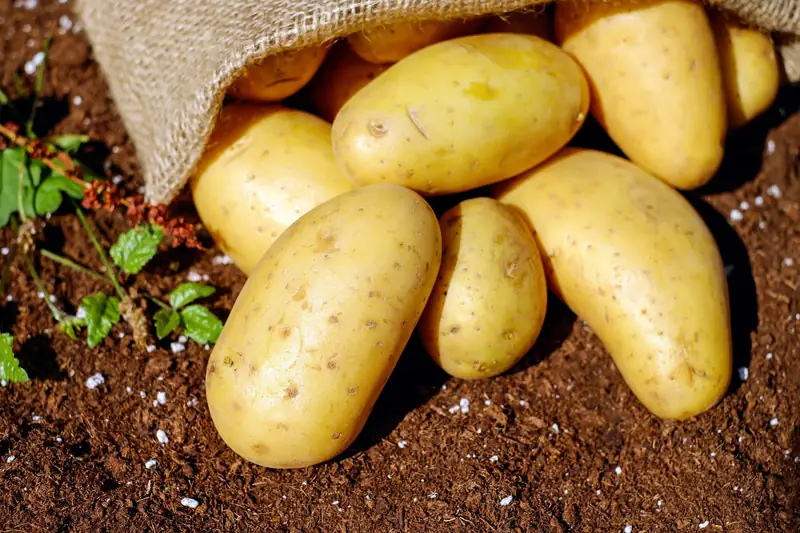
- Semi-hardy: potatoes and carrots. Lettuce is semi-hardy in Purdue's list and hardy in Colorado State's.
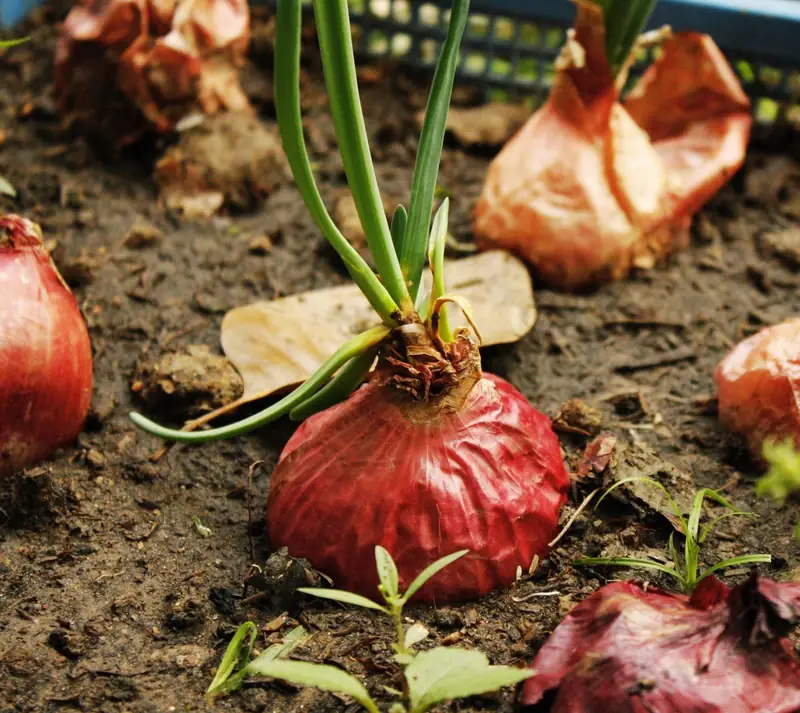
- Hardy: onions and peas.
If a frost is coming and tender crops are still in the ground, here is how to cover plants from frost. Each crop guide also lists its sourced frost class.
How PlantAlong's frost dates work: NOAA 1991-2020, 32°F and 28°F, P10/P50/P90#
NOAA's normals answer a different question than what temperature does frost occur at: they show when 32°F usually arrives. PlantAlong's planting calendar uses NOAA's 1991-2020 U.S. Climate Normals. For each weather station, those give the dates of the last spring and first fall 32°F temperature at 10%, 50% and 90% probability. Your ZIP code is matched to the nearest station with freeze statistics.
Here is how to read the three levels:
- Median (P50): the "typical" date. In half of years the last spring frost comes later.
- Spring 10% date (P10): the later, safer date, shown as "10% risk until." Only one year in ten has a frost after it.
- Fall 10% date (P10): the early end of the risk window, shown as "10% chance by." By the fall 90% date, frost has come in nine years out of ten.
For example, ZIP 63101 in St. Louis (zone 7a) matches a station 6.8 km away. Its median last spring frost is Apr 1, with a 10% risk until Apr 18. Its median first fall frost is Nov 4, with a 10% chance by Oct 24 and a 90% chance by Nov 21.
NOAA also publishes the same dates for 28°F. PlantAlong uses them in one case: at stations where 32°F is possible in any month (180 stations), the calendar shows no planting windows and lists 28°F hard-freeze dates for reference instead. Where frost is too rare to date (176 stations), it shows the share of years with any 32°F night.
A station is not your garden. The methodology notes that frost pockets, slopes, walls and city heat can shift your dates by days or weeks.
How to tell if it will frost tonight#
Knowing what temperature does frost occur at only helps if you know which night to watch. Frost dates give you the weeks; the forecast gives you the night. Signs to look for:
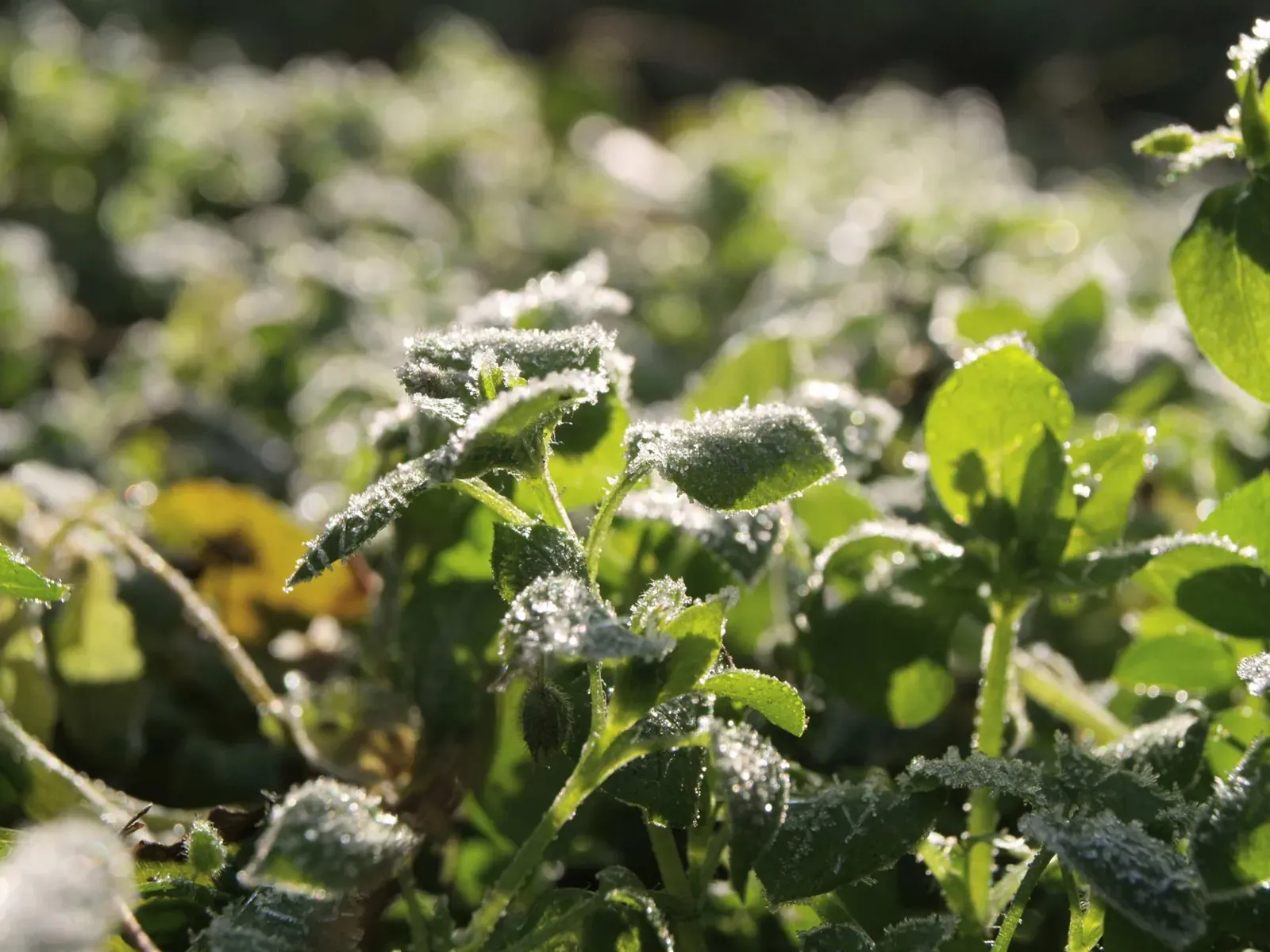 Low leafy plants dusted with frost, lit by low morning sunlight
Photo: Anna Stepko / Pexels
- A forecast low of 36°F or below. That is the NWS frost advisory range.
- Clear skies. Radiational cooling is strongest without clouds (NWS glossary).
- Light or calm winds and high humidity. NWS Tallahassee issues frost advisories when surface relative humidity is expected to approach or reach 100% on calm nights.
- A frost advisory or freeze warning. NWS Atlanta issues frost advisories up to 24 hours ahead for lows of 33 to 36°F, and freeze warnings for lows at or below 32°F.
- Low spots in your yard. Washington State University notes that low-lying areas often act as frost pockets.
For a heads-up at the right time of year, PlantAlong's free frost alerts email you before your typical first fall frost. They use long-term averages, not forecasts.
FAQ#
What is the frost point?#
The NWS glossary defines the frost point simply as a dew point below freezing. Hoar frost forms when air with a dew point below freezing is cooled to saturation, so the moisture deposits directly as ice crystals on plants, wires and grass.
Can it frost at 38 degrees?#
The NWS sources above put the usual upper limit at 36°F at thermometer height and give no figure for 38°F. A presentation hosted by New Mexico State University lists 40°F and below among ideal frost conditions. The sources disagree, so on clear, calm nights, treat the high 30s as a judgment call, especially in low spots.
Do I need to cover my plants at 35 degrees?#
Tender crops, yes, on a clear and calm night. A 35°F low is inside the NWS frost advisory range of 33 to 36°F, because frost can form at ground level while the sensor 2 meters up reads above freezing.
How do you tell if it will frost overnight?#
Look for a forecast low of 36°F or below, clear skies, light winds and high humidity. Watch for an NWS frost advisory or freeze warning, and expect low spots in the yard to frost first.
Sources#
- Frost/Freeze information (National Weather Service, St. Louis)
- Frost and Freeze Information for the NWS Tallahassee Area (National Weather Service, Tallahassee)
- Cold weather products (National Weather Service, Atlanta)
- Glossary: frost, frost point, radiational cooling, freeze, hard freeze (National Weather Service)
- Frost Protection and Season Extension (presentation hosted by New Mexico State University)
- The Fall Vegetable Garden, HO-66-W (Purdue Extension)
- How Do I Protect My Garden From Frost? (N.C. Cooperative Extension, Madison County Center)
- Vegetable Planting Guide, CMG GardenNotes #720 (Colorado State University Extension)
- Basil (University of Illinois Extension)
- Common Cultural: Frost injury (Washington State University HortSense)
- U.S. Climate Normals 1991-2020, annual/seasonal (NOAA National Centers for Environmental Information)
Featured photo: Josh (PleaseLinkToOurWebsite) / Pexels.

Check your inbox
We sent a confirmation link to . Click it and your planting calendar PDF is on its way. Nothing there in a few minutes? Check your spam or promotions folder.
Crops in this article



No comments yet. Tried this in your garden, or found a date that worked better? Start the thread.
Leave a comment