 PlantAlong

In short
- Iowa State Extension says leaves should be shredded or composted before use as mulch, and calls shredded leaves an excellent vegetable garden mulch.
- Whole leaves mat down and blow away more readily than shredded leaves, per Iowa State and Illinois Extension.
- A University of Maryland Extension answer puts shredded leaves between vegetables at a few inches, maybe 3 or so; Iowa State gives 2 to 4 inches for most organic mulches.
- Purdue Extension says black walnut leaves should not mulch sensitive crops such as tomatoes, peppers and potatoes, even after composting.
- Penn State describes leaf mold as decayed leaves that are mostly weed-free and take a couple of years to form in a packed pile.
On this page
- Can you use leaves as mulch? Yes, and shredded is better
- Shredded vs whole leaves
- How deep to spread leaves as mulch
- Leaves as mulch in vegetable beds over winter
- Leaves to avoid or limit
- Spring: pull back, dig in or compost
- Leaf mold vs leaf mulch
- FAQ
- What are the downsides of using leaves as mulch?
- Is it better to mulch leaves or leave them whole?
- Will mulched leaves turn into soil?
- How many leaves is too much?
- Sources
Yes, you can use leaves as mulch in a vegetable garden, and extension guides agree that shredded leaves work better than whole ones. Shredded leaves mat down less, blow away less and break down faster. For the vegetable beds themselves, the depths in these guides cluster around 2 to 4 inches, and the rest of the job is timing: what to cover in fall, what to skip, and what to do with the layer in spring.
Can you use leaves as mulch? Yes, and shredded is better#
Iowa State University Extension recommends leaves as mulch for vegetable gardens, with one condition: they "should be shredded or composted before applied as a mulch." Shredded or composted leaves, it says, are an excellent mulch for vegetable gardens, annual flower beds and raspberries.
University of Illinois Extension agrees that you can use leaves as mulch in vegetable gardens, and adds that shredded leaves decompose faster and are much more likely to stay in place than unshredded ones. UNH Extension says chipped leaves make a wonderful mulch for vegetable gardens and usually break down within a season, building soil organic matter.
Oak leaves are fine too: Iowa State says they are acid in reaction, but the small amounts home gardeners use have little effect on soil pH.
Shredded vs whole leaves#
The main problem with whole leaves is matting. Iowa State says shredded or composted leaves do not mat down as readily as whole leaves and are less likely to blow away. Illinois Extension notes that wind moves whole leaves more than shredded ones.
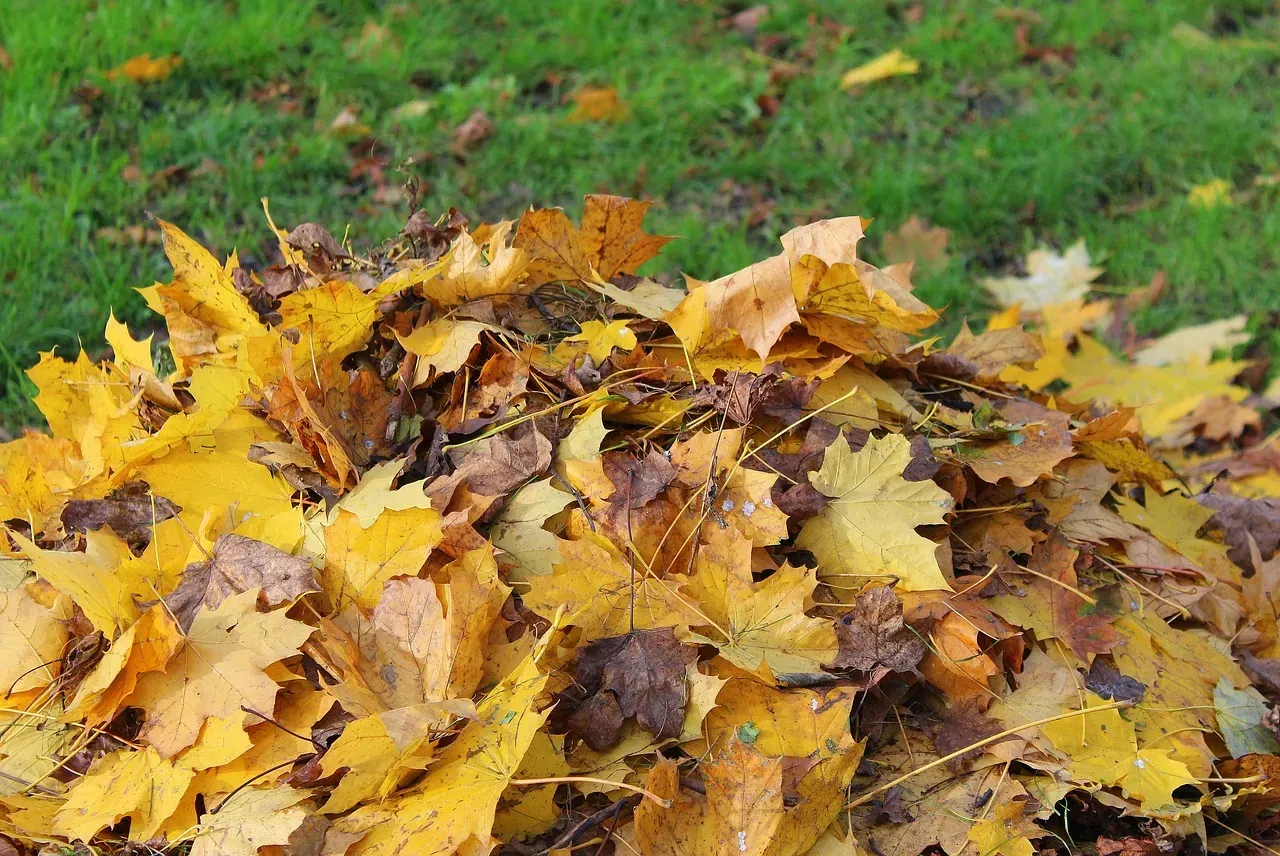 Heap of whole yellow maple leaves raked together on a green lawn in autumn
Photo: Alicja / Pixabay
Whole leaves are not useless, though. Illinois Extension says they can mat down but are still useful if your goal is smothering weeds. A University of Maryland Extension expert answer adds a wildlife angle: whole leaves shelter more organisms, and shredding can injure insects such as caterpillars or cocoons in the litter.
To shred leaves, Penn State Extension suggests simply mowing over them on the lawn. University of Delaware Extension lists a mower with a bag attachment, a vacuum shredder (dry leaves only) and a string trimmer run inside a sturdy garbage can full of dry leaves.
Shop the essentials
What you'll need
Supplies for the steps in this guide.
 After plantingStraw mulchStraw for covering beds after planting.: check price on Amazon (opens in a new tab)
 Shred the leavesLeaf mulcherShreds fallen leaves into fine mulch.: check price on Amazon (opens in a new tab)
 Fill the bedBagged compostCompost to mix into a new bed.: check price on Amazon (opens in a new tab)
 Build the bedRaised bed kit, 4 × 8 ftA ready-to-assemble bed frame.: check price on Amazon (opens in a new tab)
As an Amazon Associate I earn from qualifying purchases. Photos show the type of product, not a specific listing. How we choose
How deep to spread leaves as mulch#
Sources give different depths for different spots. Here is what each says, with vegetable beds first.
| Where | Depth | Source |
|---|---|---|
| Shredded leaves between vegetable plants | a few inches, "maybe 3 or so" | University of Maryland Extension |
| Most organic mulches, leaves included | 2 to 4 inches | Iowa State (RG 209) |
| Garlic beds over winter | "a good four inches" of straw or shredded leaves | Penn State |
| Perennial beds | 2 to 3 inches (Delaware); 2 to 4 inches (Penn State) | Delaware; Penn State |
| Trees and shrubs | 3 to 4 inches (Delaware); 2 to 4 inches (Penn State) | Delaware; Penn State |
| Raised beds | leave at least 2 inches at the top for mulch | UC Cooperative Extension |
| Leaves dug in, not used as mulch | spread 4 to 6 inches, then till | Kansas State |
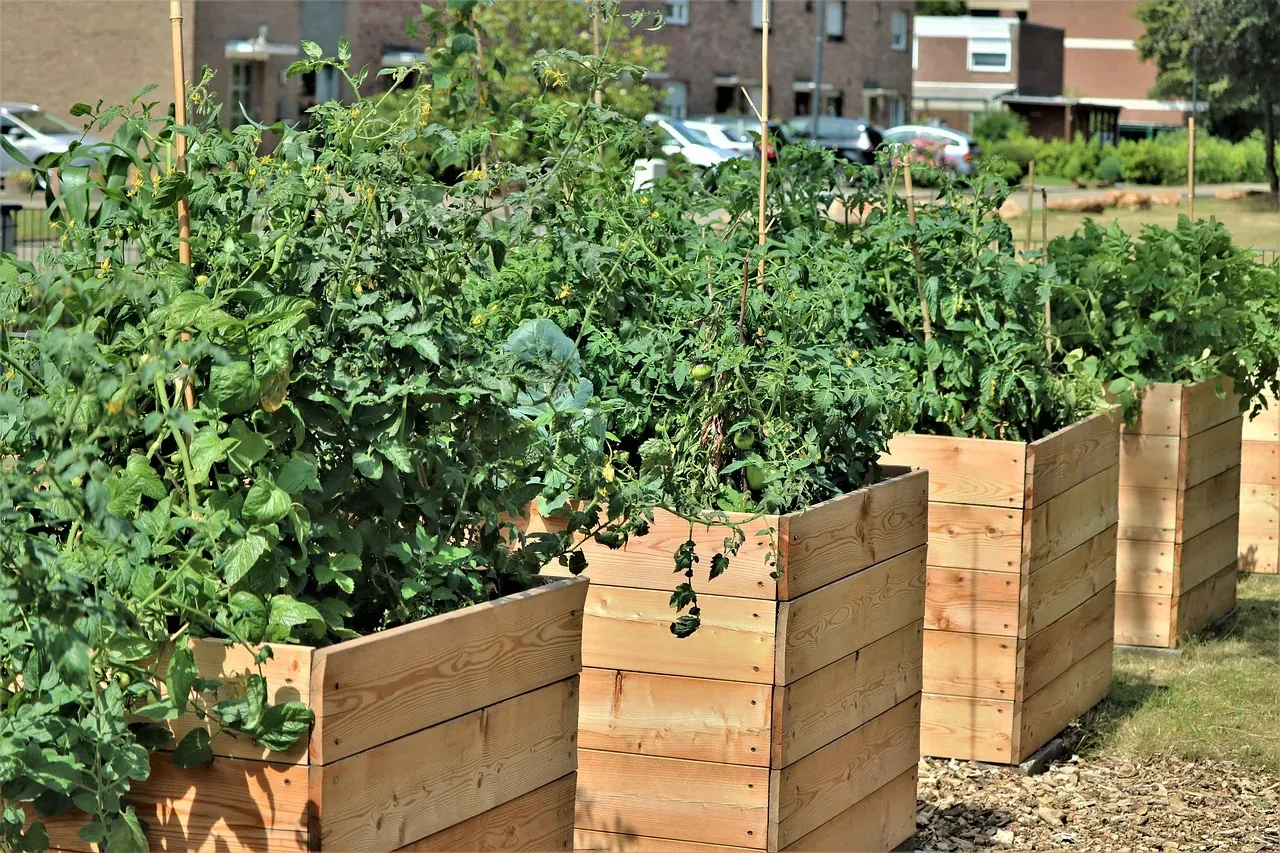
Raised beds. None of the guides we read gives a leaf depth just for raised beds. A UC Cooperative Extension handout says to leave at least 2 inches at the top of a raised bed for mulch. If you are topping up a bed, the raised bed soil calculator works out the volume.
Garlic. Penn State's "good four inches" is one of several garlic numbers. Our state-by-state table on mulching garlic for winter compares 13 extension sources; most northern sources land between 3 and 6 inches.
Leaves as mulch in vegetable beds over winter#
Start by clearing what should not stay. UNH Extension says to remove annual vegetable plants after the first killing frost and to discard diseased top growth. It notes that two common tomato diseases, early blight and Septoria leaf spot, overwinter in the soil or crop debris.
Then you have two choices for an empty bed: lay leaves on top as mulch, or work them in. University of Delaware Extension says you can spread shredded leaves over vegetable beds and till them in before spring planting. Kansas State Research and Extension says to spread organic materials 4 to 6 inches deep and till them in early autumn, so they decompose over winter and nutrients are not tied up by spring.
For beds with crops still in them, keep the layer off the plants. UNH Extension warns against piling mulch against trunks and crowns, and says mulch insulates soil and prevents frost heaving.
A few crops are exceptions. Iowa State calls leaves a poor winter mulch for strawberries and herbaceous perennials, and recommends straw for strawberries. Garlic is the opposite case: Penn State lists shredded leaves alongside straw, and the garlic guide shows when to plant it where you live.
Leaves to avoid or limit#
Black walnut. This is the clearest no. Purdue Extension says black walnut leaves, bark and wood chips should not be used to mulch sensitive garden plants, and that even after composting they may release small amounts of juglone. Purdue lists tomato, pepper, potato, eggplant, cabbage, asparagus and rhubarb as vegetables observed to be sensitive.
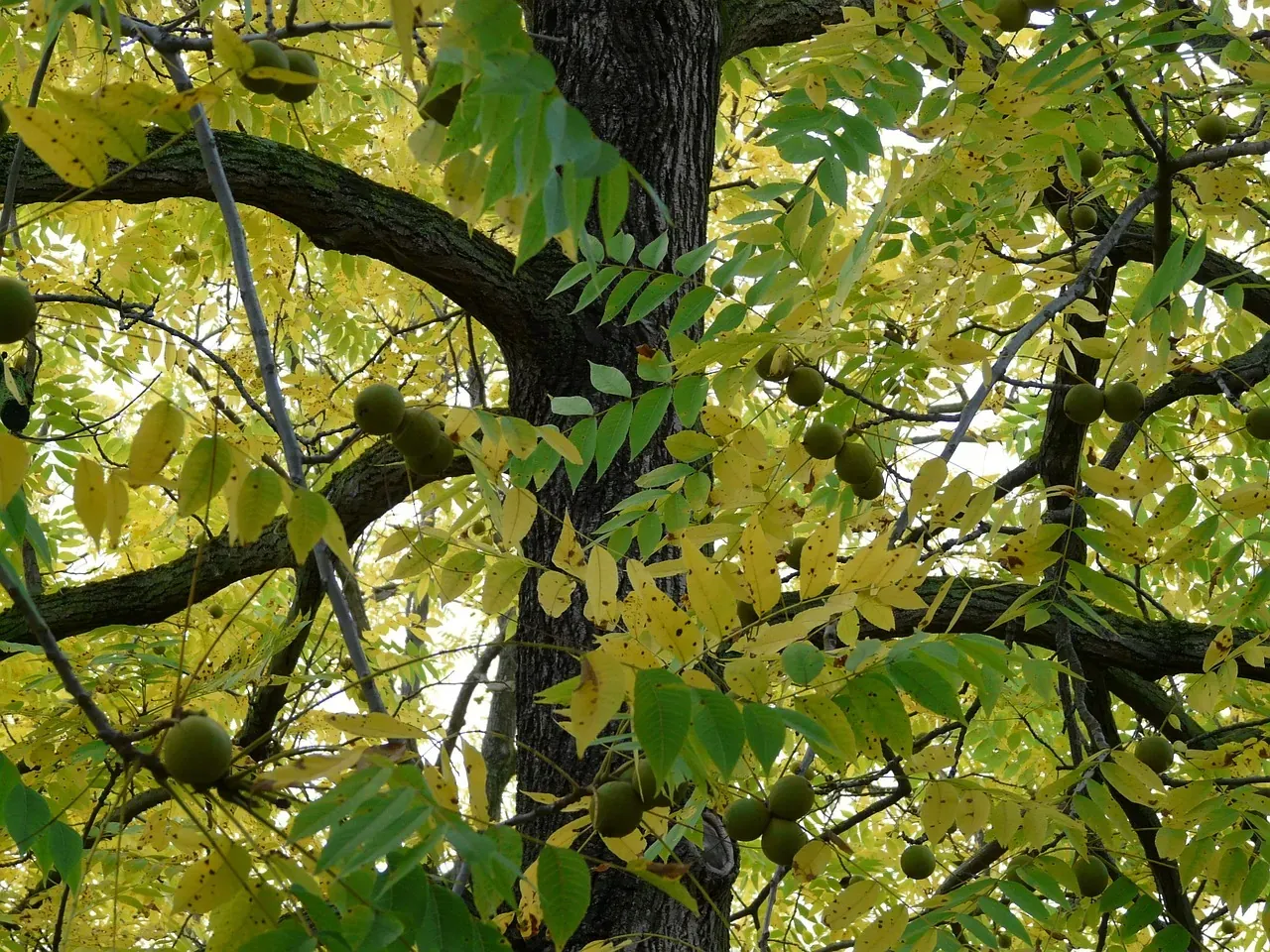 Black walnut tree with yellowing compound leaves and round green walnuts hanging in the canopy
Photo: Hans / Pixabay
Sources disagree on composting. Penn State says to compost black walnut leaves for at least six months or use them on non-edible plants, while Purdue warns that composted walnut refuse may still release juglone. Purdue lists beans, beets, carrots, corn, melons, onions, parsnips and squash as observed to be tolerant. A University of Maryland Extension answer adds that mixed leaves from several tree species are unlikely to have a substantial effect.
Leaves from diseased trees. Illinois Extension says to apply caution with leaves from trees that had a serious foliar disease, because inoculum for next year can overwinter in the leaves. It cites apple orchard research where shredding leaves helped reduce apple scab.
Spring: pull back, dig in or compost#
By spring, leaves as mulch have done their winter job, and you have three options.
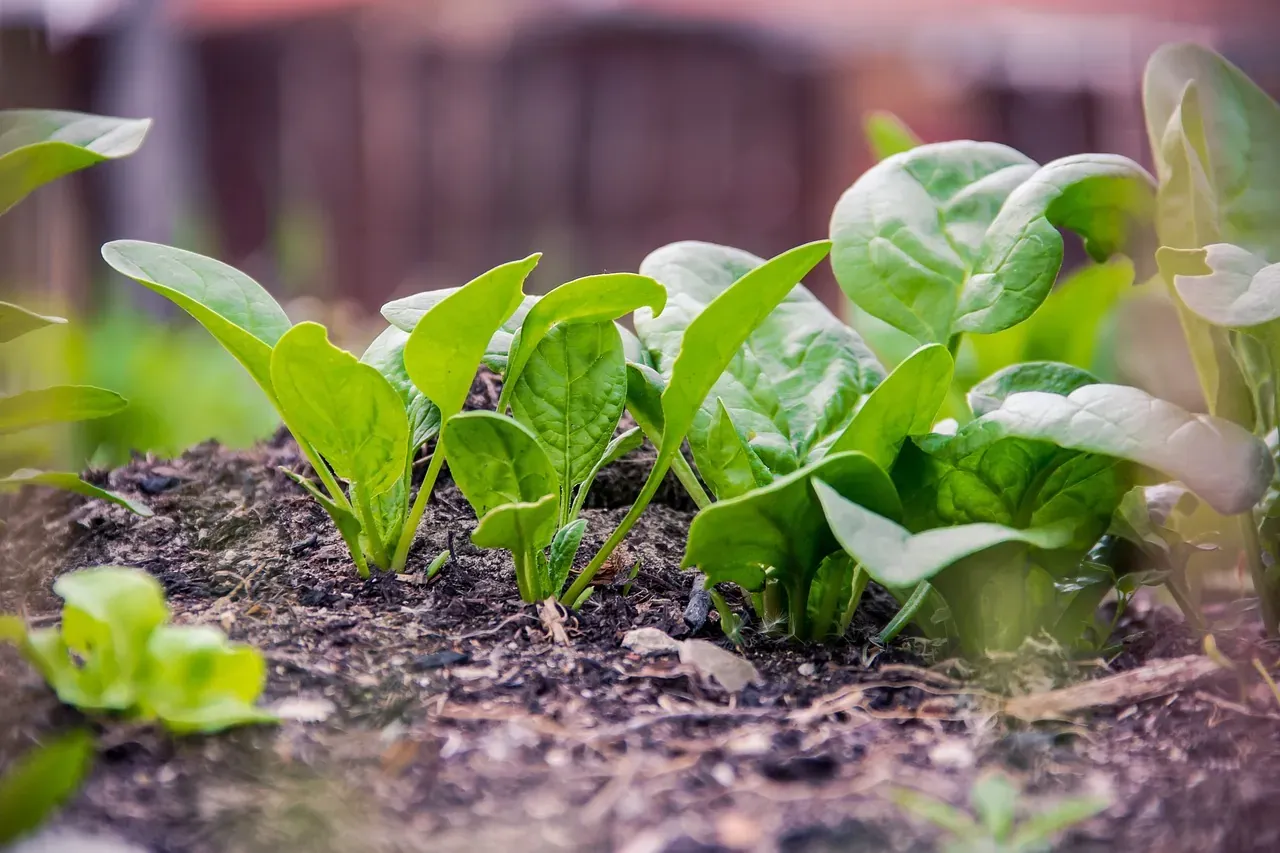 Young spinach plants growing in dark, crumbly garden soil in spring
Photo: ha11ok / Pixabay
Pull it back to let soil warm. Iowa State advises applying vegetable mulches in early June after the soil has warmed, because plant growth may be slowed if mulch goes on while soil is still cool. If leaves are still thick where you plan to sow early crops, rake them aside so the soil can warm. Check your last frost date to plan when beds need to be open.
Dig it in. Iowa State says these materials break down quickly and can be tilled into the soil in fall or the following spring. Kansas State warns that tilled-in organic matter can tie up nutrients for one to two months, so material worked in during spring or summer needs extra fertilizer to compensate.
Compost it. Delaware Extension says to shred leaves first and turn the pile often for the quickest compost.
Leaf mold vs leaf mulch#
Using leaves as mulch means spreading them, ideally shredded, on the soil now. Leaf mold is what leaves become after they decay.
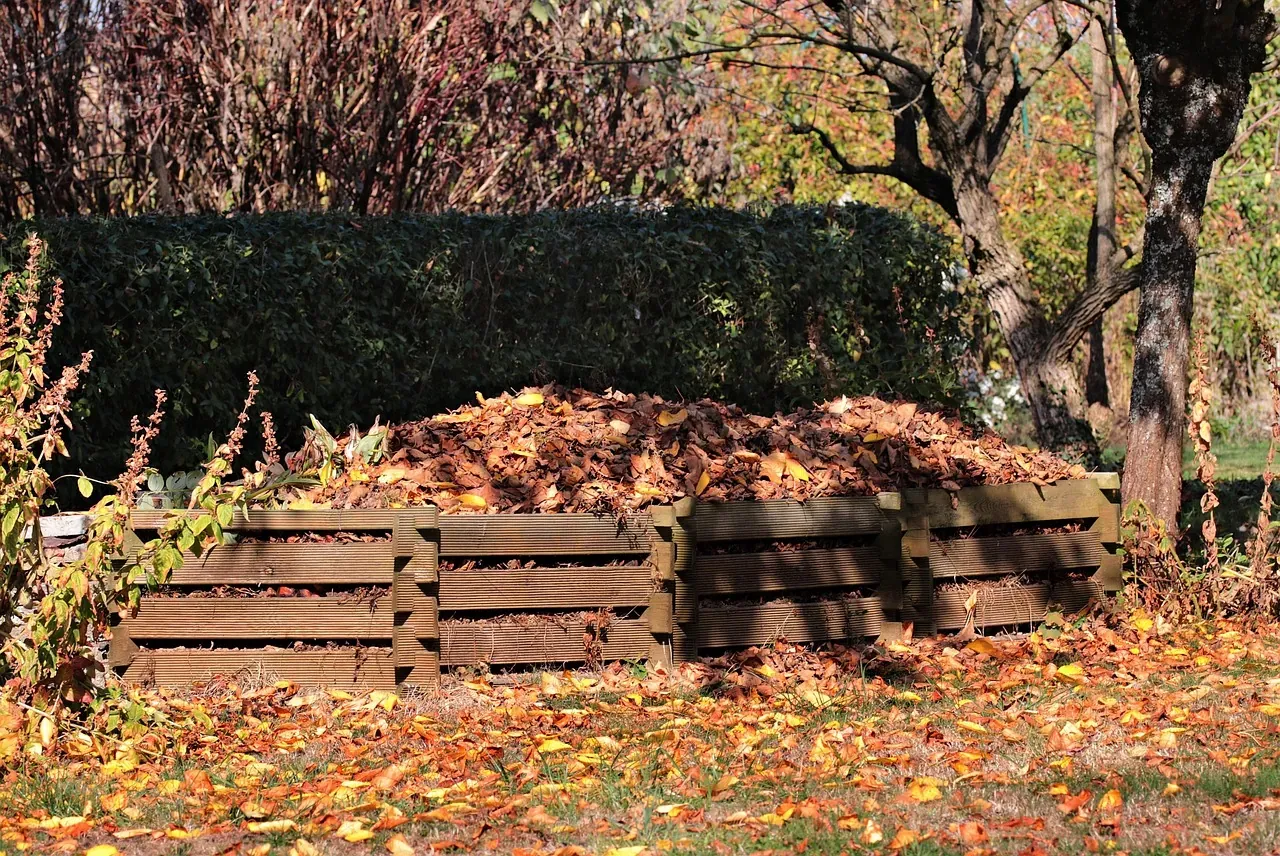 Wooden slatted compost bins heaped with brown fallen leaves in an autumn garden
Photo: pixel2013 / Pixabay
Penn State Extension describes leaf mold as essentially decayed leaves, similar to compost, and mostly weed-free, unlike compost or manure. Its method is slow: form a pile of leaves, pack it down, water it, and wait a couple of years. Iowa State counts composted leaves as an excellent vegetable garden mulch, so finished leaf mold can go on beds the same way.
If you want something on the beds this winter, use shredded leaves as mulch. If you have more leaves than beds, pile the extra and let it become leaf mold.
FAQ#
What are the downsides of using leaves as mulch?#
Whole leaves mat down and blow away (Iowa State), and leaves break down quickly, so the layer needs renewing (UNH). Leaves from trees with serious foliar disease can carry disease (Illinois), black walnut leaves can harm sensitive crops (Purdue), and mulch on cool spring soil may slow growth (Iowa State).
Is it better to mulch leaves or leave them whole?#
For vegetable beds, extension guides favor shredding: Iowa State says shredded leaves mat less and blow away less. Whole leaves still work for smothering weeds (Illinois) and are better for wildlife, according to a University of Maryland Extension answer.
Will mulched leaves turn into soil?#
Yes, over time. UNH says chipped leaves usually break down within a season and build soil organic matter. Penn State says shredded leaves decay much more quickly than whole leaves, while a packed pile of leaves takes a couple of years to become leaf mold.
How many leaves is too much?#
For leaves as mulch between vegetables, the University of Maryland answer suggests a few inches, maybe 3 or so, and Iowa State gives 2 to 4 inches for most organic mulches. The same Maryland answer says layers over a foot deep should be reduced, even in ornamental beds.
Sources#
- Organic Mulches (RG 209) (Iowa State University Extension and Outreach)
- What mulches work well for weed suppression in the vegetable garden? (Iowa State University Extension and Outreach)
- Recycled leaves make inexpensive mulch and Common mulches used in the vegetable garden (University of Illinois Extension)
- Putting the Garden to Bed (UNH Extension)
- Leaves Are Treasure, Not Trash, Growing Garlic: Fall Planting and Allelopathy in the Home Garden (Penn State Extension)
- Recycling Leaves (University of Delaware Cooperative Extension)
- Ask Extension question #871994: shredded leaves around vegetables (University of Maryland Extension, Home and Garden Information Center)
- Black Walnut Toxicity (HO-193) (Purdue Extension)
- Direct Application of Organic Materials (MF3373) (Kansas State Research and Extension)
- Building Raised Beds Workshop (UC Cooperative Extension, Inyo and Mono Counties Master Gardeners)
Featured photo: Peggychoucair / Pixabay.



Check your inbox
We sent a confirmation link to . Click it and your planting calendar PDF is on its way. Nothing there in a few minutes? Check your spam or promotions folder.
Crops in this article


No comments yet. Tried this in your garden, or found a date that worked better? Start the thread.
Leave a comment